Quick Answer: Is Chamonix Good for Beginners?
Chamonix can work for beginners, but it is not the easiest beginner ski destination in the Alps.
That distinction matters.
If you are a true beginner, Chamonix is not the kind of resort where you should casually explore the whole mountain, follow stronger friends, or assume every lift leads to safe beginner terrain. The overall Chamonix ski experience is better suited to intermediate, advanced, and expert skiers.
Beginners should treat Chamonix very differently.
If you are new to skiing, you should stay in designated beginner areas, hire a ski instructor or guide, and avoid skiing outside the zones clearly suited to your ability level. Chamonix does have beginner-friendly areas, including Le Tour / La Vormaine, Les Houches, and Le Tourchet, but the valley as a whole is famous for serious mountain terrain, changing conditions, and ski areas that are not all connected into one simple beginner resort.
Bottom line: Chamonix is possible for beginners, but it is not beginner-first. It is a better choice if you are traveling with a mixed-ability group, taking lessons, or intentionally investing time and money into learning. If your only goal is the easiest, lowest-stress first ski trip, there are simpler resorts.
Why Beginners Ask This Question
Chamonix has one of the biggest reputations in world skiing.
That reputation is both the attraction and the problem.
People see Mont Blanc, the Aiguille du Midi, big alpine scenery, steep terrain, glaciers, off-piste skiing, and legendary ski films. They hear names like Grands Montets, Vallée Blanche, Brévent, Flégère, Le Tour, and Les Houches. Then they ask the obvious question:
Can a beginner actually ski there?
The fear is reasonable.
Chamonix is not built like a typical North American destination resort where most visitors arrive at one base village, look at one connected trail map, and progress gradually through a clearly organized system of beginner, intermediate, and advanced terrain.
Chamonix is a valley. It has several major ski areas with different personalities, different access points, different elevations, and different terrain profiles.
That makes planning more important.
For beginners, Chamonix is not a place where you should just show up, pick a random lift, and hope the mountain takes care of you.
The Most Important Rule for Beginners in Chamonix
If you are a beginner, do not treat Chamonix like a mountain to explore freely.
Treat it like a place where you need a plan.
This is especially important because Chamonix’s reputation attracts strong skiers. If you are traveling with advanced friends, it can be tempting to “just try one run” with them. That is exactly the wrong approach.
A beginner in Chamonix should not be trying to keep up with advanced skiers.
A beginner should be learning in controlled terrain with professional guidance.
- Stay in beginner-designated areas.
- Take lessons or hire a ski instructor.
- Do not follow advanced friends onto terrain you are not ready for.
- Do not ski off-piste.
- Do not assume every blue run will feel easy.
- Check lift openings, weather, visibility, and snow conditions before committing to a ski area.
- Be willing to stop early or change plans.
This may sound strict, but it is the right mindset for Chamonix.
The valley is spectacular, but it rewards skiers who respect terrain, weather, visibility, and ability level. For beginners, that respect starts with staying in the right place.
Best Beginner Areas in Chamonix
Chamonix is not beginner-first, but it does have places where beginners can learn.
The key is choosing the right area.
Le Tour / La Vormaine Area
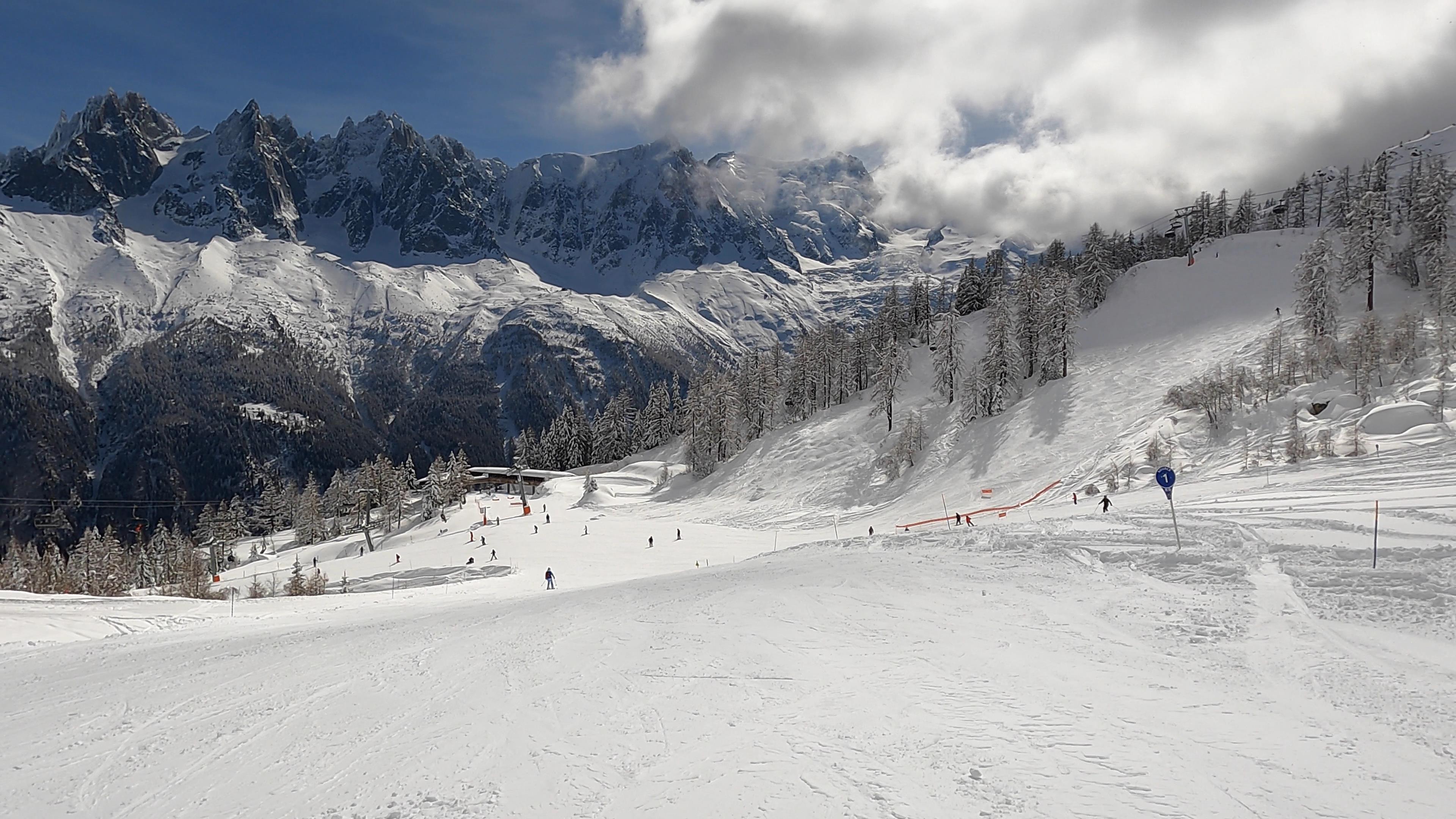
Le Tour is usually the most logical place to start for beginners in the Chamonix valley.
It feels more approachable than the more serious high-mountain areas, and beginner guidance commonly points to the beginner area at Le Tour, especially around La Vormaine on the right side of the base area.
For a true beginner, this type of area makes far more sense than trying to start at Grands Montets or treating Brévent-Flégère as a casual first-day learning zone.
Le Tour Beginner Area Photo
Le Tour Resort Overview Video
Le Tour is still part of the Chamonix ski experience, but it gives beginners a more realistic and more isolated environment to learn.
One of the biggest advantages of Le Tour over Les Houches and other locations is that its beginner area is relatively separated from the upper parts of the ski resort. If you are only using the beginner area, you do not have to wait in the main Charamillon gondola line before you can start learning. That can save time and make the day feel less stressful.
It also means beginners are less likely to feel overwhelmed by stronger skiers moving through the middle of the learning zone.
That matters.
Many beginners naturally stop, look around, hesitate, or slow down while trying to avoid collisions. A more separated beginner area helps reduce that pressure. Instead of worrying about advanced skiers passing quickly nearby, beginners can focus on balance, stopping, turning, and building confidence.
Le Tour also gives beginners room for progression. The area offers green terrain and a blue progression option, which can help newer skiers practice without immediately being pushed into more intimidating high-altitude terrain.
For a first Chamonix ski day, that kind of setup is valuable.
Les Houches
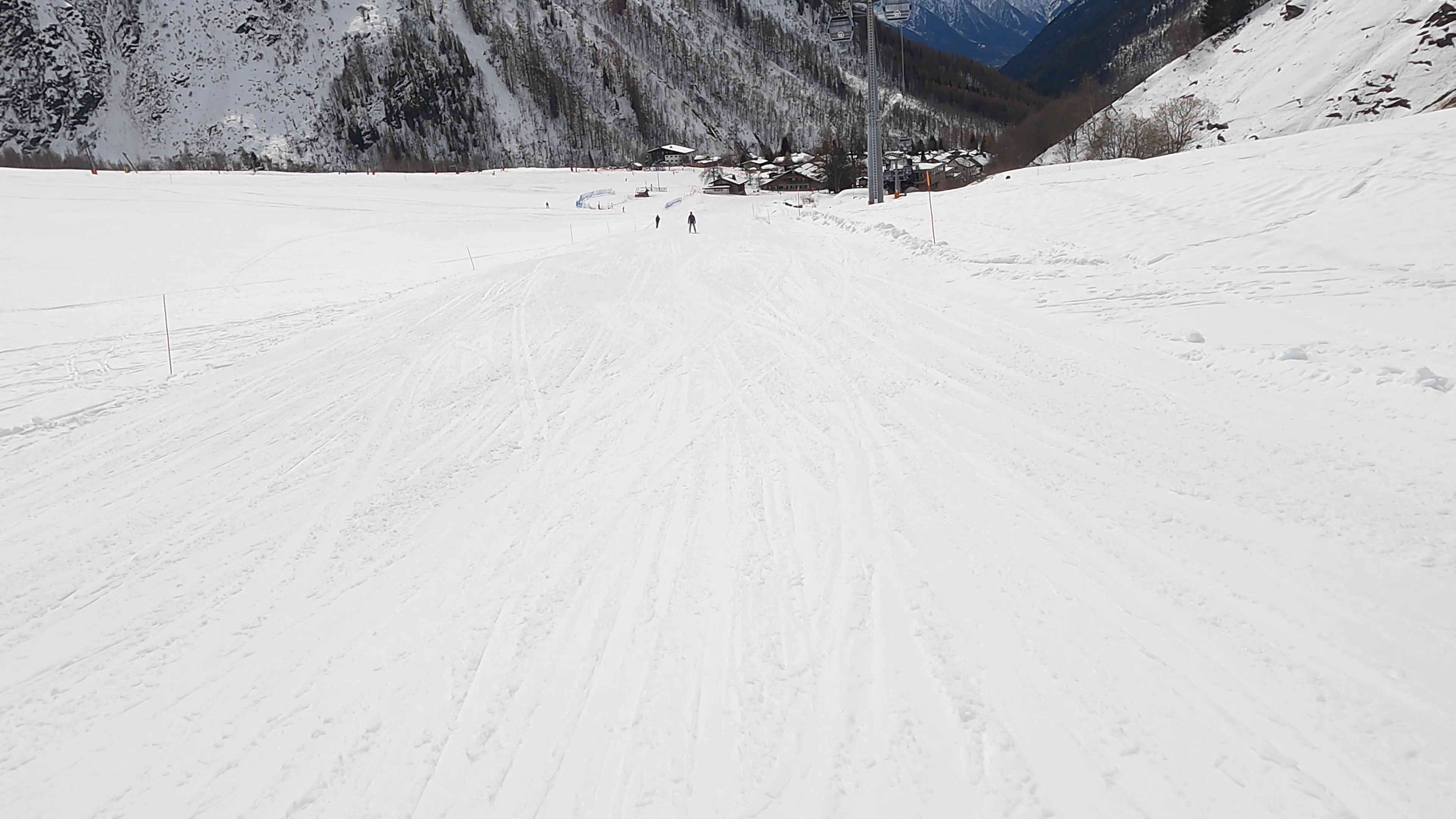
Les Houches can also work for some beginners and lower-level skiers, especially when using the right beginner-focused areas and when conditions are good.
But beginners should still be careful.
Do not confuse “has beginner terrain” with “the whole area is beginner-friendly.” Chamonix requires more judgment than that.
Les Houches Beginner Area Photo
Les Houches Resort Overview Video
If you are new, the right plan is to book a ski instructor or guide, confirm where your lesson starts, and stay within the terrain your instructor recommends.
One important planning point is that the beginner area at Les Houches is not as simple as just stepping out of the base area and skiing. You generally need to take the Prarion gondola to reach the upper area. From there, you can access beginner terrain, but the beginner zone is relatively small and surrounded by blue runs.
That can work if a beginner is already making progress and can control speed. But for a true first-timer, it may feel more limited or more intimidating than expected.
The advantage of Les Houches is progression.
If you are learning quickly, Les Houches gives access to nearby blue terrain without requiring you to move to a completely different ski area. That can be useful for beginners who are close to becoming lower intermediates and want a realistic next step.
Les Houches also offers access to Le Tourchet.
Le Tourchet is another small beginner area near the Bellevue side of Les Houches. However, based on experience, it does not feel like the most practical place to learn unless you are confident you can make progress quickly or you are skiing with a guide or instructor. It is small, and it may not provide the same useful beginner progression that some visitors expect.
For that reason, I would treat Les Houches as a possible beginner option, but not automatically the easiest choice for every true beginner.
Where Beginners Should Be Very Careful
This is where the answer needs to be direct.
Some Chamonix areas may be famous, but that does not make them beginner destinations.
Grands Montets
Grands Montets is not where I would send a beginner.
It is one of the areas that gives Chamonix its serious reputation, and that is exactly why beginners should be cautious. It is much better suited to strong skiers who understand conditions, terrain, speed control, and alpine decision-making.
If you are a beginner and someone in your group says, “Let’s just go check it out,” that should be a warning sign.
There is a difference between sightseeing and skiing terrain.
Beginners should not let curiosity override ability.
Grands Montets may have a small beginner area, but the broader environment can feel intimidating for many beginner skiers. The steep terrain, higher altitude, stronger-skier atmosphere, and overall mountain feel make it a poor choice for beginners who are not skiing with professional guidance.
Unless you are planning to hire a ski instructor or guide, it is usually smarter to consider areas such as Le Tour or Les Houches instead.
Vallée Blanche
Beginners should not consider skiing the Vallée Blanche at all.
This should not even be a debate.
The Vallée Blanche is not a normal beginner ski run. It is a high-mountain glacier route that requires proper conditions, equipment, experience, and professional guidance. For a true beginner, it belongs in the “not for this trip” category.
Even intermediate skiers who do not have experience skiing ungroomed, natural snow should be very cautious about considering it.
If you want the views, think sightseeing or taking the lift to the Aiguille du Midi. Do not confuse a famous Chamonix experience with a beginner ski objective.
A famous route is not automatically an appropriate route.
Brévent
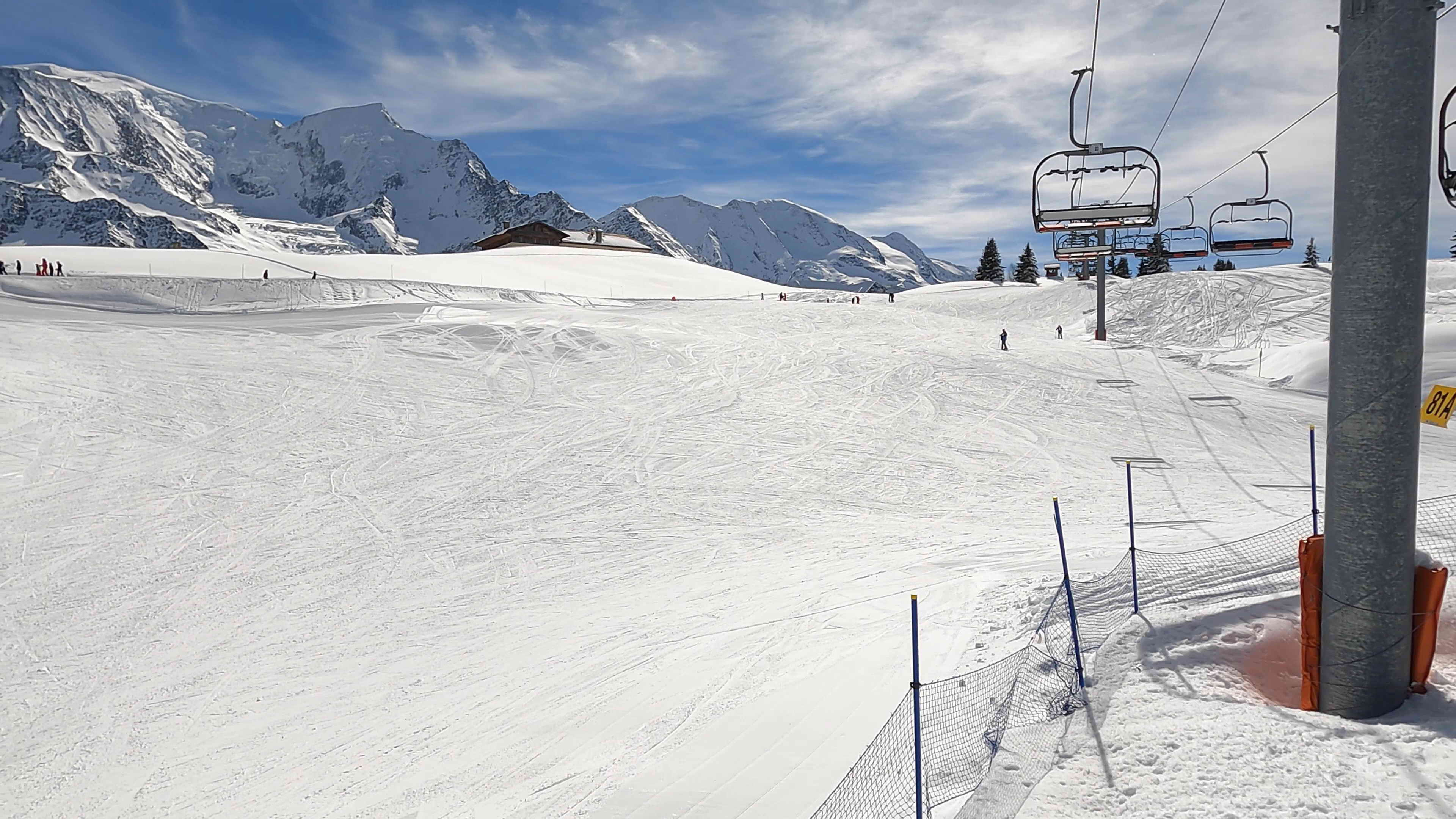
Brévent can be beautiful and may work for some improving skiers, but it should not be treated casually by beginners.
For a first-time skier, Brévent can be intimidating depending on conditions, visibility, crowding, and which runs are open. If you are still learning to control speed, stop confidently, and link turns, this is not where you should improvise.
Brévent Photo
Brévent Resort Overview Video
Brévent may offer a small beginner zone around upper lift access, but the broader setting attracts many intermediate and advanced skiers. That can slow beginners down mentally, especially if they are still nervous around faster traffic.
There is one exception worth noting.
Brévent can be interesting if you want to combine a small amount of beginner practice with sightseeing. The views toward the Mont Blanc massif are magnificent, and a beginner could potentially practice around the beginner area near Planpraz, then enjoy lunch or sightseeing higher up.
But that is different from treating Brévent as a full beginner ski destination.
Flégère
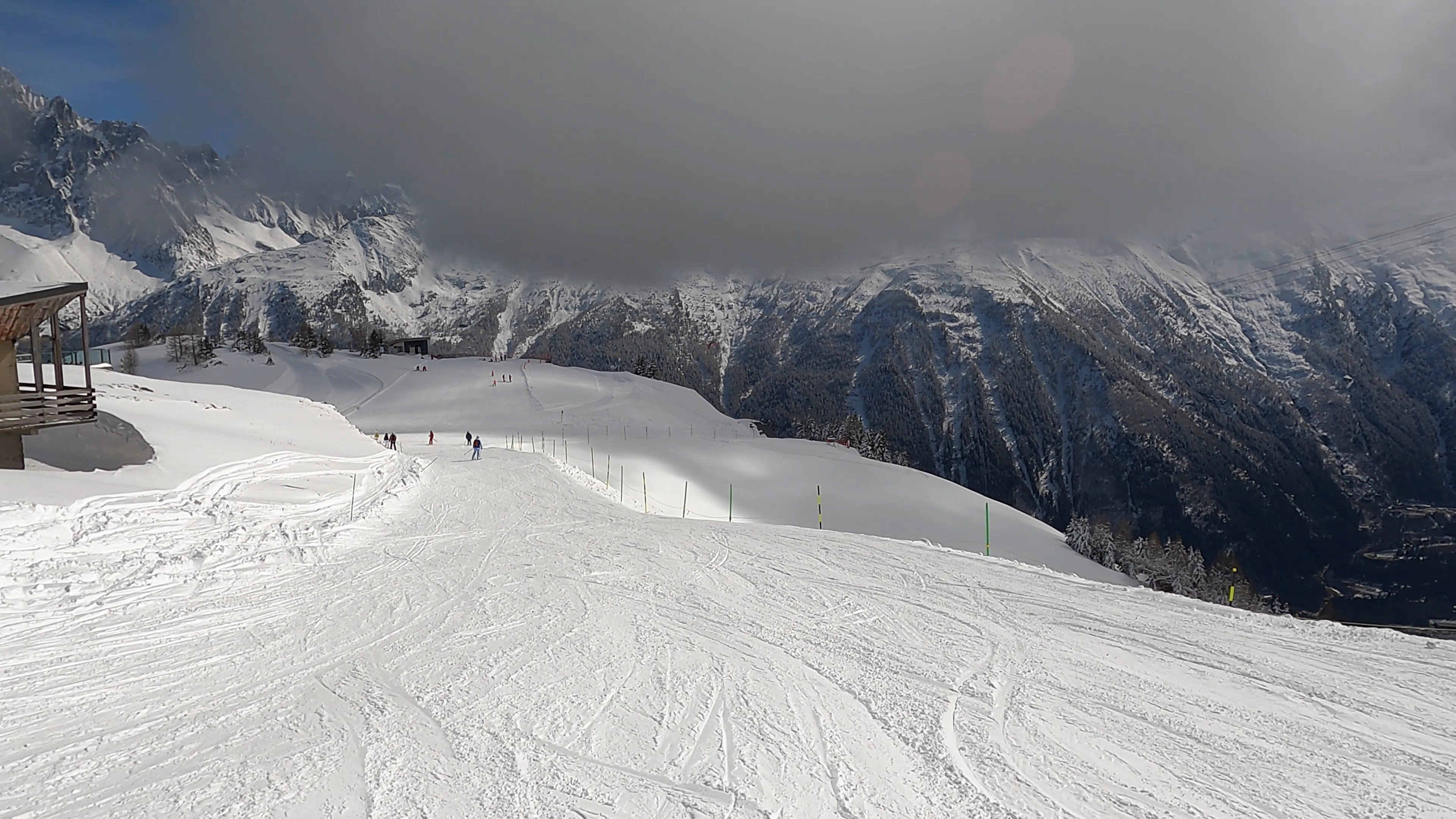
Flégère can also be beautiful, but beginners should approach it with the same caution.
This is not an area where true beginners should casually explore just because it appears on the Chamonix trail map. The setting, lift access, stronger-skier traffic, changing visibility, and terrain choices can make it stressful for a new skier.
Flégère Photo
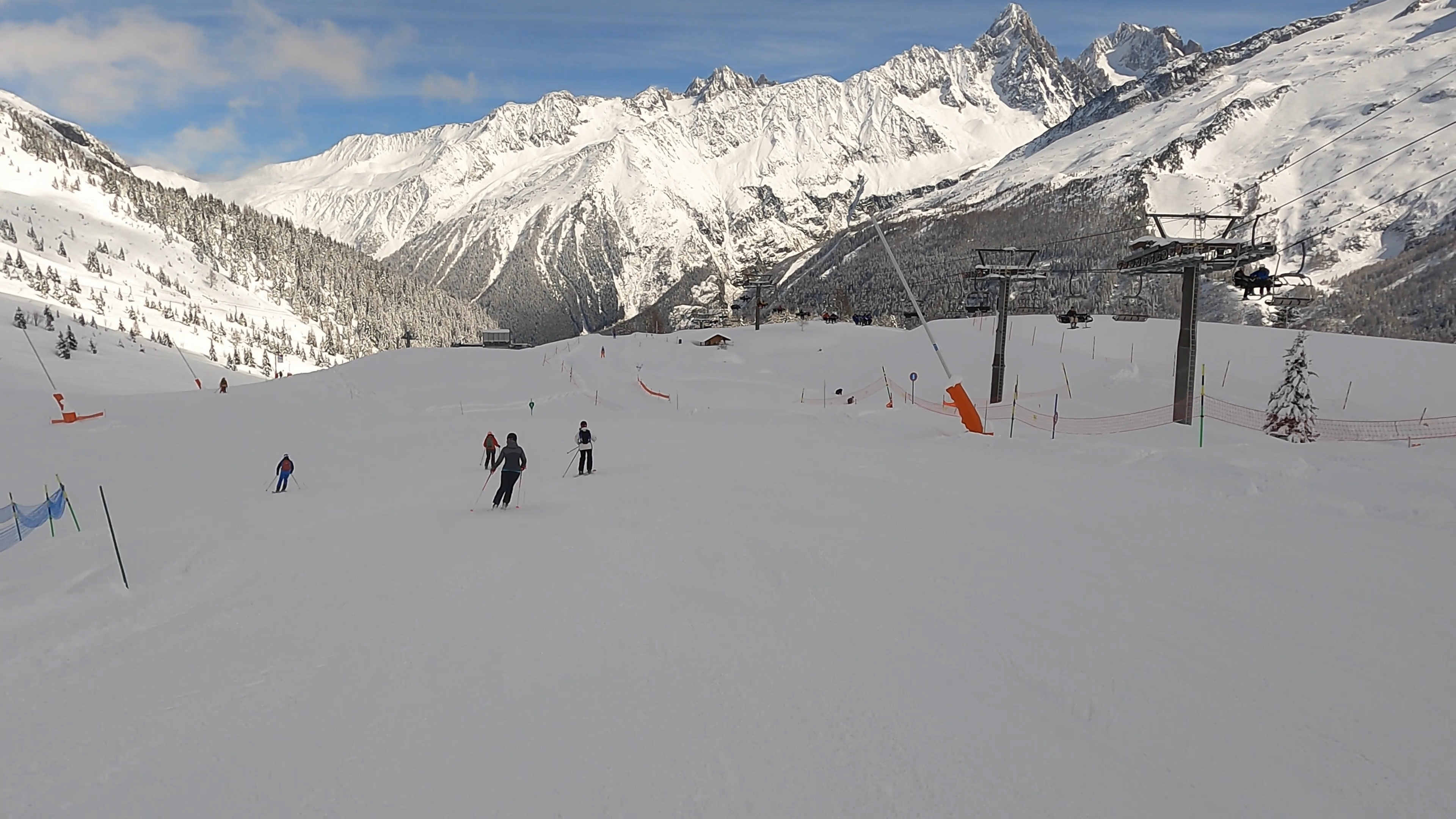
Flégère Resort Overview Video
For most true beginners, Brévent and Flégère should be approached carefully and preferably with instruction. They may fit improving skiers, mixed groups, or sightseeing-focused days, but they should not be treated like simple beginner resorts.
Chamonix Is Better for Intermediates and Experts
This is the main point.
Chamonix’s global reputation exists for a reason. The valley is famous because it gives stronger skiers access to serious terrain, dramatic scenery, high alpine environments, and multiple ski areas with different personalities.
That is why Chamonix is ideal for:
- Confident intermediates.
- Advanced skiers.
- Expert skiers.
- Mixed-ability groups where beginners take lessons while stronger skiers explore.
- Travelers who want a legendary mountain-town experience instead of only a ski-school resort.
For a pure beginner-only ski trip, Chamonix is not always the best value.
You may spend more money, deal with more logistics, and still end up skiing only a small portion of what makes Chamonix famous.
That does not mean beginners should never go.
It means beginners need the right reason to go.
When Chamonix Makes Sense for Beginners
Chamonix can make sense for beginners in a few specific situations.
You Are Traveling With a Mixed-Ability Group
This is probably the strongest case.
If one person is a beginner and others are intermediate or advanced skiers, Chamonix can work well because everyone has something to do.
The beginner can take lessons in appropriate terrain while stronger skiers explore more challenging areas. Then everyone can reconnect in town, at the hotel, or for non-ski activities.
In this scenario, Chamonix makes sense because the trip is not only about the beginner’s ski progression.
It is about the whole group.
That is very different from choosing Chamonix as a beginner-only ski school vacation.
You Are Serious About Learning
Chamonix can also make sense if you are a beginner who wants to invest in learning.
That means you are not trying to save money by skipping instruction. You are not trying to follow friends onto random terrain. You are willing to pay for lessons, practice patiently, and accept that your first trip may be about skill-building rather than exploring the whole valley.
If that is your mindset, Chamonix can be inspiring.
But if you want the easiest and cheapest beginner ski week, it may not be the best match.
You Want the Chamonix Experience Beyond Skiing
Some beginners may choose Chamonix because they want the mountain-town atmosphere, Mont Blanc views, food, scenery, sightseeing, and European alpine culture.
That is legitimate.
But then the trip should be planned honestly.
You are not going to Chamonix because it is the easiest beginner ski resort. You are going because you want Chamonix, and skiing is one part of the trip.
That is a very different expectation.
When Beginners Should Avoid Chamonix
Beginners should probably choose somewhere else if:
- Everyone in the group is a first-time skier.
- You do not plan to take lessons.
- You are nervous about mountain logistics.
- You want a simple ski-in/ski-out beginner resort.
- You expect to explore the whole mountain after one lesson.
- You are trying to keep costs low.
- You are uncomfortable with weather, visibility changes, or transport between ski areas.
- You want every run to feel clearly marked and beginner-oriented.
There is nothing wrong with choosing an easier beginner resort.
In fact, that may be the smarter decision.
A first ski trip should build confidence, not anxiety.
Best Beginner Strategy for Chamonix
If you are a beginner and still want to ski Chamonix, use a conservative plan.
Day 1: Lesson and Beginner Zone
Do not start by trying to “see the mountain.”
Start with a lesson.
Use beginner terrain. Let an instructor evaluate your ability. Build confidence before making bigger plans.
This is not the day to chase famous terrain or follow advanced friends. It is the day to learn how your body responds to skiing, how the snow feels, how your equipment works, and whether you are ready to progress.
Day 2: Repeat the Right Area
If Day 1 goes well, repeat similar terrain rather than immediately jumping into a more complex ski area.
Beginners often make progress through repetition.
That is not boring.
That is how you learn.
The goal is to become more comfortable, not to collect ski areas.
Day 3: Expand Only If Your Instructor Says You Are Ready
If you are improving, ask your instructor where you should go next.
Do not rely on a friend who skis much better than you and forgot what beginner terrain feels like.
A professional instructor is a better judge.
This is especially important in Chamonix, where the difference between “manageable” and “too much” can change quickly depending on the area, visibility, snow surface, crowding, and open terrain.
Best Plan for Mixed-Ability Groups
If you are visiting Chamonix with both beginners and stronger skiers, split the ski day strategically.
A good plan might look like this:
| Group Type | Best Plan |
|---|---|
| True beginners | Lessons at a beginner area such as Le Tour. |
| Lower intermediates | Stay on appropriate groomed terrain with clear progression. |
| Strong intermediates | Explore more terrain, but avoid overcommitting in poor visibility. |
| Advanced skiers | Use Chamonix’s stronger terrain only when conditions are suitable. |
| Whole group | Reconnect in town or at a planned meeting point, not randomly on the mountain. |
This is where Chamonix can work well.
The problem is not mixed ability.
The problem is pretending everyone should ski the same terrain.
A beginner should not be forced into an advanced skier’s day. An advanced skier should not expect a beginner to keep up. The best Chamonix trip for a mixed group is one where each person skis appropriate terrain, then the group enjoys the valley together off the mountain.
Is Chamonix Too Dangerous for Beginners?
Chamonix is not “too dangerous” if beginners stay in appropriate areas, take lessons, and respect their ability level.
But Chamonix can become the wrong place very quickly if beginners make bad decisions.
The risk is not that beginner zones exist.
The risk is that the broader valley has serious terrain, strong skier culture, changing alpine weather, and famous areas that beginners may be tempted to approach before they are ready.
That is why beginners need boundaries.
The safest mindset is simple:
Ski beginner terrain. Take instruction. Do not chase the famous terrain.
Should Beginners Hire a Ski Instructor in Chamonix?
Yes.
For beginners, lessons are not optional in any practical sense.
You may technically be able to rent skis and try to figure things out, but in Chamonix that is a poor strategy. The valley is too complex, the terrain is too varied, and the cost of wasting ski days is too high.
A beginner should hire a ski instructor or book ski school.
Instruction helps you:
- Learn safely.
- Avoid unsuitable terrain.
- Understand where to ski next.
- Build real confidence.
- Avoid ruining the trip through fear or frustration.
If you are already spending money to travel to Chamonix, instruction is part of the trip cost.
Do not skip the one thing that can make the skiing actually work.
Final Verdict: Should Beginners Ski Chamonix?
Chamonix can be good for beginners only under the right conditions.
It is good for beginners who are taking lessons, staying in beginner areas, traveling with stronger skiers, or intentionally investing in learning.
It is not ideal for beginners who want the easiest possible first ski trip.
That is the honest answer.
Chamonix is a legendary ski destination, but it is not famous because it is the easiest beginner resort in Europe. It is famous because it offers dramatic mountains, serious terrain, alpine culture, and a level of skiing that becomes more rewarding as your ability improves.
For beginners, that means the goal should not be to conquer Chamonix.
The goal should be to start correctly.
Stay in the right areas. Hire an instructor. Respect the mountain. Do not follow advanced skiers into terrain you are not ready for.
If you do that, Chamonix can be an inspiring place to begin.
But if you want a simple, low-stress, beginner-first ski vacation, choose an easier resort and come back to Chamonix when your skiing is stronger.
Chamonix is possible for beginners.
But it is built for skiers who are ready to respect the mountain.
Watch: Is Chamonix Good for Beginners?
This quick video summarizes the most practical Chamonix beginner recommendations discussed in this guide.

About the Author
Andy Newman is the founder of Next Outdoor Adventures and has more than 10 years of firsthand skiing experience at major resorts across North America and Europe, including Jackson Hole, Sun Valley, Vail, Chamonix, and Dolomiti Superski.
Andy began skiing in his 40s and progressed from a complete beginner to skiing advanced and double-black-diamond terrain by his late 40s. That progression gives him a practical understanding of the challenges adult beginners face when choosing a resort, taking lessons, selecting appropriate terrain, and building confidence safely.
His ski guides are based on actual resort visits and personal skiing experience—not generic destination descriptions or theoretical trail-map analysis.
FAQ: Chamonix for Beginner Skiers
Is Chamonix good for beginner skiers?
Chamonix can work for beginners, but it is not beginner-first. Beginners should stay in designated beginner areas, take lessons or hire an instructor, and avoid skiing outside terrain suited to their ability level.
Which Chamonix ski area is best for beginners?
Le Tour / La Vormaine is often the most logical place to start because the beginner area is more separated from the main upper-mountain traffic. Les Houches can also work for some beginners, especially with instruction and the right expectations.
Should beginners ski Grands Montets?
No. Grands Montets is better suited to stronger skiers who understand terrain, conditions, speed control, and alpine decision-making.
Should beginners ski the Vallée Blanche?
No. Beginners should not consider skiing the Vallée Blanche. It is a high-mountain glacier route and not a normal beginner ski run.
Should beginners hire a ski instructor in Chamonix?
Yes. For beginners, lessons or professional instruction are a practical necessity in Chamonix because the valley is complex and the broader terrain is not designed around casual beginner exploration.
Useful Links for Planning Chamonix Skiing
- Skiing Blog Hub
- Where to Ski in Chamonix: Full Ski Area Guide
- Ski Trip Planning Tips
- Ski Trail Rankings Explained: US vs Europe
- Next Outdoor Adventures on YouTube
Nearby Airports for Chamonix Ski Trips
For most visitors flying internationally, Geneva is the simplest airport for Chamonix. Other airports can work when airfare, ski-pass plans, rental-car logistics, or a broader France/Italy/Switzerland itinerary make them worthwhile.
| Airport | Approximate travel time to Chamonix | Best use | Planning note |
|---|---|---|---|
| Geneva Airport (GVA), Switzerland | About 1 hour to 1 hour 15 minutes by car or transfer in normal conditions. | Best default airport for most Chamonix ski trips. | Most practical for shared shuttles, private transfers, and shorter arrival-day logistics. |
| Lyon-Saint Exupéry Airport (LYS), France | About 2.5 to 3 hours by car or transfer. | Useful backup when flights or prices are better than Geneva. | Longer transfer; compare total door-to-door cost before booking. |
| Turin Airport (TRN), Italy | About 2 to 2.5 hours by car, depending on traffic and Mont Blanc Tunnel conditions. | Useful if combining Chamonix with Courmayeur, Aosta Valley, or northern Italy. | Check tunnel conditions, tolls, rental-car rules, and cross-border fees. |
| Milan Malpensa Airport (MXP), Italy | About 3 to 3.5 hours by car or private transfer. | Better for longer Italy-plus-Chamonix itineraries than a simple Chamonix-only ski trip. | Can work well if you also plan to ski Courmayeur or visit Milan/Lake Como. |
| Zurich Airport (ZRH), Switzerland | About 3.5 to 4.5 hours by car or train/transfer combinations. | Only consider if flight pricing, airline routes, or a broader Swiss itinerary justify it. | Usually less convenient than Geneva for a Chamonix-only trip. |
Travel times are approximate and can change with traffic, weather, tunnel delays, border logistics, and transfer schedules. Confirm live routing and current shuttle options before booking flights.
By Andy Newman, Next Outdoor Adventures founder, July 18, 2026