Where to Ski in Chamonix: Ultimate Guide to Les Houches, Le Tour, Brévent, Flégère & Grands Montets
If you have seen our "Where to Ski in Chamonix" video on YouTube, you already know how breathtaking this valley is
This article goes deeper covering each of the five main ski resorts in Chamonix, insider travel tips, and must-try runs that will help you plan your next unforgettable adventure.
Compare Chamonix with other major ski destinations. Use Slope360™ to compare terrain, snowfall, vertical drop, pass access, travel details, lodging, and amenities.
Explore Ski Resorts with Slope360™Who This Guide Is For (and Who It Isn’t)
This guide is designed for first-time visitors to Chamonix from all over the world who want a clear, practical understanding of where to ski and what to expect before arriving.
It is especially helpful for beginner and intermediate skiers, families planning their first European ski trip, and advanced skiers who want an overview of how Chamonix’s different ski areas compare before diving deeper into specific terrain.
If you are looking for resort-by-resort insights, realistic expectations about snow conditions, and tips on choosing the right ski area based on skill level, this guide will help you plan more confidently.
This guide is not intended to replace detailed avalanche training or professional mountain-guide advice for extreme off-piste routes. Instead, it focuses on helping skiers make informed decisions about where to ski, how the Chamonix valley is structured, and which areas are best suited to their experience level.
What Makes Chamonix Different From North American Ski Resorts
Skiing in Chamonix is fundamentally different from skiing at most North American resorts, and understanding this difference is critical for first-time visitors.
Unlike large U.S. and Canadian ski resorts that are built around a single, self-contained mountain, Chamonix is a valley-based destination made up of several independent ski areas. Each resort — Les Houches, Le Tour, Brévent, Flégère, and Grands Montets — has its own character, terrain style, and snow conditions. Skiers move between them using public buses or trains rather than lifts.
Trail marking and grooming standards also differ. In North America, most trails are groomed regularly and difficulty ratings are relatively consistent from resort to resort. In Chamonix, many runs — even marked ones — can be ungroomed, variable, or icy depending on recent snowfall and temperature changes. A “red” or “black” run in Chamonix may feel significantly more challenging than a similarly rated trail in the U.S.
Another major difference is the approach to off-piste skiing. In France, off-piste terrain is not controlled or avalanche-mitigated in the same way as in North American resorts. While this opens access to legendary freeride terrain, it also places greater responsibility on skiers to assess conditions, carry proper equipment, and, in many cases, hire a certified mountain guide.
Finally, weather and visibility play a bigger role in daily decision-making. High alpine terrain, glaciers, and rapidly changing conditions mean that choosing where to ski in Chamonix often depends on wind, cloud cover, and snow quality rather than simply skill level. Flexibility is key — and skiers who adapt their plans day by day tend to have the best experience.
Common Mistakes First-Time Chamonix Visitors Make
First-time visitors to Chamonix often underestimate how different the experience can be compared to destination resorts elsewhere. Avoiding the following common mistakes can make a dramatic difference in how enjoyable — and safe — your trip becomes.
Assuming trail difficulty ratings translate directly from North America.
Many skiers are surprised to discover that a red or black run in Chamonix can feel significantly steeper, icier, or more technical than similarly rated trails in the U.S. or Canada. Difficulty ratings should be treated as guidance, not guarantees.
Not planning around weather and visibility.
Chamonix’s high-alpine terrain means that wind, cloud cover, and flat light can completely change the skiing experience from one day to the next. Some areas shine on sunny days, while others are far more enjoyable when visibility is poor. Successful trips are built around flexibility, not rigid schedules.
Underestimating transportation and logistics.
Unlike single-mountain resorts, Chamonix requires daily decisions about where to ski and how to get there. First-time visitors sometimes lose valuable ski time by choosing accommodation far from bus routes or by not checking morning transport schedules.
Approaching off-piste skiing too casually.
Chamonix is famous for its freeride terrain, but off-piste skiing here is unmanaged and unpatrolled. Entering ungroomed terrain without avalanche knowledge, safety equipment, or a certified guide is one of the most serious mistakes new visitors make.
Trying to ski every resort in too few days.
With five major ski areas in close proximity, it’s tempting to sample everything. In reality, most skiers have a better experience by focusing on two or three areas that best match their skill level and current conditions rather than rushing between resorts.
How to Choose the Right Chamonix Ski Area for Your Skill Level
Choosing where to ski in Chamonix is less about finding the “best” resort and more about matching terrain, conditions, and experience level. Because each ski area in the valley is distinct, making the right choice on any given day can significantly improve your overall trip.
For beginners and families
Les Houches and Le Tour are generally the most forgiving options. Both offer wide, well-marked pistes, dedicated beginner zones, and a calmer atmosphere that allows new skiers to build confidence without pressure. Les Houches is particularly convenient for first-time visitors due to its proximity to town and easy transportation access.
For intermediate skiers
Le Tour, Brévent, and Flégère provide the best balance of challenge and enjoyment. These areas feature long blue and red runs, varied terrain, and enough progression options to keep intermediate skiers engaged for multiple days. On sunny days with good visibility, Brévent and Flégère stand out for their panoramic skiing above the valley.
For advanced and expert skiers
Grands Montets is the clear choice when snow conditions are favorable. Its steep terrain, north-facing slopes, and off-piste opportunities attract experienced skiers seeking vertical drop and technical challenges. However, conditions here are highly weather-dependent, and flexibility is essential.
When visibility or weather is poor
Lower-elevation resorts such as Les Houches and Le Tour are often more enjoyable on flat-light or stormy days. Tree-lined runs and gentler terrain make these areas easier to navigate when high alpine visibility is limited.
A practical approach for most visitors
Rather than trying to ski every resort, many first-time visitors have the best experience by selecting two or three areas that align with their skill level and current conditions. This approach reduces travel stress, maximizes ski time, and allows you to explore each area more fully.
Season-by-Season Reality: When Chamonix Is at Its Best
Ski conditions in Chamonix can vary dramatically depending on the time of year, and understanding these seasonal differences is key to setting realistic expectations for your trip. Unlike many destination resorts with consistent grooming and snowmaking, Chamonix’s high-alpine terrain is more directly influenced by weather, temperature, and natural snowfall.
December: Early-season potential with limitations
December can offer excellent early-season skiing after strong snowstorms, especially at higher elevations such as Grands Montets. However, coverage at lower resorts may be limited, and top-to-bottom runs are not always open. This period is best for flexible travelers who are comfortable adjusting plans based on conditions.
January: Cold temperatures and improving snow quality
January typically brings colder temperatures, which help preserve snow and improve surface conditions. Crowds are lighter after the holiday period, making this a good time for confident skiers who prioritize snow quality over full terrain availability. Some lifts and routes may still open gradually as the season progresses.
February: Peak season and full alpine experience
February is often considered the heart of the Chamonix ski season. Snowpack is usually well-established, more terrain is accessible, and daylight hours are longer. This is an excellent time for first-time visitors who want to experience the valley at its most complete — though it also comes with higher prices and busier slopes during school holidays.
March: Spring conditions with strong snow at altitude
March offers a mix of winter and spring skiing. High-altitude and north-facing areas, such as Grands Montets, often maintain excellent snow quality, while lower and south-facing slopes can soften significantly by midday. Visibility is often good, and longer days make this a favorite month for many experienced skiers.
Late season considerations
As the season progresses, top-to-bottom runs in several areas may close due to snow conditions, even when upper lifts remain open. Planning ski days around elevation, slope orientation, and daily temperatures becomes increasingly important.
Bottom line
There is no single “perfect” time to ski Chamonix for everyone. The best experience comes from matching the season to your priorities — whether that’s snow quality, terrain access, fewer crowds, or longer spring days — and staying flexible as conditions evolve.
Watch the Video First
Before you read on, watch our cinematic guide to “Where to Ski in Chamonix - then come back for snow & ski resorts insights, and resort-by-resort breakdown.
This video will give you a quick idea on how breathtaking slopes, charming alpine villages look like and will also provide insider tips on where to ski first.
Why Chamonix is a Must-Ski Destination
Nestled at the foot of Mont Blanc, Chamonix is home to five incredible ski resorts and over 150 kilometers of trails for all skill levels - from beginner greens to extreme off-piste descents. There are multiple reason why Chamonix is a must visit ski destination for many skiers and snowboarders:
Majestic Alpine Beauty.
The valley is legendary for its mix of world-class skiing, alpine culture, and jaw-dropping scenery. The stunning peaks, including the iconic Mont Blanc, create a dramatic backdrop that captivates visitors. Whether you're a skier or not, the sheer beauty of the landscape is reason enough to visit Chamonix. You can take cable cars or enjoy hiking trails to appreciate the awe-inspiring views.
Vibrant atmosphere in the town
The town offers a vibrant atmosphere with plenty of shops, restaurants, and cafes, ensuring there's something for everyone to enjoy.
You can enjoy a mix of local Savoyard cuisine and international flavors. It also has several museums and exhibitions that showcase the history, geology, and mountaineering heritage of the region. Chamonix hosts numerous events and festivals throughout the year, attracting visitors from around the world. These include the Chamonix Adventure Festival, the Ultra-Trail du Mont-Blanc, the Cosmo Jazz Festival, and various ski competitions. These events add to the vibrant atmosphere and offer unique experiences for tourists.
Also note, Chamonix is international place and you can meet visitors from almost all countries around the world. As Chamonix is located in France, French is the official language of the town and is widely spoken by the local population. However, due to its popularity as an international tourist destination, many people in Chamonix, especially those working in the tourism industry, also have a good command of English. You should be able to communicate effectively in English in most hotels, restaurants, and tourist-oriented establishments
Superb Skiing and Snowboarding opportunities:
Chamonix is world-renowned for its exceptional skiing and snowboarding experiences. With five ski resorts spread across the stunning Chamonix Valley and more than 150 kilometers of slopes, the region caters to all levels — from beginners learning their first turns to seasoned experts chasing adrenaline-filled descents. The valley’s challenging terrain, steep slopes, and legendary off-piste routes make it a true paradise for advanced skiers. If you’re an intermediate or expert skier seeking a once-in-a-lifetime high-altitude adventure, explore the famous Vallée Blanche — a 23-kilometer off-piste descent with an incredible 2,800-meter vertical drop from the Aiguille du Midi summit at 3,842 meters. Unlike traditional resorts, the Vallée Blanche offers a natural, ungroomed experience through glaciers, powder fields, and dramatic alpine landscapes. It’s a demanding yet unforgettable journey that requires booking a certified mountain guide to safely navigate its crevasses and ever-changing snow conditions. The outstanding skiing and snowboarding in Chamonix stem from its unique geography and separate ski areas, each offering distinct terrain and panoramic views of the Mont Blanc Massif. Brévent and Flégère are linked by cable car; travel between the other main ski areas requires road or public transport. Every one of the five ski areas deserves its own visit — which is why I’ve included not just key facts about each, but also insider highlights and tips to help you make the most of your trip.
Important Note: We recommend checking daily conditions in the Chamonix mobile app — top runs may be ungroomed and technical depending on weather.
Chamonix Ski Areas Map
Use this interactive Google Map to understand how the five main Chamonix ski areas are spread across the valley before choosing where to ski each day.
Interactive Map: 5 Main Chamonix Ski Areas
The map and pin links below cover Les Houches, Le Tour / Domaine de Balme, Brévent, Flégère, and Grands Montets.
1. Les Houches (Le Zoosh) — Best for Beginners & Families
If you are new to skiing or visiting Chamonix for the first time, Les Houches (also known as Le Zoosh) is the perfect place to start. Located just 6 km from town, it's accessible by bus or train — no need to stress about parking.
Ideal for: Les Houches is ideal for beginners, families, and first-time Chamonix visitors who want the most forgiving terrain, easier logistics, and a calmer introduction to skiing in the valley.
Highlights
- Excellent mix of green, blue, red, and black trails
- Home to Alpine Ski World Cup events. Try out Kandahar Olympic Black run!
- Multiple cafes and restaurants with panoramic views from Prarion Peak.
- Fun non-ski options like snowshoeing and snow tubing
- Top to bottom runs can be closed in early March due to lack of snow
- Best Runs: Kandahar (Black), Plancerts (Red), Abbaye (Blue)
- Snow quality - Heavy (wet) snow around noon - Slopes can be icy in early morning. South facing ski area.
Tip: Beginners can start near the Prarion gondola area and work up to the scenic blue trails higher up the mountain.
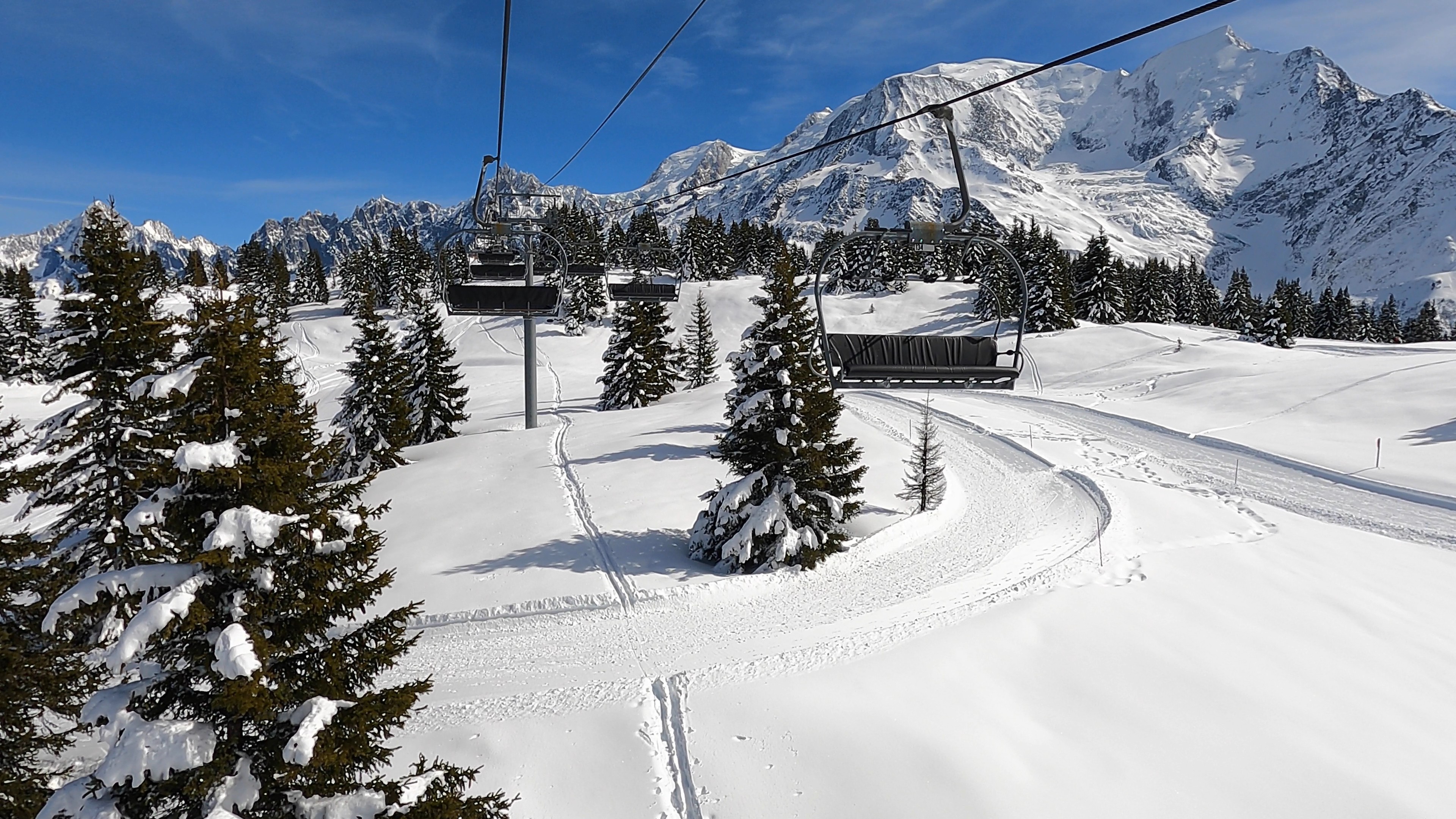
Quick Facts — Les Houches
| Category | Details |
|---|---|
| Elevation Top (feet/meters) | 6,560 ft (2,000 m) |
| Elevation Base (feet/meters) | 3,300 ft (1,000 m) |
| Skiable Area | 55 km of slopes |
| Number of Ski Runs | 29 |
| Terrain by Level | Beginner 20% · Intermediate 50% · Expert 30% |
| % of Trails Groomed | 70% |
| Distance from Chamonix Center (by bus) | 15–20 minutes |
| Chamonix Pass Coverage | Mont Blanc Unlimited Pass (€75/day approx.) |
Stats source – en.chamonix.com
Watch on YouTube
2. Le Tour — Scenic Runs for Intermediates
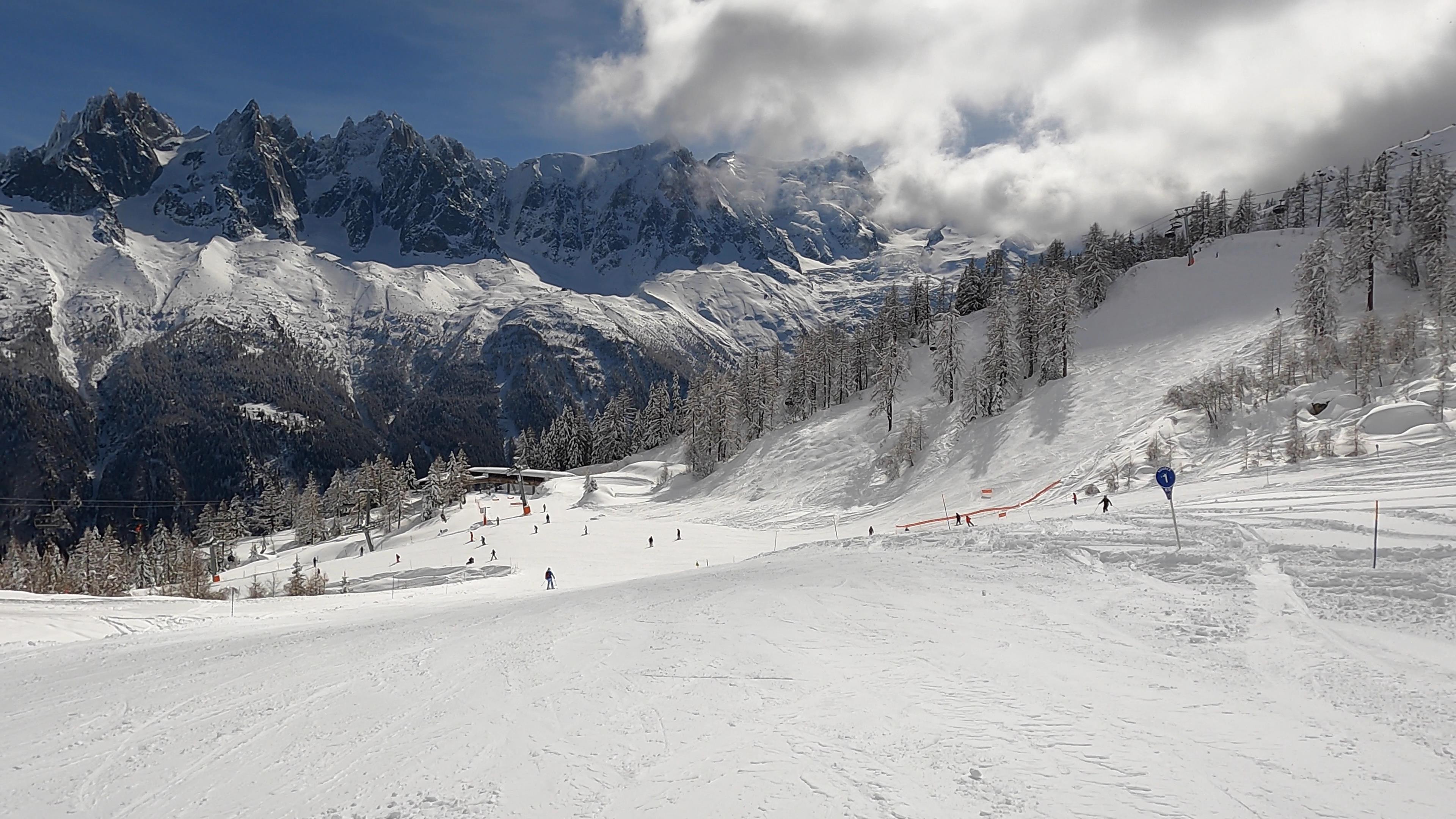
Located at the northern end of the valley, Le Tour offers wide, sunny slopes and great snow conditions through most of the season.
Ideal for: Le Tour is ideal for intermediate skiers, progressing beginners, and families who want wide blue and red runs, scenic terrain, and a less intimidating ski day than the higher alpine areas.
Highlights
- Fantastic choice of blue and red runs for intermediates.
- Reliable snow cover even in late season.
- A cozy mountain cafe perfect for a midday break
- Top to bottom runs can be closed in early March due to lack of snow
- Best Runs: Solonges (Red), Liaison Balme (Blue), Chatelet (Red)
- Snow quality - Heavy (wet) snow around noon - Slopes can be icy in early morning. Majority of slopes face south (sun) during the day.
Bonus: Dedicated beginner zone ensures new skiers can learn comfortably away from faster traffic.
Quick Facts — Le Tour
| Category | Details |
|---|---|
| Elevation Top (feet/meters) | 7,200 ft (2,200 m) |
| Elevation Base (feet/meters) | 4,000 ft (1,220 m) |
| Skiable Area | 70 km of slopes |
| Number of Runs | 19 |
| Terrain by Level | Beginner 25% · Intermediate 55% · Expert 20% |
| % of Trails Groomed | 80% |
| Distance from Chamonix Center (by bus) | 20–25 minutes |
| Chamonix Pass Coverage | Mont Blanc Unlimited Pass (€75/day approx.) |
Stats source: skiresort.info
Watch on YouTube
3. Le Brevent - Panoramic Skiing Above Chamonix
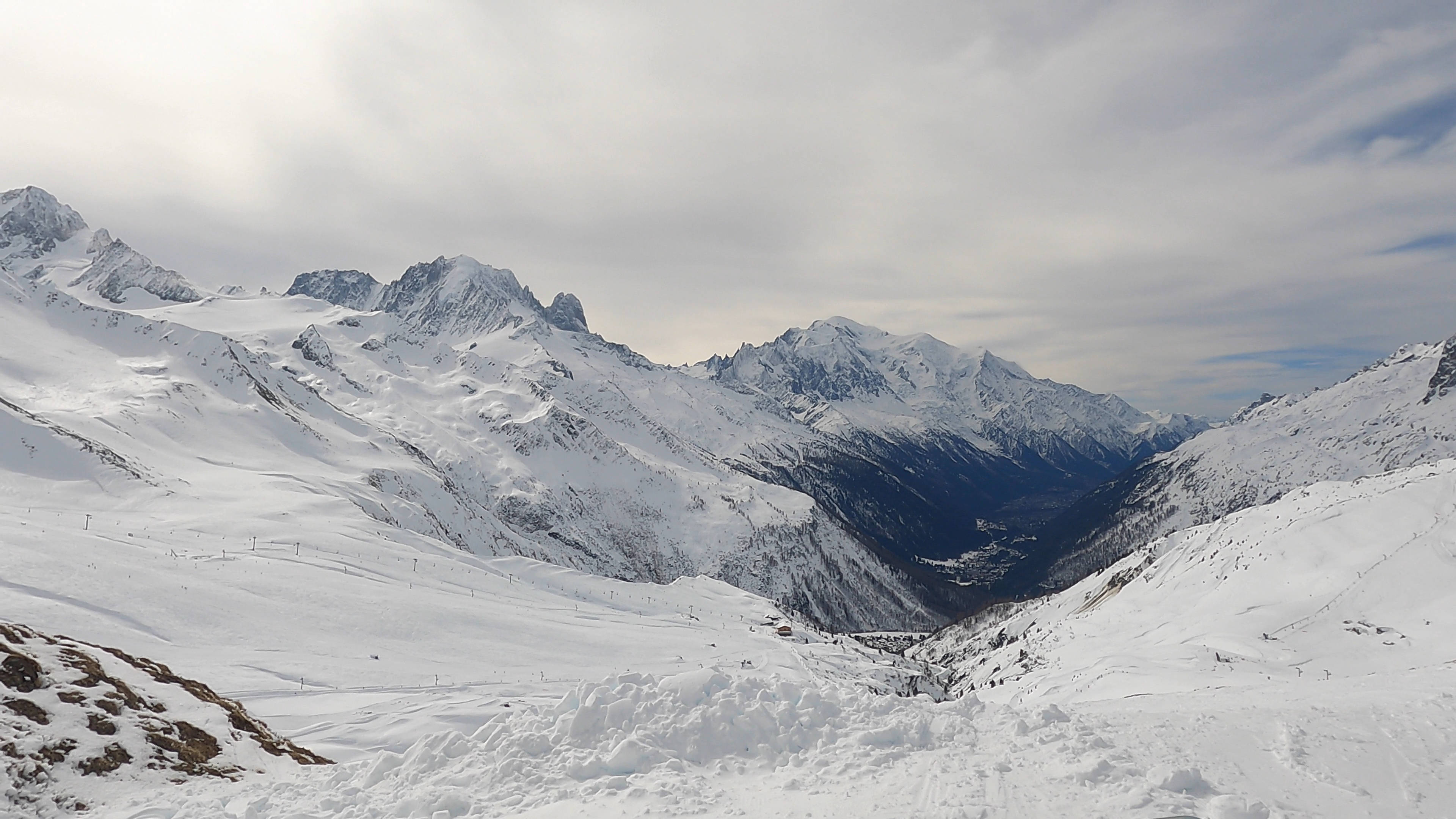
Brevent sits directly above downtown Chamonix, offering epic views of Mont Blanc and easy access via gondola.
Ideal for: Brévent is ideal for confident intermediate and advanced skiers who want dramatic Mont Blanc views, steeper piste options, and convenient access from central Chamonix.
Highlights
- Mind-blowing panoramic views on Mont Blanc massif .
- Steeper trails perfect for intermediate and expert skiers.
- Snow quality - Heavy (wet) snow around noon - Slopes can be icy in early morning. South facing ski area
- Top to bottom runs are typically closed during entire season with exception years with good snowfall / low temps
- Best Runs: Charles C. Bozon (Black - Experts), Blanchots (Blue), Vioz (Red)
- A summit cafe with one of the best lunch views in the Alps.
Tip: Combine Brevent and Flegere in a single day via connecting trails and lifts for a full mountain experience
Quick Facts Brevent
| Category | Details |
|---|---|
| Elevation Top (feet/meters) | 8,400 ft (2,525 m) |
| Elevation Base (feet/meters) | 3,900 ft (1,185 m) |
| Skiable Area | 56 km of slopes |
| Number of Runs | 16 |
| Terrain by Level | Beginner 10% · Intermediate 60% · Expert 30% |
| % of Trails Groomed | 75% |
| Distance from Chamonix Center (by bus) | 5 minutes by bus or gondola |
| Chamonix Pass Coverage | Mont Blanc Unlimited Pass (€75/day approx.) |
Stats source: skiresort.info
Watch on YouTube
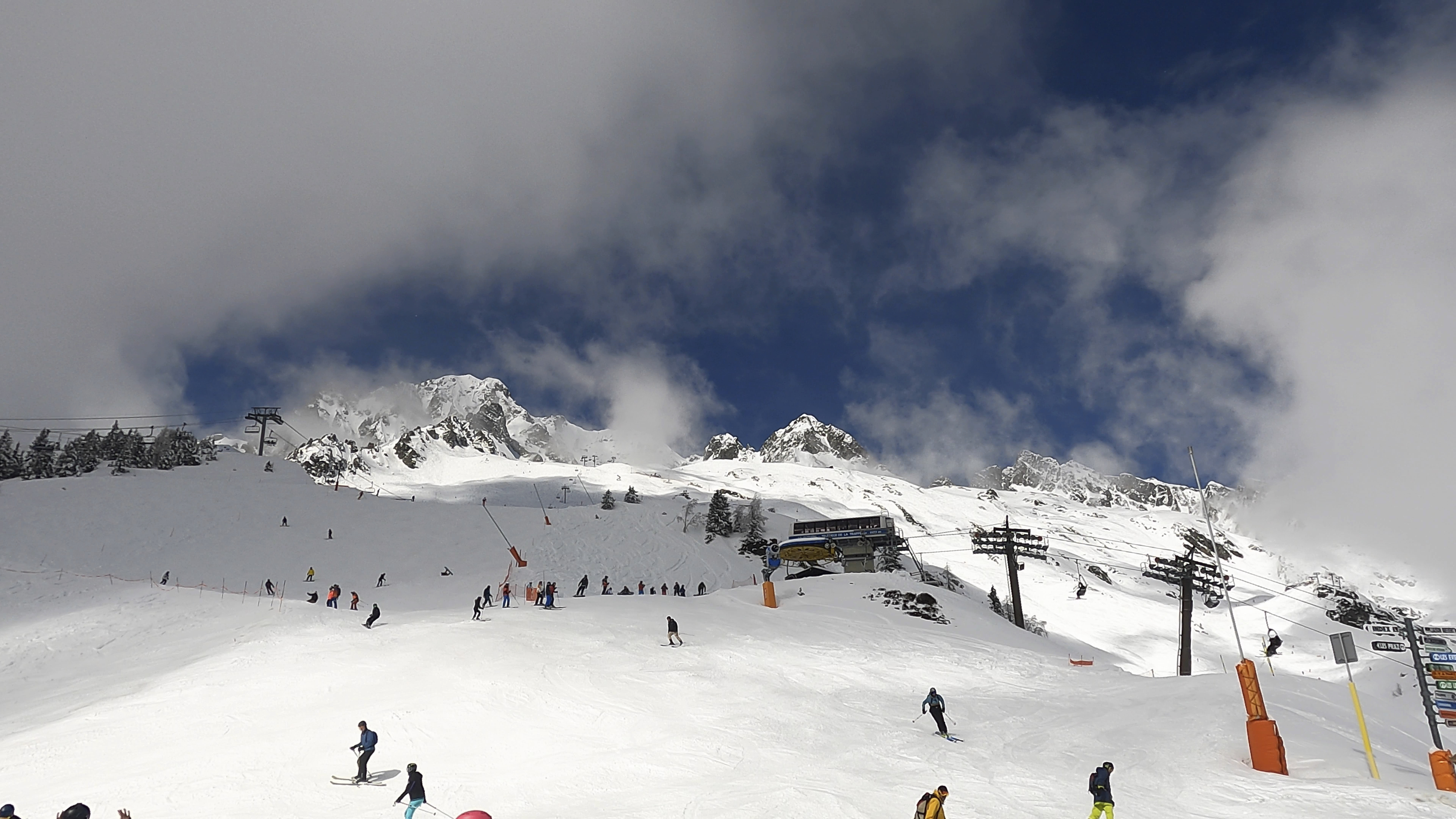
4. La Flegere - A Sunny Slopes and Steep Challenges
Neighboring Brevent , Flegere features high-altitude terrain and varied pistes from groomed blue runs to mogul-filled black trails.
Ideal for: Flégère is ideal for intermediate and advanced skiers who want sunny high-altitude terrain, strong views, varied red runs, and the option to combine skiing with Brévent.
Highlights
- Ideal for off piste skiing and/or skiing to/from Brevent
- Known for stunning views and challenging red trails
- Easily accessed from the village of Les Praz by gondola or bus
- Snow quality - Heavy (wet) snow around noon - Slopes can be icy in early morning. South facing ski area.
- Best Runs: Chrochues (Red), Floria (Black), Chavanne (Blue)
- Top to bottom runs are typically closed during entire season with exception years with good snowfall / low temps.
Tip: Combine Brevent and Flegere in a single day via connecting trails and lifts for a full mountain experience
Quick Facts Flegere
| Category | Details |
|---|---|
| Elevation Top (feet/meters) | 8,200 ft (2,500 m) |
| Elevation Base (feet/meters) | 3,900 ft (1,185 m) |
| Skiable Area | 65 km of slopes |
| Number of Runs | 17 |
| Terrain by Level | Beginner 15% · Intermediate 55% · Expert 30% |
| % of Trails Groomed | 75% |
| Distance from Chamonix Center (by bus) | 10 minutes |
| Chamonix Pass Coverage | Mont Blanc Unlimited Pass (€75/day approx.) |
Stats source: skiresort.info
Watch on YouTube
5. Grands Montets -The Powder Paradise
If you are looking for the best snow and most vertical drop in Chamonix, Grands Montets is your destination.
Ideal for: Grands Montets is ideal for advanced and expert skiers who prioritize snow quality, steeper terrain, vertical drop, and the most serious high-mountain skiing in the Chamonix Valley.
Highlights
- Altitude: 1,200 m - 3,200 m
- North-facing slopes preserve powder longer.
- Ideal for advanced and expert skiers.
- Offers glacier access and legendary off-piste routes
- Snow quality - Best in the Valley - Light/Dry Powder
- Best Runs: Blanchots (Black - Experts), Bochard (Red), Marmottons (Blue), Pierre A Ric (Red) the only top to botton in the valley!
- Top to bottom runs are typically closed during entire season with exception years with good snowfall / low temps.
Tip: Very top of the mountain provides the best free ride experience with mind blowing views!
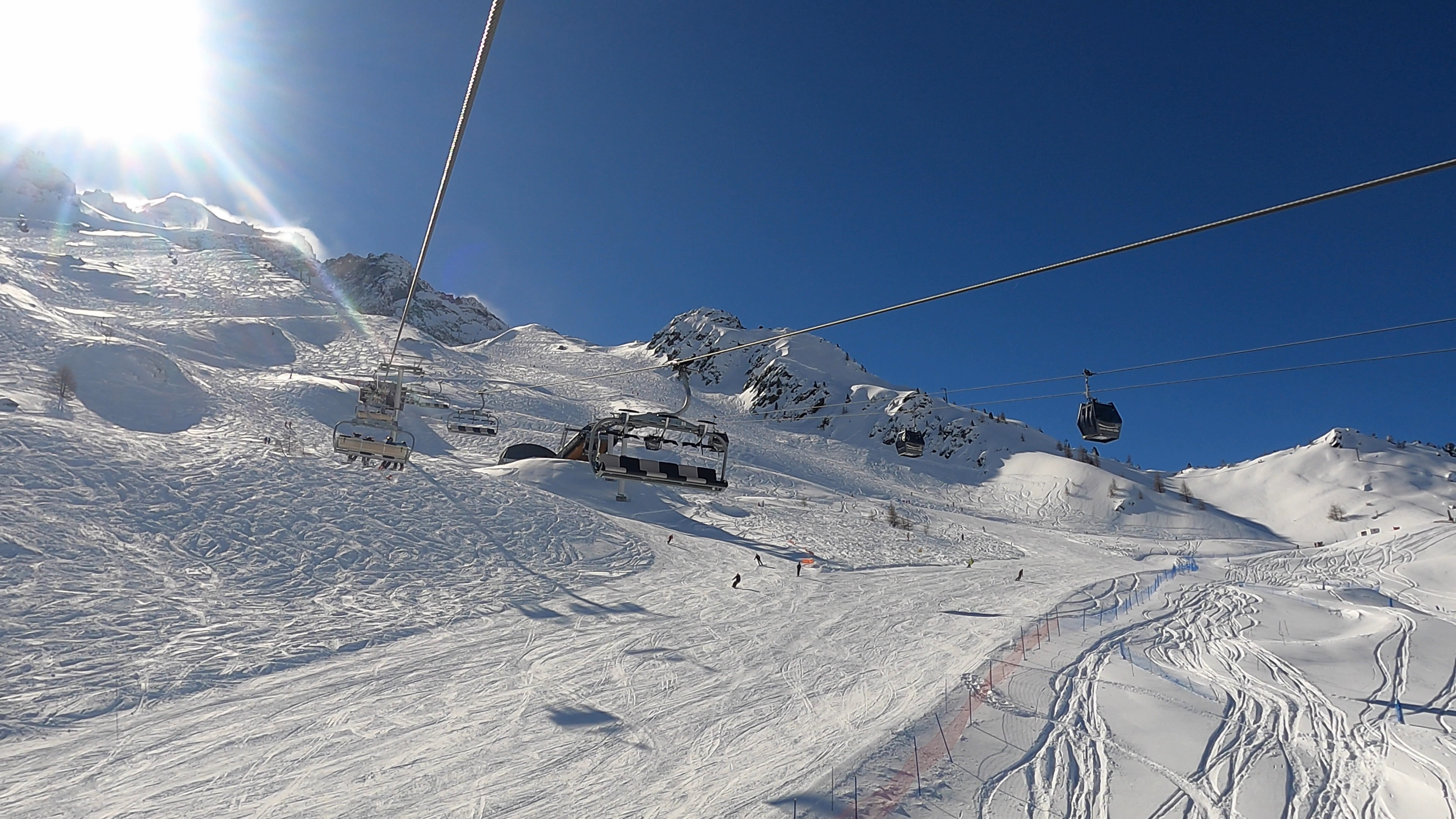
Note: Some upper lifts remain under reconstruction after a 2018 fire check the Chamonix app for updates before you go.
Even with limited upper access, Grands Montets remains a highlight for powder lovers and steep-terrain fans thanks to its long top-to-bottom runs like Pierre a Ric.
| Category | Details |
|---|---|
| Elevation Top (feet/meters) | 10,500 ft (3,275 m) |
| Elevation Base (feet/meters) | 4,000 ft (1,235 m) |
| Skiable Area | 90 km of slopes |
| Ski Runs | See the official Grands Montets resort information for current terrain and access details. |
| Terrain by Level | Beginner 5% Intermediate 45% Expert 50% |
| % of Trails Groomed | 60% |
| Distance from Chamonix Center (by bus) | 15 minutes by bus |
| Chamonix Pass Coverage | Mont Blanc Unlimited Pass (€75/day approx.) |
skiresort.info Watch on YouTube
6. Bonus Trip: Courmayeur, Italy
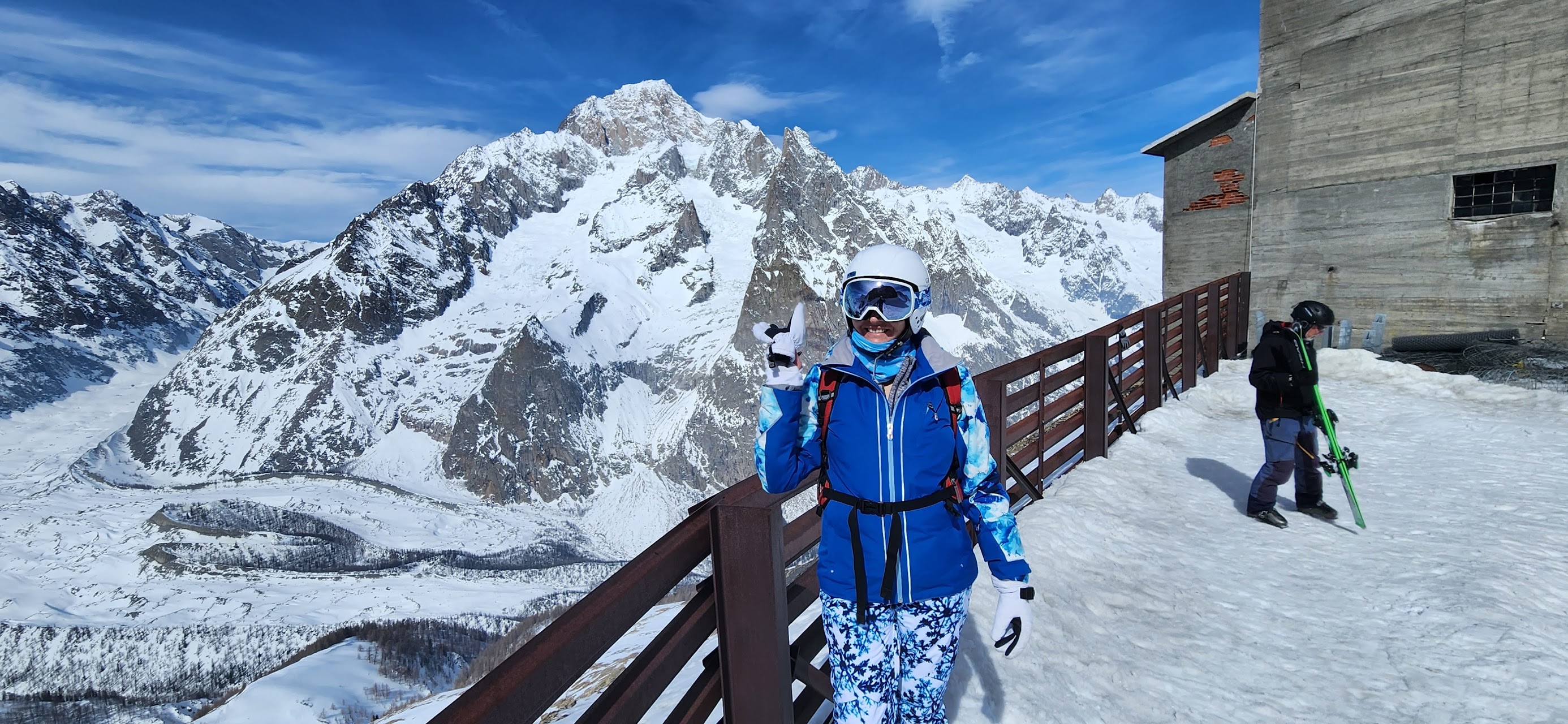
Just through the Mont Blanc Tunnel, you'll find Courmayeur — a charming Italian resort easily reachable by bus from Chamonix. Its not just the best Italian food in the area, but also best groomed trails that many skiers appreciate!
Ideal for: Courmayeur is ideal for skiers who want a scenic Italian day trip from Chamonix, better groomed piste conditions, excellent mountain restaurants, and a different resort atmosphere across the Mont Blanc Tunnel.
Highlights
- Best groomed trails near Chamonix - Expect beautifully groomed blue and red trails
- Cozy mountain restaurants, and some of the best food in the Alps.
- Don't miss your lunch at the restaurant called Zerotta. This place is conveniently located at the bottom on the northern side of Courmayeur and can be accessed from variety of ski trails that lead to the Zerrota lift station. Zerotta restaurant offered big selection of classic Italian foods and we really enjoyed minestrone soup, carpaccio, and warm, handmade, Italian bread
- Best Runs: Youla (Red), Internazionale (Red), Diagonale Peindent (Blue)
- Snow quality: North facing slopes offer powder alike snow. Slopes can be icy in early morning and turn into heavy snow after noon
- Top to bottom run (Dolonnee) is usually open during entire season but snow turns into slush after 12 pm.
Quick Facts — Courmayeur (Italy)
| Category | Details |
|---|---|
| Elevation Top (feet/meters) | 9,035 ft (2,755 m) |
| Elevation Base (feet/meters) | 4,016 ft (1,224 m) |
| Skiable Area | ~42 km of slopes |
| Number of Runs | 33 (11 blue / 17 red / 5 black) |
| Terrain by Level | Beginner ~27% Intermediate ~59% Expert ~14% |
| % of Trails Groomed | ~82% with artificial snow coverage |
| Distance from Chamonix Center (by bus) | ~45 minutes via Mont Blanc Tunnel |
| Pass | Included with Mont Blanc Unlimited passes of 2 days or longer, subject to the operator's current conditions. Check the requirements for your pass before traveling. |
Getting Around Chamonix
Public transportation is your best friend here. Buses and trains efficiently connect all major resorts — often faster and cheaper than driving.
Parking can be limited, especially during weekends and holidays.
Pro tip: Use Public Transport for access to all five Chamonix ski areas (and Courmayeur!).
Beyond Skiing
Chamonix isn't only about skiing — it's an alpine adventure hub:
- Ice climbing & mountaineering
- Paragliding above Mont Blanc
- Snowshoeing through forest trails
Plan Your Chamonix Ski Trip
| Category | Recommendation |
|---|---|
| Best for beginners | Les Houches (Le Zoosh) & Le Tour (note Le Tour offers dedicated beginners area!) |
| Best snow quality | Grands Montets |
| Best panoramic views | Brévent & Flégère |
| Best for intermediates | Le Tour |
| Best day trip | Courmayeur, Italy |
All 5 Chamonix Ski Resorts at a Glance
A quick comparison of the five main ski resorts in the Chamonix Valley - including their vertical drop, skiable area, and terrain distribution by difficulty level.
| Ski Resort | Altitude (Base/Top) | Vertical Drop | Skiable Area | Terrain by Level |
|---|---|---|---|---|
| Le Tour / Domaine de Balme | 4,000 ft / 7,200 ft | 2,460 ft (750 m) | 70 km | Beg. 25% · Interm. 55% · Expert 20% |
| Les Houches (Le Zoosh) | 3,300 ft / 6,560 ft | 3,280 ft (1,000 m) | 55 km | Beg. 20% · Interm. 50% · Expert 30% |
| Flégère | 3,900 ft / 8,200 ft | 4,265 ft (1,300 m) | 65 km | Beg. 15% · Interm. 55% · Expert 30% |
| Brévent | 3,900 ft / 8,400 ft | 4,500 ft (1,340 m) | 56 km | Beg. 10% · Interm. 60% · Expert 30% |
| Grands Montets | 4,000 ft / 10,500 ft | 6,500 ft (1,980 m) | 90 km | Beg. 5% · Interm. 45% · Expert 50% |
Sources: Compagnie du Mont-Blanc, Chamonix.com, Skiresort.info, and ChamonixAllYear.com.
Note: Terrain percentages are approximate, derived from published run distributions.
Final Thoughts
From beginner-friendly slopes to expert off-piste challenges, Chamonix offers something for everyone - with views and memories that last a lifetime.
If you are a beginner, start with ski resorts that offer dedicated beginners areas.
Intermediate skiers will get biggest bang for their buck by visiting all 5 ski resorts as they all offer same ski pass and are located in close proximity.
Grands Montets is a top destination for experts, but if Charles Bozon trail is open, Brevent can offer unforgetable skiing experience from its top.
If you haven't yet, make sure to watch our full YouTube video for real-footage insights, ski trail previews, and travel tips from our visit.

About the Author
Andy Newman is the founder of Next Outdoor Adventures and has more than 10 years of firsthand skiing experience at major resorts across North America and Europe, including Jackson Hole, Sun Valley, Vail, Chamonix, and Dolomiti Superski.
Andy began skiing in his 40s and progressed from a complete beginner to skiing advanced and double-black-diamond terrain by his late 40s. That progression gives him a practical understanding of the challenges skiers face when comparing resorts, choosing appropriate terrain, and planning trips for different ability levels.
His ski guides are based on actual resort visits and personal skiing experience—not generic destination descriptions or theoretical trail-map analysis.
Support the Channel
If this guide helped you plan your trip, please subscribe to our YouTube channel, share the article, and tag us on Instagram with your Chamonix photos!