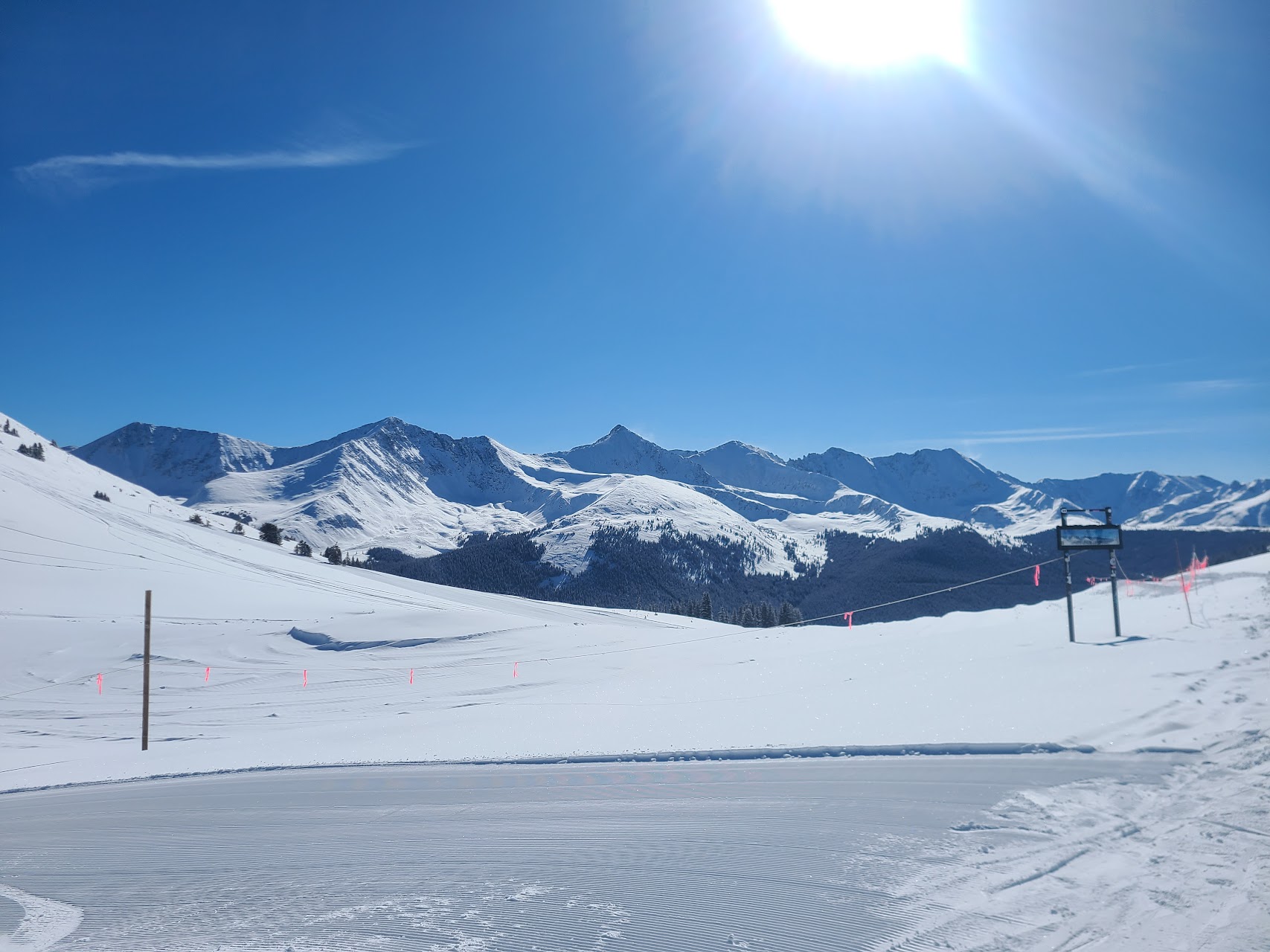
Why Copper Mountain works for all abilities
| Mountain Summary | What to Know |
|---|---|
| Skiable terrain | More than 2,500 skiable acres. |
| Marked trails | Roughly 150 marked trails. |
| Terrain distribution | Approximately 21% beginner, 25% intermediate, 36% advanced, and 18% expert / double-black terrain. |
| Elevation | Base elevation above 9,700 feet and summit elevation above 12,300 feet. |
| Best-known layout advantage | Naturally divided terrain: easier runs generally sit to the west, intermediate terrain is concentrated in the center, and advanced / expert terrain increases toward the east and backside. |
Copper Mountain’s popularity among skiers of all abilities is the result of several factors working together. Its naturally divided terrain layout is the most visible advantage, but it is only part of the story.
Many ski resorts mix beginner, intermediate, and advanced traffic across the same base areas. That can create stress for new skiers and frustration for stronger skiers trying to move efficiently. Copper Mountain is different. Easier terrain is concentrated to the west, difficulty increases smoothly as you move east, and the most challenging expert terrain sits farthest out, including the backside and Tucker Mountain.
This depth ensures that beginners are not confined to a handful of runs, intermediates have extensive cruising options, and advanced skiers can spend entire days exploring steeper, more technical terrain without repetition.
Copper also benefits from modern lift infrastructure. High-speed lifts, chondolas, and express quads are positioned to move skiers efficiently across the mountain, allowing visitors to spend more time skiing and less time standing in lift lines. Clear lift placement also complements the terrain layout, making transitions between zones straightforward.
At elevation, Copper Mountain delivers both snow quality and scenery. The altitude helps preserve snow and offers expansive panoramic views from many lift-served peaks, especially on clear days.
In practice, this means first-timers spend less mental energy studying the map and more time skiing. Mixed-ability groups can also self-separate during the day and still meet up easily for lunch or mid-mountain regroup points.
First-timers: what to know before you arrive
Copper Mountain is located in Summit County, Colorado, roughly 75 miles west of Denver along I‑70. Drive time can be reasonable in light traffic, but it can also expand substantially when conditions are busy. Copper Mountain is also on the Ikon Pass, which is important for first-timers comparing Colorado resorts and deciding whether a multi-resort pass makes sense for the season. Before your trip, check road conditions, parking status, pass access, and traffic so your arrival is not rushed.
Denver International Airport to Copper Mountain Base Village
This map shows the driving route from Denver International Airport to Copper Mountain Base Village. Winter traffic, weather, and I‑70 congestion can materially change the trip time.
Villages and base areas
Lodging, dining, entertainment, shopping, rentals, and base services are divided into three villages: West Village, Center Village, and East Village. West Village is the most practical base for beginners and families, Center Village has the strongest concentration of restaurants, shops, après-ski energy, and walkable base-area activity, and East Village is useful for stronger skiers accessing more advanced terrain. Understanding which village matches your skiing level and off-slope plans is one of the easiest ways to reduce unnecessary walking and prevent accidental “wrong base” starts.
Use the trail map
We strongly recommend using the official trail map (online and at ticketing offices). Copper’s layout is intuitive, but the map helps you connect lifts efficiently—especially when you want to move between zones.
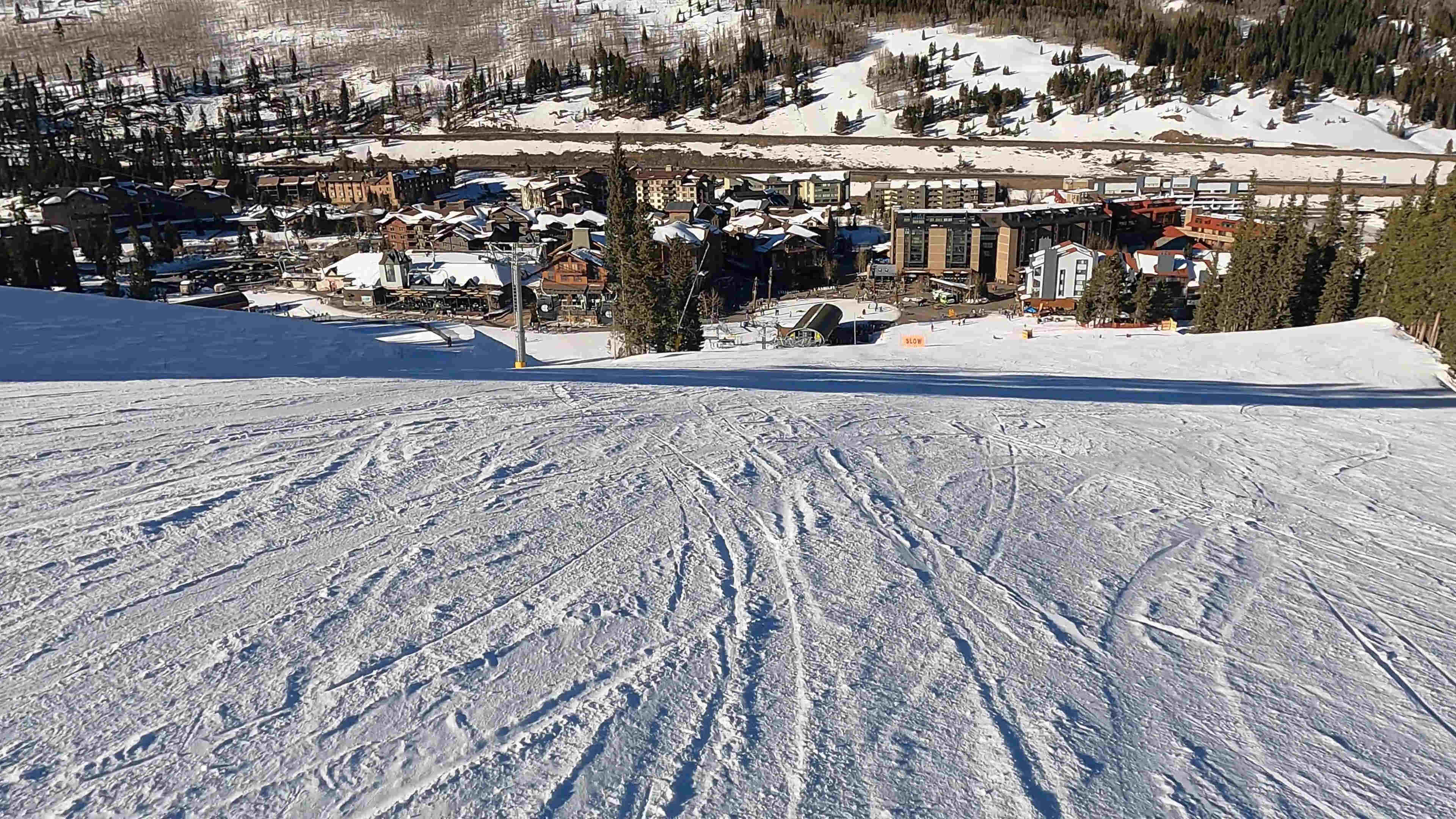
Copper Mountain village base area photo by Andy Newman - Next Outdoor Adventures
The terrain layout: West, Center, East (and the backside)
Copper Mountain’s defining feature is how the terrain naturally separates. Beginner terrain is primarily on the west side. Intermediate terrain dominates the central zones. Advanced and expert terrain concentrates toward the east, with the most difficult runs extending to the far east and the backside. Tucker Mountain is expert-only and consists of double-black terrain.
| Zone | Best for | What it feels like in practice |
|---|---|---|
| West Village | Beginners / first-timers | Calmer learning environment; fewer fast skiers crossing through; easier navigation. |
| Center Village | Intermediates | Most “all-day cruising” options; smooth progression; convenient meeting points. |
| East Village | Advanced / experts | Steeper options and more technical lines; gateway to the most challenging terrain. |
| Backside / Tucker Mountain | Expert-only | Double-black terrain with higher consequences; not a “dabble” zone—commit if you belong there. |
Where to ski by level
Beginner skiing (West Village)
For beginners, Copper’s west-side isolation is a major advantage. New skiers can practice without constantly worrying about being in the path of faster traffic. It also reduces the need to over-study the map because the terrain is naturally separated from harder runs.
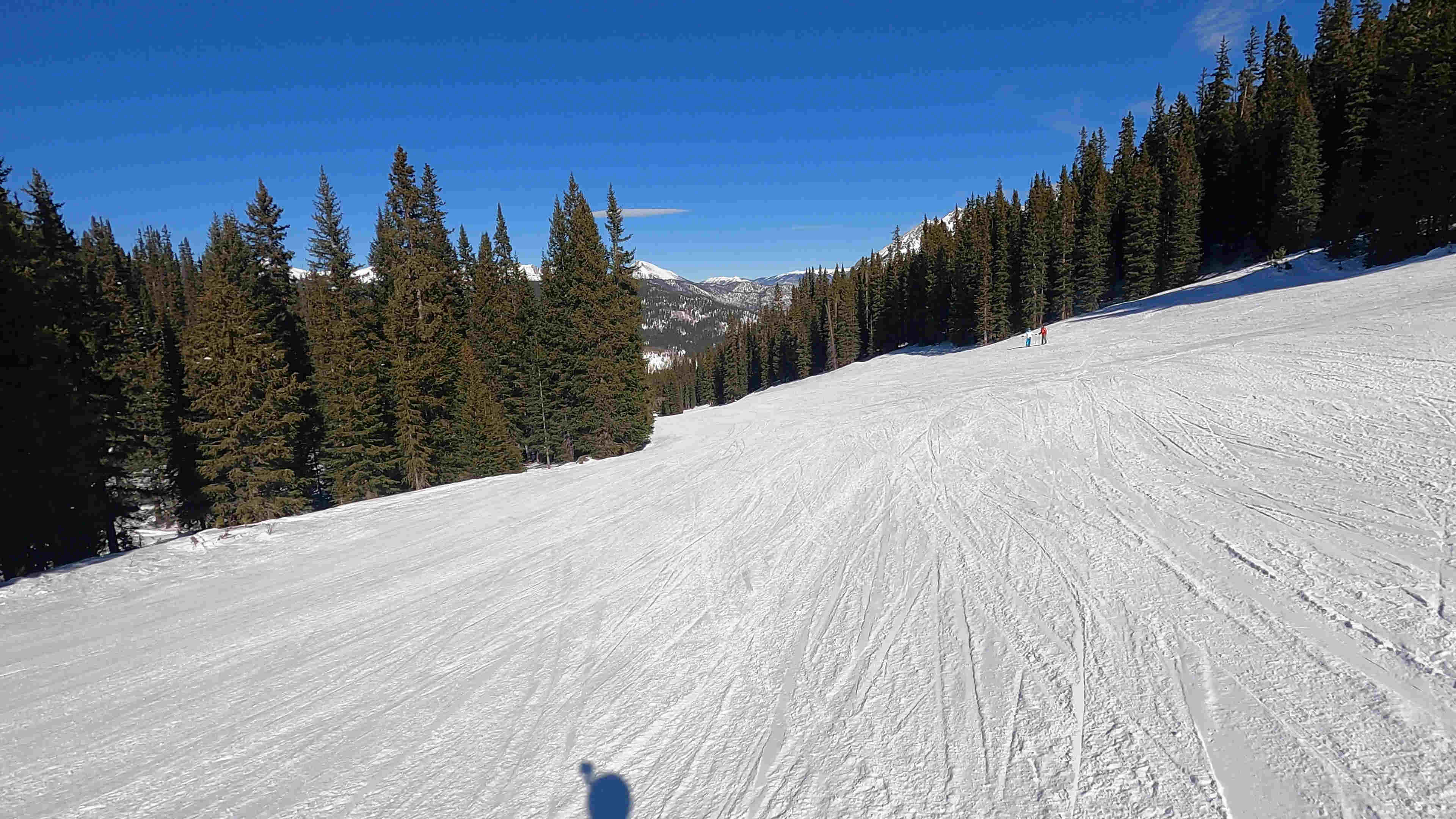
Copper Mountain Soliloquy green ski run - By Andy Newman - NextOutdoorAdventures
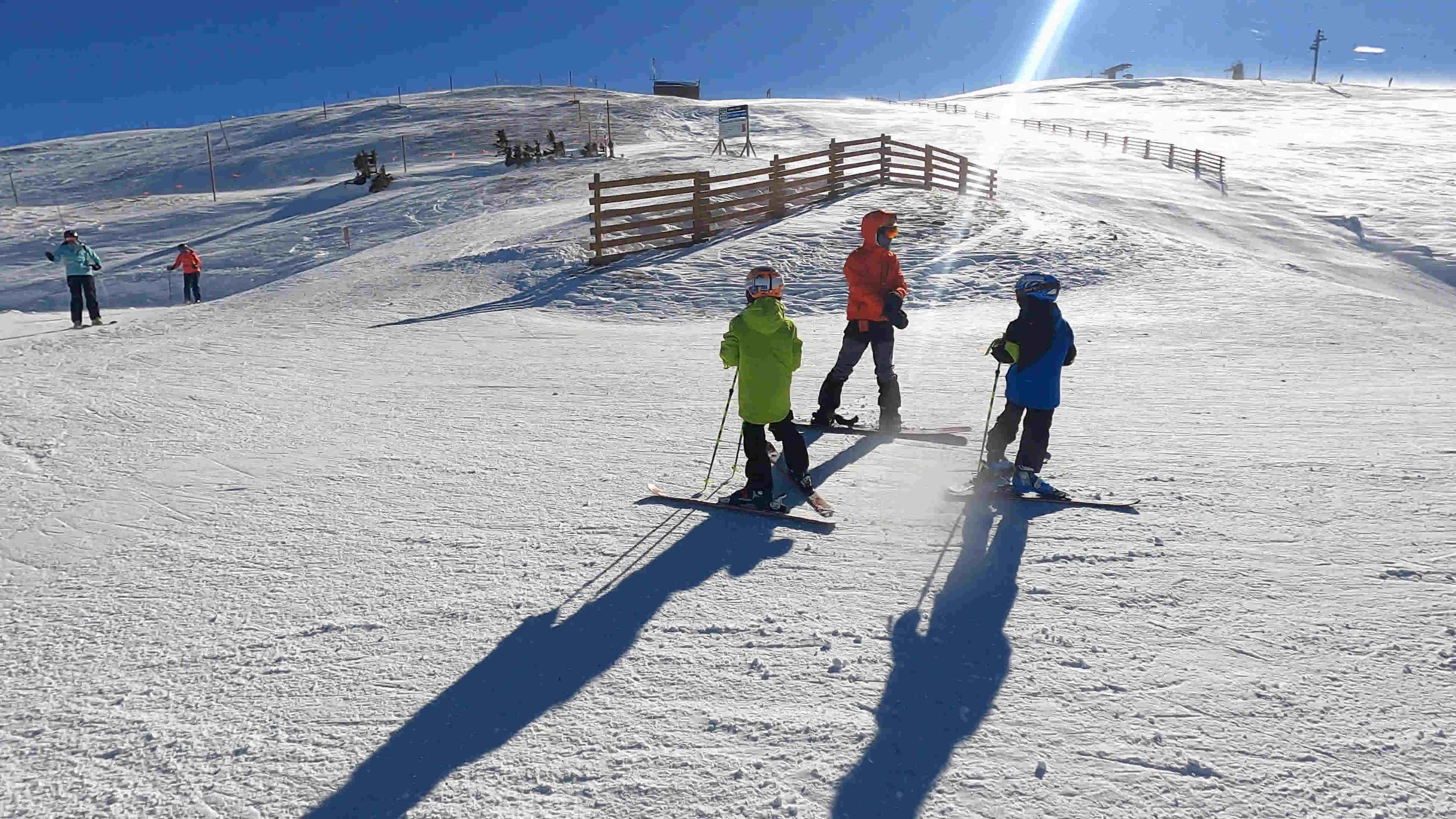
Kids getting ready to ski at Copper Mountain - photo by Andy Newman - NextOutdoorAdventures
Intermediate skiing (Center Village and central zones)
The intermediate experience at Copper tends to feel organized and progressive. As you move east from the beginner zones, runs become more challenging in a smooth way. This makes it easier to pick “one step up” terrain without accidentally landing in a zone that is above your comfort level.
Advanced skiing (East Village)
Stronger skiers find more challenging runs toward the far east. This is where Copper starts to feel more “big mountain” in character, with steeper pitches and more demanding terrain choices.
Expert terrain (Tucker Mountain and the backside)
Tucker Mountain is expert-only and consists of double-black terrain. Treat this zone as a deliberate decision—conditions and consequences matter, and it is not an appropriate place to “test yourself” casually.
Our Top 5 Picks of Ski Trails at Copper Mountain
Copper Mountain has enough terrain for every ability level, but these five trails are especially useful for first-time visitors because they show the resort's natural progression from wide groomed green terrain to steep expert terrain.
| Ski Run | Description / Ideal For | How to Access from the Base |
|---|---|---|
| Coppertone | Green trail that is typically groomed. Ideal for beginners because it is wide, gives skiers plenty of room, has trees that help protect from wind, and offers excellent surrounding views. It can also work well for any skier who enjoys relaxed cruising. | Take the American Flyer lift from the base area. |
| Andy's Encore | Blue trail that is typically groomed. Ideal for intermediate and advanced skiers who like cruising on steeper slopes. It is one of Copper's longest intermediate trails and feels like a signature run for the resort. The trail is surrounded by trees and mountain views, and skiers can also branch toward tree skiing by taking the adjacent Oh No trail. | The most direct base access is from East Village via the Super Bee lift. It can also be reached from several adjacent areas and lifts depending on where you start. |
| Timber Ridge | Short blue trail that is typically groomed. Ideal for intermediate skiers who want a scenic lap near Union Peak with excellent high-mountain views. | There is no single direct base lift access. A practical route is to take American Flyer, ski down toward the Sierra lift, and then use Sierra to reach the Timber Ridge area. The exact route can vary depending on your starting location. |
| Rattler | Black trail that may be groomed or ungroomed. Ideal for advanced skiers who want a relatively short but steep introduction to Copper's more serious terrain, with one of the best views toward the back bowls. Check the Copper Mountain app before skiing it to confirm grooming and conditions. | Access Rattler by taking the Rendezvous chair, or use a combination of other trails and lifts to reach Rendezvous from your starting area. |
| Triple Zero | Very steep double-black-diamond trail suitable for advanced skiers. It offers dramatic views into Resolution Bowl and has one of the biggest vertical drops in the first 400 feet of the trail. It can be groomed or ungroomed, so check the Copper Mountain trail map or app before skiing it. | Triple Zero can be reached from multiple lift combinations, but the shortest base-area approach is to start from East Village and take the Super Bee lift. |
Watch: Top 5 Copper Mountain Ski Trails
Copper Bowl & Spaulding Bowl: scenic laps for confident skiers
If you are an intermediate skier (especially upper-intermediate) or an expert, the bowl areas can be a highlight. Copper Bowl offers scenic views of surrounding mountains and trees. This is also a strong area for “big landscape” photos—summit panoramas and ridge-line perspectives.
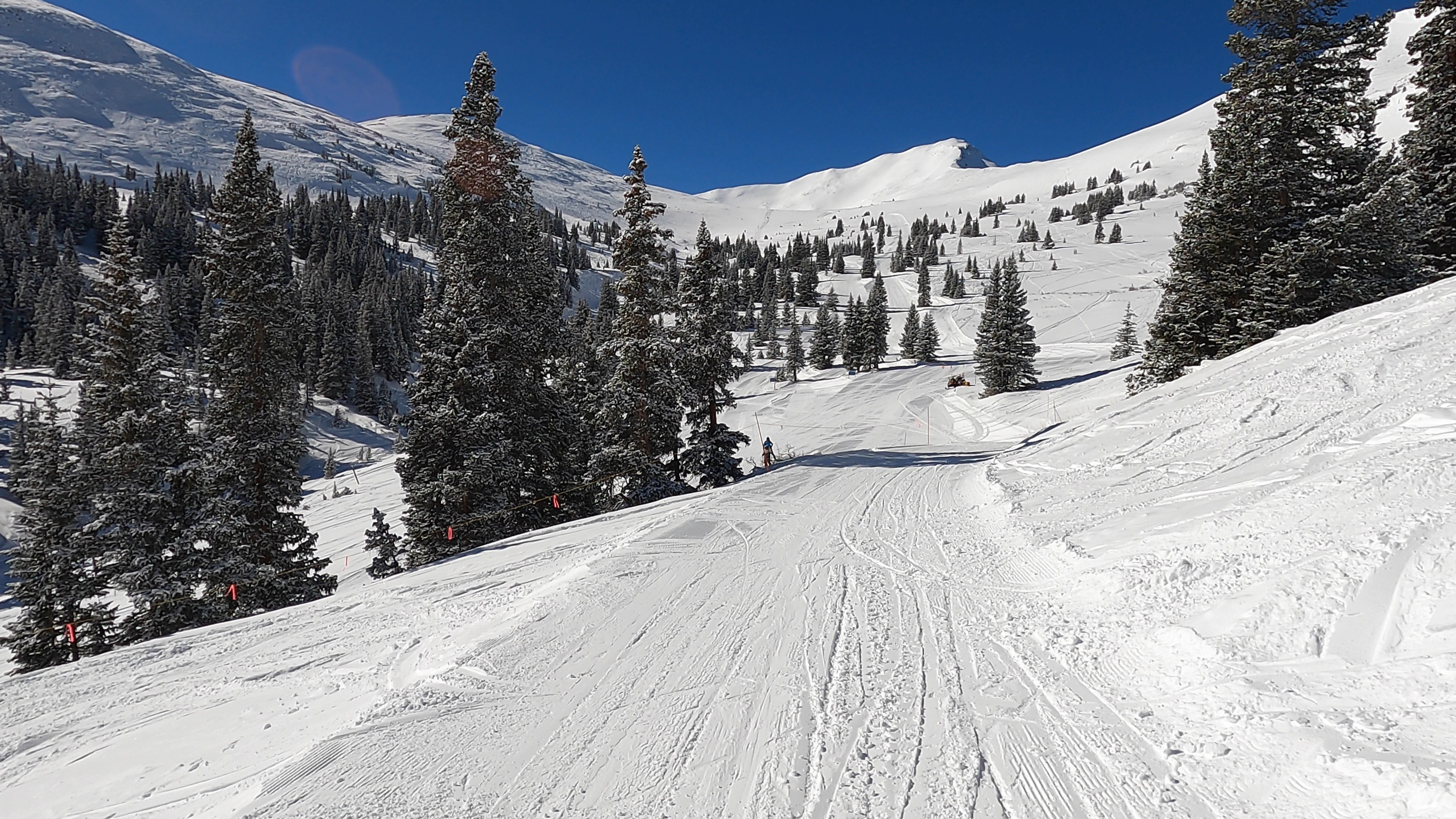
Copper Mountain Copper Bowl panoramic view - a photo shot from Otto Bahn ski trail by Andy Newman - Next Outdoor Adventures
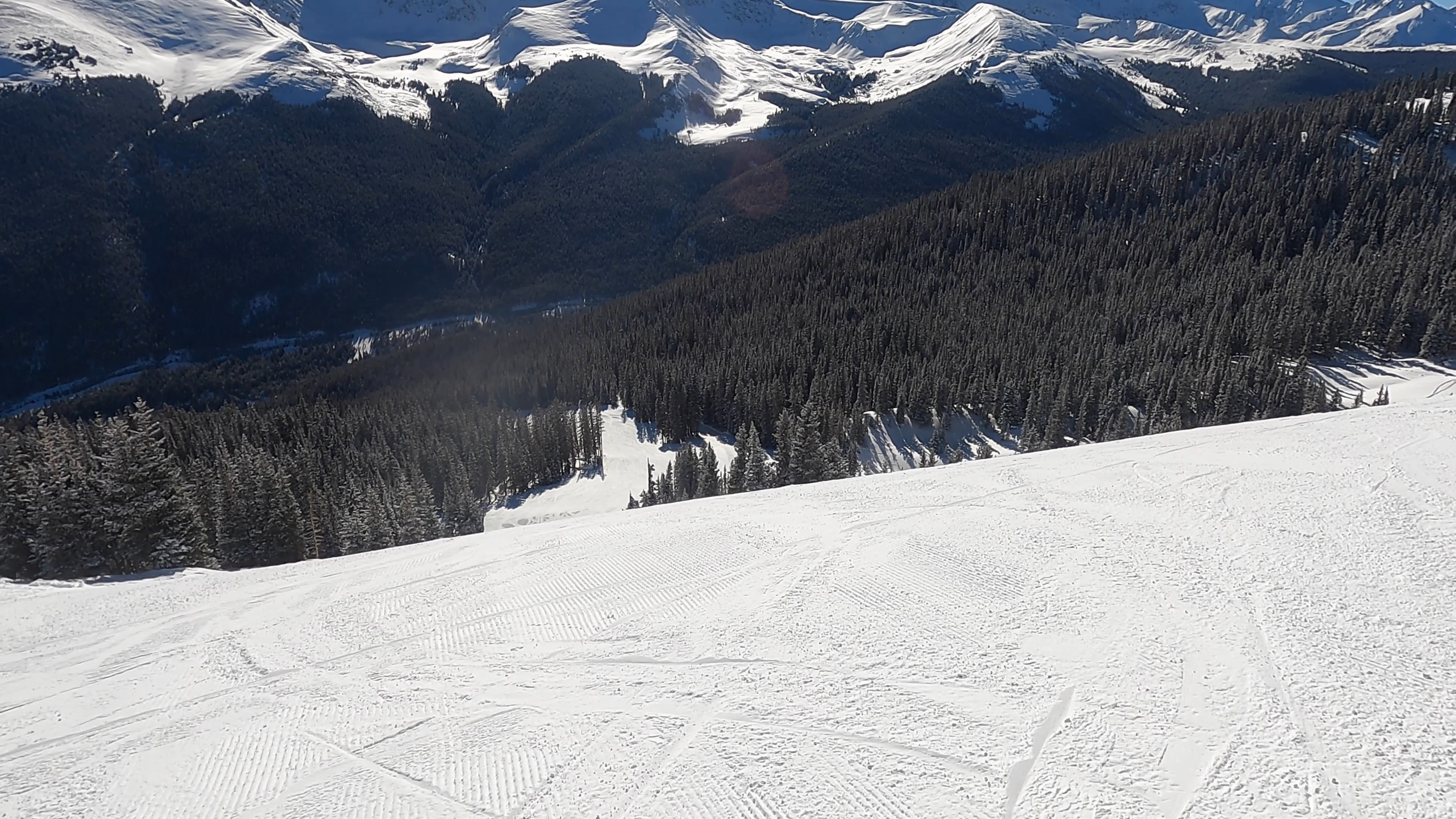
Copper Mountain Spaulding Bowl area photo - a photo shot from the Triple Zero trailhead by Andy Newman - Next Outdoor Adventures
Weather, traffic, and day-planning tips
Mountain weather changes quickly. Temperatures can vary widely, and wind or snow can shift the feel of the resort from one hour to the next. Check the forecast before you go and plan layers accordingly, especially if you expect cold chairlift rides and long top-to-bottom runs.
Copper Mountain is one of the most popular ski resorts in Colorado, and it can get busy very early in the morning. Weekend powder days, holidays, and peak-season Saturdays can feel extremely crowded before the lifts even start turning, especially when parking demand builds quickly.
The ideal strategy is to visit outside peak weekend hours when possible. If you are planning a weekend ski trip, arriving on Friday and staying in the village can make the experience much easier because finding a parking spot on busy weekend mornings can be very challenging.
- Traffic: I‑70 can be unpredictable—build schedule buffer on weekends, holidays, and after storms.
- Parking: Arrive very early on busy days or reduce parking stress by staying in the village.
- Start simple: On day one, ski the zone that matches your level before trying to “tour the whole mountain.”
- Mixed groups: Set clear meeting points (base village or a mid-mountain landmark) and agree on regroup times.
Tradeoffs and who Copper is best for
Copper Mountain is an excellent fit for mixed-ability groups, families, and skiers who value a logical mountain layout and groomed options. Like any resort, it has tradeoffs: villages are spread out, and expert zones should be treated with respect—especially when conditions are firm or visibility is flat.

About the Author
Andy Newman is the founder of Next Outdoor Adventures and has more than 10 years of firsthand skiing experience at major resorts across North America and Europe, including Jackson Hole, Sun Valley, Vail, Chamonix, and Dolomiti Superski.
Andy began skiing in his 40s and progressed from a complete beginner to skiing advanced and double-black-diamond terrain by his late 40s. That progression gives him a practical understanding of the challenges skiers face when comparing resorts, choosing appropriate terrain, and planning trips for different ability levels.
His ski guides are based on actual resort visits and personal skiing experience—not generic destination descriptions or theoretical trail-map analysis.
Related Articles
Additional editorial guides to help you plan your ski trip and understand terrain difficulty: