
Whitetail Is the Best Quick Advanced-Skiing Day Trip from Washington DC
Not every ski resort near Washington DC serves the same type of skier.
If you are a beginner, a casual skier, a family planning lessons, or someone who mostly wants a ski day centered around the lodge with a few easy runs, Liberty, Roundtop and Whitetail can all serve a purpose.
If you are an experienced skier in the DC metro area and you want vertical drop, steeper pitches and efficient runs without turning the ski day into a weekend trip, the choice becomes much clearer.
Whitetail is the best advanced-skier day trip within a practical same-day drive from Washington DC.
For this specific use case, I would not start with Vermont, Snowshoe, Timberline, Canaan Valley, or Seven Springs.
Those are different types of trips. Once you are driving several hours, booking lodging, packing for the weekend, or planning around a full resort getaway, you are no longer comparing the same category of ski day.
Whitetail is different because it solves a specific DC-area skier problem:
How do you leave the DC area early, ski meaningful vertical, repeat steeper runs, and return home the same day?
That is Whitetail's clearest advantage.
This guide is based on repeated DC-area ski days, not trail-map analysis alone. I have skied the Epic Pass resorts near Washington DC multiple times in different conditions — early-season hardpack, crowded weekend mornings, night skiing, better groomer days, and scraped Mid-Atlantic afternoons. That matters because the main question for DC-area skiers is not which resort looks better on paper. The main question is which mountain still delivers when you only have one day, a short weather window, and limited patience for traffic.
Quick Verdict
| Category | Whitetail Advantage |
|---|---|
| Best use case | Advanced-skier day trip from Washington DC |
| Location logic | Close enough for a same-day ski trip; Whitetail describes itself as about 90 minutes from the beltways |
| Vertical | 935 feet |
| Terrain layout | Beginner terrain to the left, expert terrain to the right |
| Snowmaking | Fully covered across the mountain |
| Night skiing | Available across the mountain |
| Best skier type | Intermediate-to-advanced and advanced DC-area skiers |
| Biggest weakness | Mid-Atlantic firm conditions, weekend crowds and limited destination-resort feel |
Official mountain stats: Whitetail lists a summit elevation of 1,800 feet, a base elevation of 865 feet, 120 skiable acres, 9 lifts, 23 trails, 100% snowmaking coverage and 100% lighted terrain. Whitetail's vertical drop is 935 feet. The same official mountain-info page describes the layout as beginner terrain to the left and expert terrain to the right. See Whitetail's official mountain information.
Whitetail is not trying to be Aspen, Stowe or Killington.
It does not need to be.
Its value is simpler: it gives DC-area skiers the strongest combination of advanced terrain, vertical drop and drive-time efficiency close to home.
Whitetail First Timers Guide
Watch the footage before visiting & skiing so you understand the layout, terrain, views and trail conditions.
How Epic Pass Access Makes Whitetail More Useful
Epic Pass access makes Whitetail more useful for DC-area skiers who want to ski several times during the season instead of buying a separate day ticket for every visit.
For skiers near Washington DC, Whitetail can serve as a practical place to train during the season. It gives you a place to work on edge control, speed management, carving, and confidence on firm Mid-Atlantic snow without driving to Vermont or flying west.
If you also plan larger ski trips later in the season, the same Epic Pass network may give you access to bigger Northeast resorts such as Mount Snow, Okemo, and Stowe, depending on the specific pass product you buy.
That does not make Whitetail a destination resort. It makes Whitetail a useful nearby ski area for adding ski days, practicing technique, and staying active between larger trips.
Roundtop and Seven Springs can still be useful for families, beginners, mixed groups, and weekend plans. But they do not replace Whitetail’s specific advantage for advanced DC-area skiers: shorter drive time, 935 feet of vertical, and a more focused advanced terrain layout.
Always check your exact Epic Pass product before assuming access. Epic lists Mid-Atlantic resorts including Seven Springs, Liberty, Roundtop and more, while its Northeast pages include resorts such as Stowe, Okemo and Mount Snow. Pass access, restrictions and blackout dates can vary by product. Review current Epic Pass regions and resort access.
Why Drive Time Changes the Ski Decision
For DC-area skiers, the hardest part of skiing is often not the mountain. It is the drive.
A trip to Vermont, Snowshoe, Timberline, or Canaan Valley can be worthwhile, but those mountains usually require a weekend plan or a much longer travel day.
Whitetail belongs in a different category.
This is the resort you choose when you want to ski without booking lodging or coordinating a larger weekend trip.
If you leave early enough, Whitetail can work as a same-day ski trip from the DC area.
- You do not need to use vacation days.
- You do not need a hotel.
- You do not need to spend all day driving.
You need a good weather window, sharp edges, an early start, and a plan to avoid the worst traffic.
That is the basic same-day Whitetail strategy.
The Same-Day Driving Plan
The biggest hurdle to skiing from DC is not always snow.
It is traffic.
The I-270 and I-70 corridors can create long delays on busy winter weekends. If you want Whitetail to work, treat the drive as part of the ski plan.
The best strategy is simple:
Leave early enough to beat the Frederick-area traffic.
If you are leaving from the DC metro area, a 6:00 to 6:30 a.m. departure gives you a much better chance of making Whitetail a manageable day trip instead of spending too much of the morning in traffic.
The goal is to arrive early, park close to the base, get ready quickly, and be on the snow before the mountain gets crowded.
That is where Whitetail becomes useful for stronger DC-area skiers.
Because the vertical is meaningful for the region and the advanced terrain is concentrated, a focused skier can get a strong morning of skiing before lunch. With Whitetail's vertical drop, even a dozen top-to-bottom runs can make the drive worthwhile.
That is the difference between Whitetail and smaller, flatter nearby options.
You are not just saying that you went skiing. You are getting enough skiing to make the drive worthwhile.
Interactive Map: Washington DC to Whitetail Resort
Use this map for orientation before your trip. The exact drive time depends on your starting point in the DMV, weather, traffic, and whether you leave early enough to beat the I-270 and I-70 weekend bottlenecks.

Whitetail vs. Liberty for Advanced Skiing
Liberty has its place.
It is convenient. It is useful for beginners. It works for families. It can be fun for casual skiing, lessons, tubing and local winter outings.
But for advanced skiers, Liberty is not the same type of terrain decision.
Based on official mountain stats, Liberty has 620 feet of vertical, which puts it in a different category for advanced skiers. See Liberty's official mountain information.
Whitetail's vertical drop is 935 feet. That difference matters.
For beginners, that may not matter much. For advanced skiers, it matters immediately.
A larger vertical drop means longer sustained pitches, more sustained physical effort, more rhythm, and more value from repeated runs.
This is why the Liberty comparison needs context.
Liberty may be the easier choice for families and beginners.
Whitetail is the stronger choice for advanced skiers.
Those are different skier priorities.
Why the Mountain Layout Matters
Whitetail’s best feature is not just its vertical. It is the layout.
From the base area, the mountain is organized in a way that makes intuitive sense. Beginner terrain is separated to one side, intermediate terrain sits more centrally, and the advanced/expert terrain area is on the other side.
That is not a minor convenience. For experienced skiers, it changes the whole day.
Mixing steeper terrain with heavy beginner traffic can make a ski day more stressful. Large speed differences, narrow trail merges, and skiers who are still learning speed control all create problems.
Whitetail’s layout reduces that conflict.
Once you move into the advanced side of the mountain, the skiing feels more focused. You can repeat steeper runs without constantly crossing through the same beginner learning zones. That makes Whitetail feel more serious than its size suggests.
This is one reason Whitetail works so well for advanced skiers near DC. It is not huge, but it is efficient.
The Advanced Terrain Area: Where Whitetail Makes Its Case
If you are going to Whitetail for advanced skiing, do not judge the mountain by the beginner area, tubing hill, rental crowd or lodge traffic.
Judge it by the advanced terrain area.
This is where Whitetail makes the drive worthwhile.
Exhibition
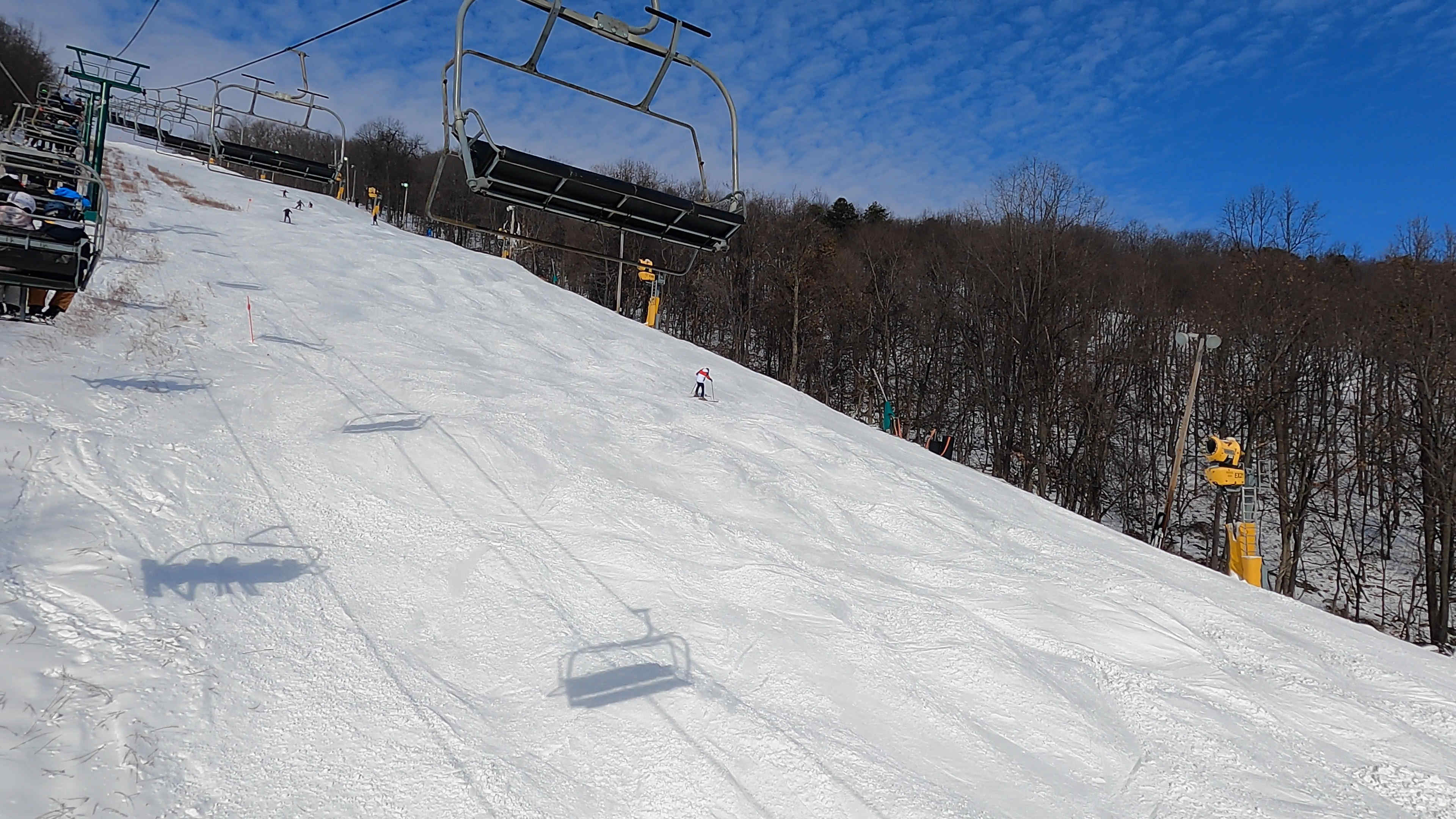
Exhibition is the front-facing black diamond that defines Whitetail for many advanced DC-area skiers.
It is wide enough to let you open up your turns, steep enough to require real edge control, and visible enough to create that classic visibility from the lift. On a good morning, when the surface is freshly groomed and firm, Exhibition can be the best carve session within quick reach of Washington DC.
Ski Exhibition early, before lunch crowds build and before the surface gets scraped down. Early morning Exhibition runs are one of the strongest reasons to choose Whitetail.
Bold Decision
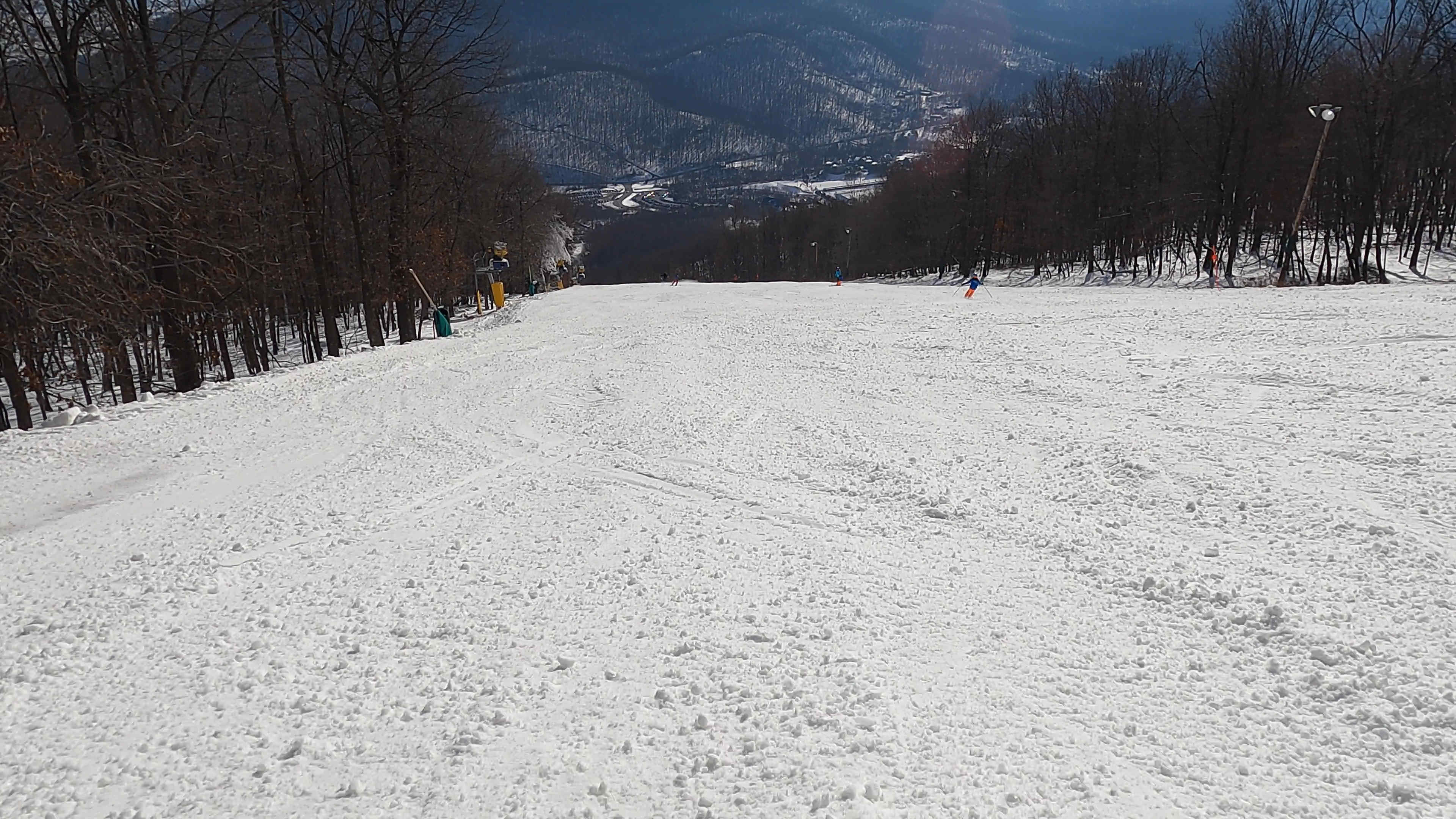
Bold Decision is where Whitetail starts to feel more demanding.
It gives you a steeper pitch and rewards skiers who can stay balanced, commit to their edges, and manage speed without skidding the entire trail.
This is not Western steep skiing, and it should not be described that way.
But for a DC-area day trip, it provides enough pitch and challenge to matter.
If your edge control is weak, Bold Decision will make that obvious. If you ski it with confidence, it gives advanced DC-area skiers something they often lack close to home: short, repeatable, physically demanding runs.
Far Side
Far Side is the trail that can make Whitetail feel like more than a simple groomer mountain.
When it bumps up, it gives advanced skiers something they rarely get near DC: tight, technical, Mid-Atlantic mogul skiing.
It is not forgiving. It is not soft. It is not wide-open powder skiing.
It feels like traditional Eastern-style technical skiing.
That is why it matters for DC-area skiers.
Many skiers say they want advanced terrain until they encounter hard, uneven, narrow, bumped-up snow. Far Side is where Whitetail shows that advanced skiing near DC is about edge control, balance, leg strength, and willingness to ski imperfect snow.
That kind of terrain still demands strong technique.
The Views Are Better Than People Expect
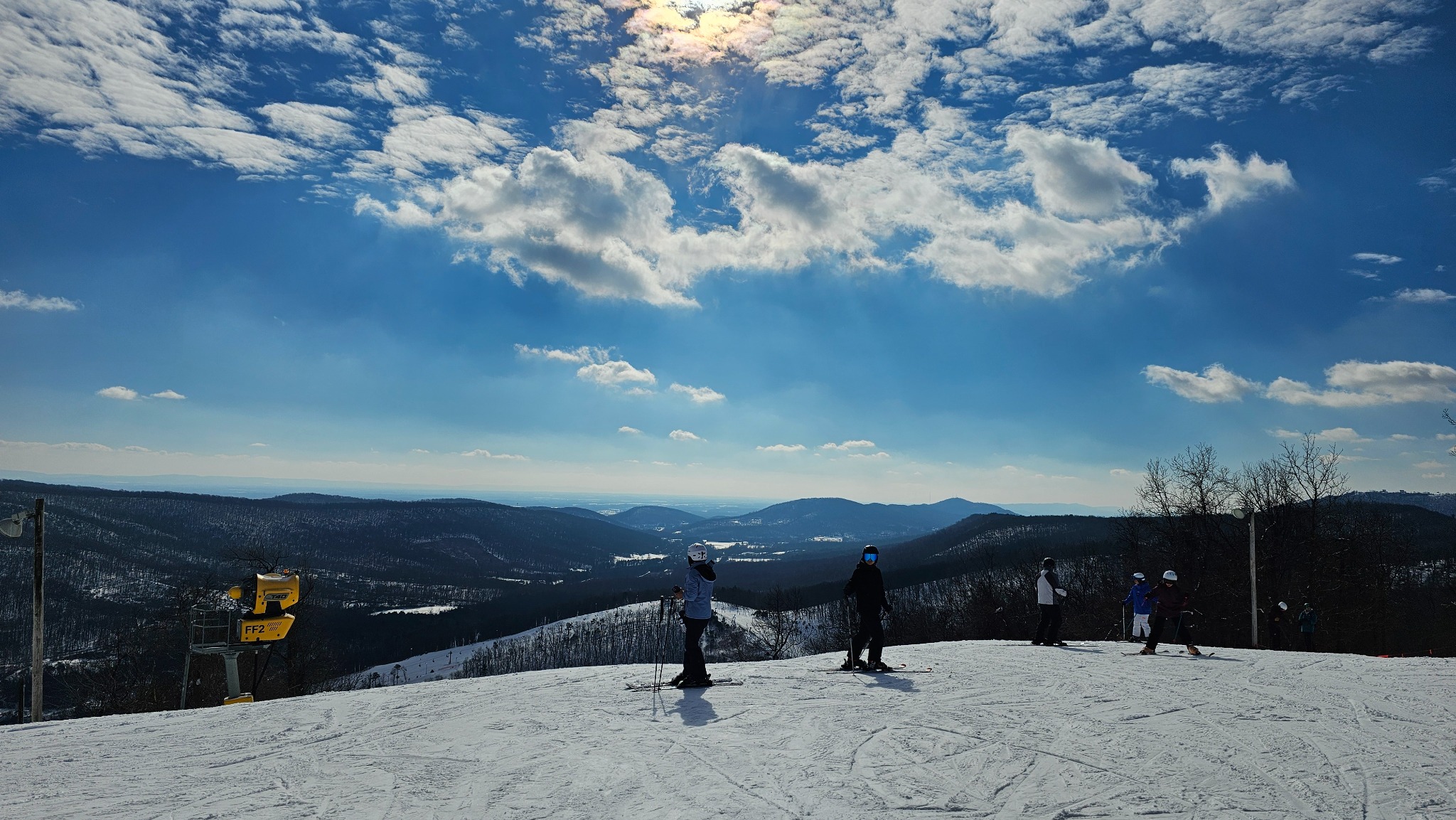
Whitetail also has strong valley views from the upper mountain.
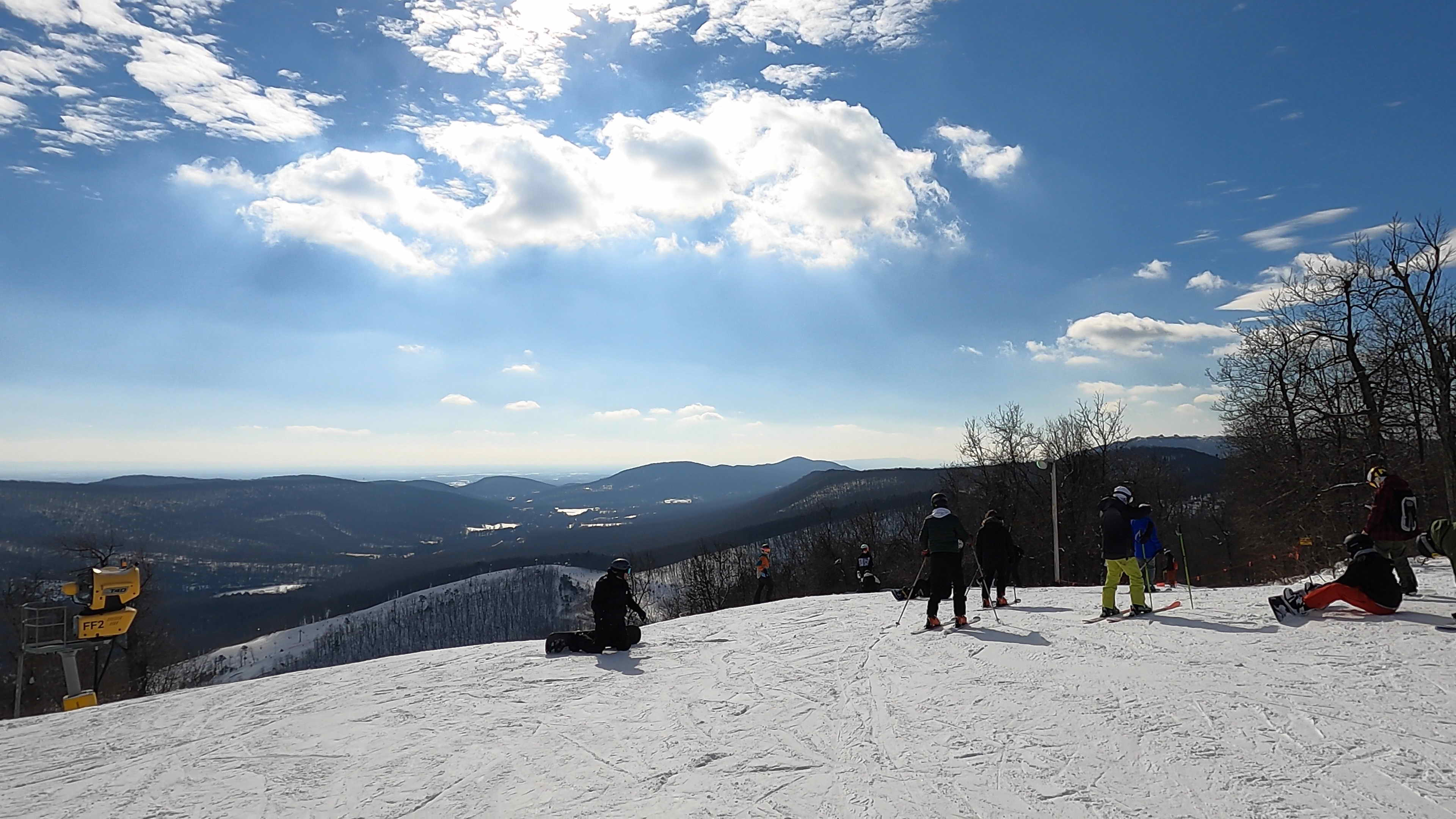
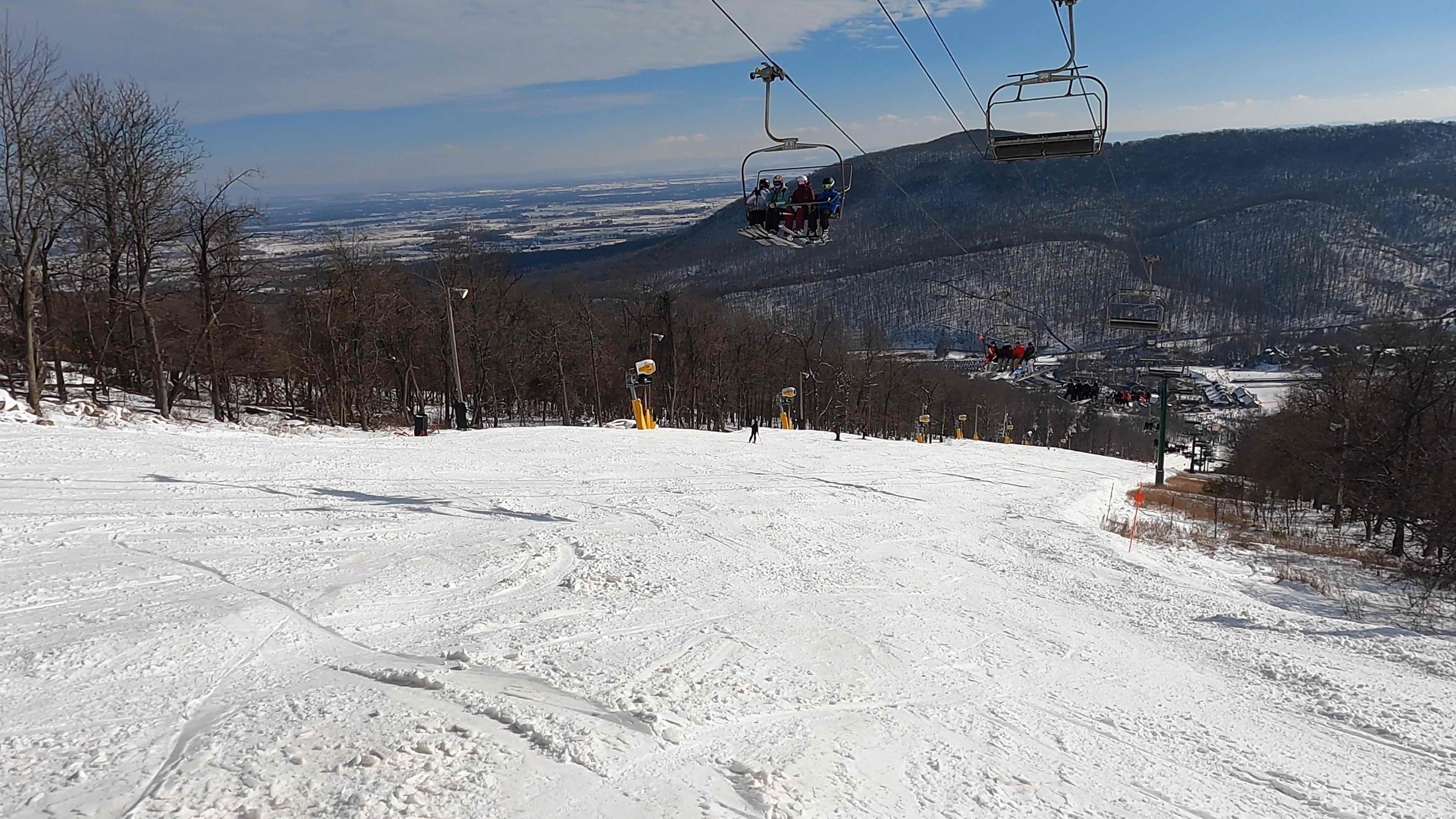
On clear days, the upper mountain gives you wide-open views across the surrounding Pennsylvania countryside. This does not turn Whitetail into a destination resort, but it does make the ski day feel more scenic than many nearby ski areas. When the light is right, especially in the morning or late afternoon, the ridgelines and valley below add strong scenery between runs.
That matters if you are bringing a camera, filming ski footage, or building a day around more than just vertical feet. Whitetail is still mainly a practical day-trip mountain, but the views add real value to the ski day.
Mid-Atlantic Firm Snow Is Part of the Whitetail Experience
You cannot evaluate Whitetail honestly without discussing conditions.
This is Pennsylvania skiing. You are not chasing deep powder, soft bowls or endless natural-snow glades. You are skiing a Mid-Atlantic mountain that relies heavily on snowmaking and surface management.
Whitetail's full-mountain snowmaking coverage is important for a resort in this climate.
Full snowmaking coverage does not mean soft western-style snow conditions.
It often means firm, fast snow, especially early in the morning or after freeze-thaw cycles. Advanced skiers can use those conditions to work on edge control.
Whitetail is best when you come prepared for the conditions that actually exist.
- Sharp edges.
- Narrower skis.
- Strong carving technique.
- Controlled speed.
- Do not bring a ski setup designed mainly for deep powder.
- Avoid lazy skidding on hardpack.
Leave the wide rockered powder skis at home.
For Whitetail, the better tool is a frontside carver or narrow all-mountain ski with enough torsional stiffness to hold on firm machine-made snow.
This is a mountain where frontside grip matters more than powder flotation.
This is where tuned edges matter.
How to Ski Whitetail Efficiently
The least effective way to ski Whitetail is to arrive late, park far from the base, spend too much time in the lodge, take several slow warm-up runs, and reach the advanced terrain after the best morning surface is gone.
A better approach is more deliberate.
- Get there early.
- Be ready to ski early.
- Go straight to the advanced terrain area.
- Repeat the steepest groomed runs while the surface is still clean.
- Then adjust based on crowds and conditions.
A practical Whitetail morning for advanced skiers looks like this:
| Time Window | Strategy |
|---|---|
| First hour | Exhibition and advanced terrain warm-up runs. |
| Second hour | Bold Decision / Far Side focus if conditions are good. |
| Late morning | Mix in cruisers if the advanced terrain gets scraped or crowded. |
| After lunch | Decide whether the surface is still worth skiing hard or whether the best part of the day is already complete. |
That decision matters.
Whitetail is not always an all-day mountain for advanced skiers. Sometimes the best plan is to ski hard early, use the best three or four hours, and leave satisfied.
That is a practical strategy for getting the best surface before the mountain gets crowded or scraped.
Why Whitetail Makes Sense for a Same-Day Ski Trip from DC
Snowshoe, Timberline, Vermont, and Seven Springs may offer better options for longer ski trips.
For a weekend trip or destination ski vacation, they may be the better choice.
But those are not the same type of trip.
Once you are driving several hours, staying overnight, paying for lodging, or using the whole weekend, you are no longer comparing same-day skiing near DC.
You are comparing weekend ski trips or destination ski trips.
Whitetail stands out because it does not require that level of time, travel, or lodging planning.
It is a practical same-day ski option.
That is why it matters for DC-area skiers.
An advanced DC-area skier does not always need the largest mountain in the region. Sometimes the better planning question is:
Where can I ski the most meaningful vertical with the least travel complexity?
For a same-day trip from the DC area, the most practical answer is Whitetail.
Who Whitetail Is Not For
Whitetail is not perfect.
- It is not the best choice if you want a luxury ski village.
- It is not the best choice if you want deep natural snow.
- It is not the best choice if you want a romantic mountain-town weekend.
- It is not the best choice if you want long destination-resort trails.
- It is not the best choice if you hate firm machine-made conditions.
Whitetail should not be evaluated as that type of resort.
Its value is clear when judged against the right trip type.
Whitetail’s value is specific. It is a high-efficiency nearby ski option for people who want the strongest advanced-terrain payoff they can reasonably reach from Washington DC without turning the day into a weekend trip.
If that is not your goal, another resort may make more sense.
If that is your goal, Whitetail is the most practical choice near DC.
The Verdict: Efficiency and Terrain Layout Matter
Whitetail is not the best overall ski resort in the East.
It does not need to be.
But within roughly 90 minutes of Washington DC, for advanced skiers who care about vertical, steeper terrain, efficient runs and a layout that keeps the advanced side focused, Whitetail is the strongest nearby option.
Liberty is not the strongest choice for advanced skiers.
Roundtop is not the strongest choice for advanced skiers.
The farther mountains are not in the same same-day trip category.
Whitetail works because it solves a specific DC-area skier problem.
- Get up early.
- Drive early enough to avoid the worst traffic.
- Bring sharp edges.
- Repeat runs on the advanced terrain area.
- Ski the best surface before it gets scraped.
- Go home the same day.
That is Whitetail's advantage.
For experienced DC-area skiers who want strong advanced terrain close to home, Whitetail is not just another nearby resort.
It is the most practical advanced-skiing choice near Washington DC.

About the Author
Andy Newman is the founder of Next Outdoor Adventures and has more than 10 years of firsthand skiing experience at major resorts across North America and Europe, including Jackson Hole, Sun Valley, Vail, Chamonix, and Dolomiti Superski.
Andy began skiing in his 40s and progressed from a complete beginner to skiing advanced and double-black-diamond terrain by his late 40s. That progression gives him a practical understanding of terrain selection, skill development, and the realities of skiing firm Mid-Atlantic conditions.
His ski guides are based on actual resort visits and personal skiing experience—not generic destination descriptions or theoretical trail-map analysis.
FAQ: Whitetail Resort for DC-Area Skiers
Is Whitetail the best ski resort near Washington DC?
For advanced skiers looking for an efficient same-day trip from Washington DC, Whitetail is the strongest nearby option because of its 935-foot vertical drop, efficient layout, separated advanced terrain, and short drive from the Beltway area.
Is Whitetail better than Liberty for advanced skiers?
For advanced-skiing efficiency, yes. Liberty is useful for beginners, families and casual local skiing, but Whitetail offers more vertical and a more focused advanced-side layout.
Is Whitetail on Epic Pass?
Whitetail is part of the Epic Pass Mid-Atlantic resort network. Pass access depends on the specific Epic Pass product and restrictions, so check current access before buying or visiting.
What kind of skis work best at Whitetail?
Whitetail is usually best with sharp edges and a narrower frontside or all-mountain ski that can hold on firm machine-made Mid-Atlantic snow. Wide powder skis are usually not the best tool for this mountain.
Is Whitetail worth a day trip from DC?
Yes, if you are looking for efficient skiing, meaningful vertical and a same-day advanced-skier trip from the Washington DC area. It is less ideal if your priority is a luxury village, deep natural snow or a destination-resort weekend.
Useful Links for Planning a Whitetail Ski Day
- Skiing Blog Hub
- Whitetail Mountain Information
- Whitetail Trail and Resort Map
- Whitetail Lift and Terrain Status
- Epic Pass Regions and Resorts
- Next Outdoor Adventures on YouTube
By Andy Newman, Next Outdoor Adventures founder, July 12, 2026