Where to Ski and Stay in Val Gardena
Val Gardena is not a single mountain with one central base. It is a connected Dolomites ski destination built around three villages—Ortisei, Santa Cristina and Selva—and each village provides the most convenient access to different terrain.
I spent substantial time skiing Alpe di Siusi, skied Seceda and completed the Sellaronda. Based on that experience, the best way to plan Val Gardena is to decide what kind of skiing your group wants most, then choose the village that provides the most convenient access.
- Where should beginners, intermediate skiers and advanced or expert skiers ski?
- Should you stay in Ortisei, Santa Cristina or Selva?
- Can you ski the Sellaronda from Val Gardena, and where should you start?

Compare Val Gardena with other major ski destinations. Use Slope360™ to compare terrain, snowfall, vertical drop, pass access, travel details, lodging, and amenities.
Explore Ski Resorts with Slope360™Who This Guide Is For (and Who It Isn’t)
This guide is designed for first-time Val Gardena visitors who want to understand how Ortisei, Santa Cristina and Selva differ before reserving accommodation.
It is especially useful for beginners, intermediate skiers, families whose members ski at different levels, and experienced skiers deciding whether to prioritize Val Gardena’s local slopes or the Sellaronda.
This guide is not a substitute for professional guidance on ski-touring or off-piste routes. It focuses on groomed skiing, village selection, transportation and practical access to the main sectors.
What Makes Val Gardena Different From a Single-Base Ski Resort
All three villages are part of the same destination, but they do not provide equally convenient access to every sector. Ortisei connects directly to Seceda and Alpe di Siusi. Santa Cristina provides direct access toward Ciampinoi and Saslong, with Col Raiser connecting toward Seceda. Selva sits higher in the valley, close to the Sella Group and Passo Sella, and provides the most efficient access to the Sellaronda and neighboring Dolomiti Superski areas.
Unlike Chamonix, where major ski areas are separated and reached mainly by road, much of Val Gardena is lift-connected. However, transportation still matters. Selecting the wrong base can add substantial time to the beginning and end of each ski day.
The marked ski areas are groomed, so the choice comes down to the experience each sector provides: gentle panoramic cruising, long intermediate descents, more challenging pistes, or convenient access to a full day of connected skiing.
Common Mistakes First-Time Val Gardena Visitors Make
Choosing a village without checking the nearest lift.
A property described as being in Val Gardena may not be close to the sector your group plans to use most often.
Assuming Ortisei is a practical on-snow start for the complete Sellaronda.
It is technically possible to ski toward the circuit, but the connection can consume several hours. Taking a bus to Santa Cristina and starting through Ciampinoi is more practical.
Choosing Selva only because it has the best connectivity.
Selva is ideal for confident skiers focused on the Sellaronda, but Ortisei may be much better for beginners and mixed-ability families using Alpe di Siusi.
Trying to ski every sector too quickly.
Alpe di Siusi, Seceda, Ciampinoi/Saslong and the Sellaronda can each justify a dedicated ski day.
How to Choose the Right Val Gardena Ski Area for Your Skill Level
For beginners and families
Alpe di Siusi is the strongest option. Its broad groomed slopes and open layout make it suitable for practice and progression. Ortisei provides direct gondola access.
For intermediate skiers
Val Gardena is exceptional. Alpe di Siusi offers approachable cruising, Seceda provides long panoramic runs, and stronger intermediates can progress to Ciampinoi and the Sellaronda.
For advanced skiers
Ciampinoi, Saslong, Dantercepies and the wider connected network provide long descents, more demanding groomed pistes and enough variety for full days of exploration.
For experts
Experts can enjoy technical groomed descents, connected exploration and ski-touring access. Val Gardena should not be presented as an extreme-terrain destination in the Chamonix sense.
Watch the Val Gardena Video
Watch the Val Gardena ski footage for a visual introduction to Alpe di Siusi, Seceda and the Sellaronda, then use the detailed sections below to choose where to ski and stay.
Explore the ski areas in more detail

Alpe di Siusi
Explore the broad groomed slopes and panoramic scenery for beginners, intermediates and families.
Watch on YouTube
Seceda
See the long groomed descents and Dolomite mountain views before planning your ski day.
Watch on YouTube
Sellaronda
Preview the connected ski circuit and practical considerations for completing the route.
Watch on YouTubeWhy Val Gardena Is a Strong Ski Destination
Panoramic Dolomites scenery. Both Alpe di Siusi and Seceda provide extensive mountain views, but they deliver different skiing. Alpe di Siusi is more approachable, while Seceda is primarily an intermediate sector with longer descents.
Exceptional intermediate skiing. Val Gardena’s groomed sectors and wider Dolomiti Superski connections provide enough variety for an entire week.
Practical choices for mixed abilities. A family can stay in Ortisei while beginners practice on Alpe di Siusi and experienced skiers take a bus to Santa Cristina for the Sellaronda.
Direct access to a major ski circuit. Selva and Santa Cristina provide practical entry points to the Sellaronda, allowing confident skiers to explore beyond Val Gardena.
Val Gardena Ski Areas and Villages Map
Use this interactive map to understand the position of Ortisei, Santa Cristina, Selva, Seceda, Alpe di Siusi and the main Sellaronda access points.
Interactive Map: Val Gardena Villages and Ski Areas
The map and pin links below help explain which village is closest to each major ski sector.
1. Alpe di Siusi — Best for Beginners and Relaxed Intermediates
Alpe di Siusi is the strongest Val Gardena sector for beginners and intermediates who want broad groomed slopes, open views and a less demanding ski day. I spent more time here than in the other local sectors.
Ideal for: Beginners, families, progressing skiers and intermediates who prefer scenic cruising.
Highlights
- Broad, groomed terrain with room to practice and progress.
- Panoramic views across the Dolomites in multiple directions.
- Good choice for families who want to ski together on approachable pistes.
- Enough terrain for intermediates to spend a complete day exploring.
- Direct gondola access from Ortisei.
Tip: Plan Alpe di Siusi as a deliberate full-day sector. Moving from it to the central Val Gardena slopes is not as seamless as skiing between adjacent lifts.
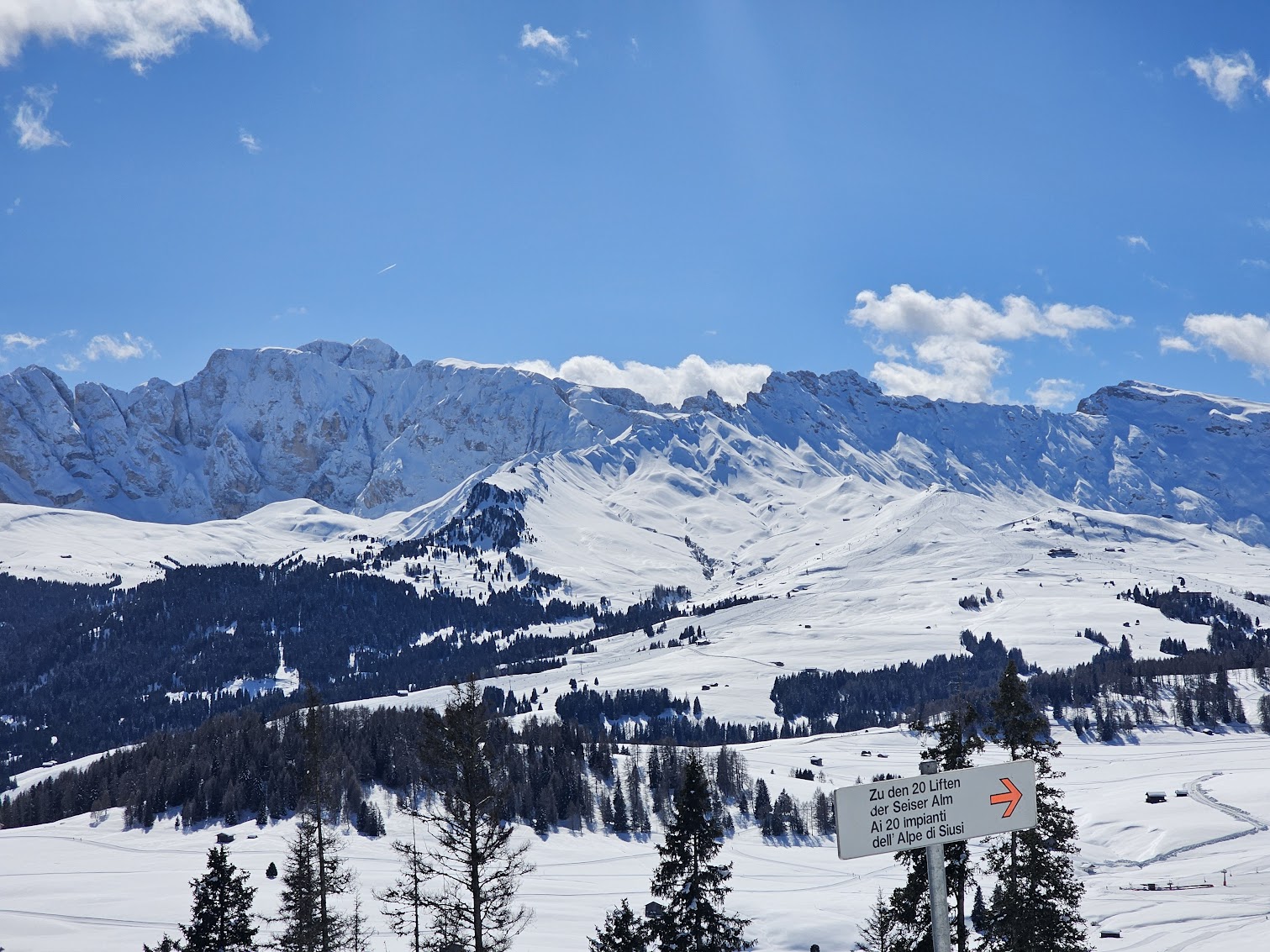
Quick Planning Facts — Alpe di Siusi
| Category | Details |
|---|---|
| Best village access | Ortisei |
| Best for | Beginners, families and intermediates |
| What to expect | Broad, groomed slopes with a generally approachable layout |
| Main advantage | Beginner progression combined with extensive scenery |
| Pass coverage | Val Gardena/Alpe di Siusi local pass or Dolomiti Superski |
2. Seceda — Panoramic Skiing for Intermediates
Seceda combines recognizable Odle mountain views with long groomed descents. Its skiing is mainly suited to intermediates who are comfortable covering distance.
Ideal for: Intermediate skiers, scenic skiing and experts interested in properly guided ski-touring opportunities.
Highlights
- Expansive panoramic views toward the Odle peaks.
- Long groomed intermediate skiing.
- Direct lift access from Ortisei.
- Access from Santa Cristina through Col Raiser.
- Ski-touring possibilities for qualified, properly equipped skiers.
Tip: Check visibility before committing to exposed upper slopes. Poor visibility can reduce the value of both the views and open terrain.
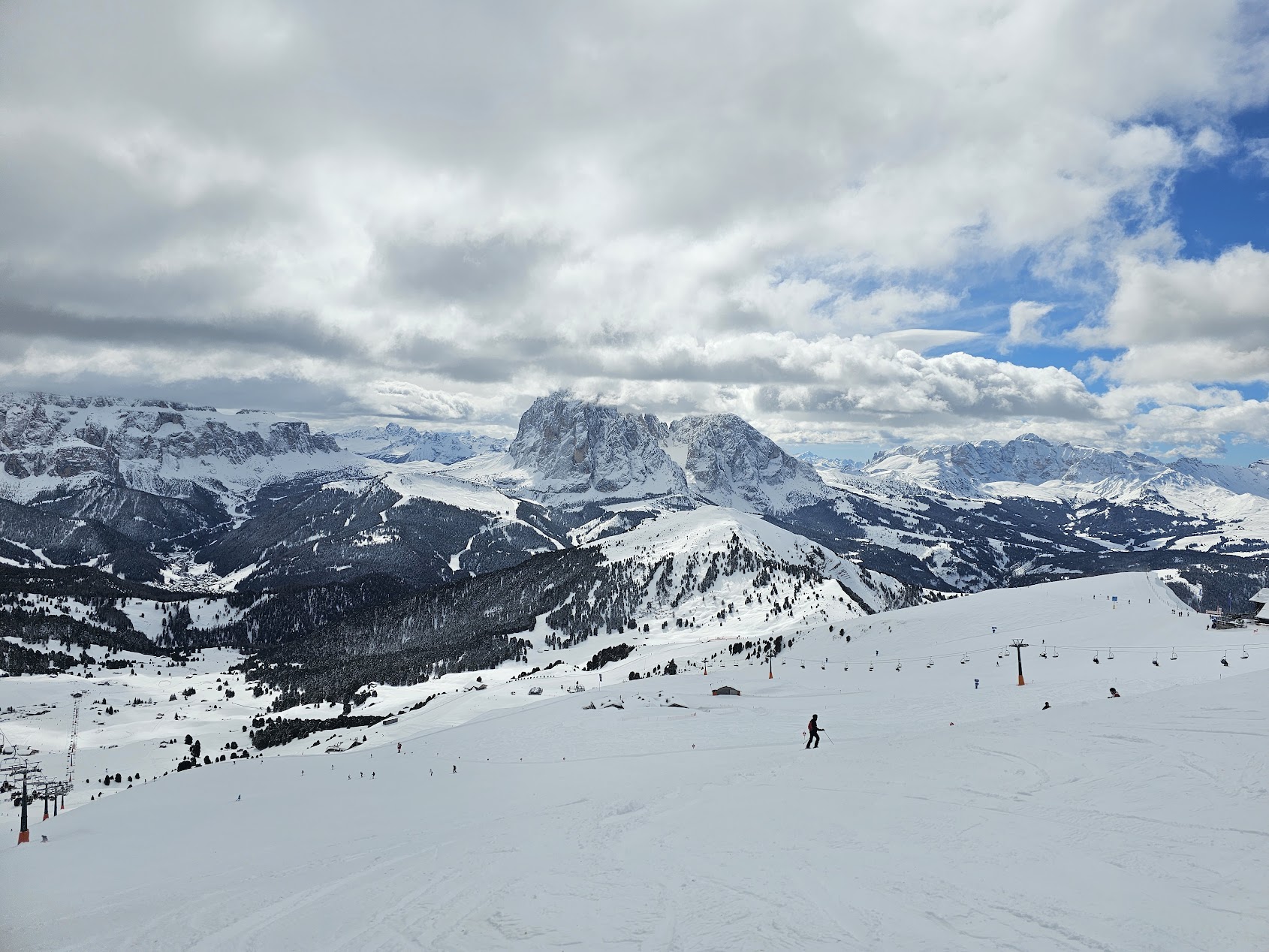
Quick Planning Facts — Seceda
| Category | Details |
|---|---|
| Best village access | Ortisei; also accessible from Santa Cristina through Col Raiser |
| Best for | Intermediate skiers and panoramic skiing |
| What to expect | Open, groomed slopes and long descents through panoramic terrain |
| Expert appeal | Touring access where conditions, equipment and guidance are appropriate |
| Pass coverage | Val Gardena/Alpe di Siusi local pass or Dolomiti Superski |
3. Ciampinoi and Saslong — Best for Confident Intermediates and Advanced Skiers
Santa Cristina provides direct access toward Ciampinoi and Saslong. These areas are better suited to intermediate, advanced and expert skiers than Alpe di Siusi.
Ideal for: Confident intermediates, advanced skiers and experts who want stronger groomed terrain and access toward the Sellaronda.
Highlights
- Longer and steeper groomed descents.
- Access to the Saslong World Cup downhill route.
- Practical entry toward the Sellaronda.
- Central position for skiers staying in Santa Cristina.
- Connection across the valley toward Col Raiser and Seceda.
Tip: Firm grooming, traffic and late-day conditions can make some connecting pistes feel harder than their marked difficulty.
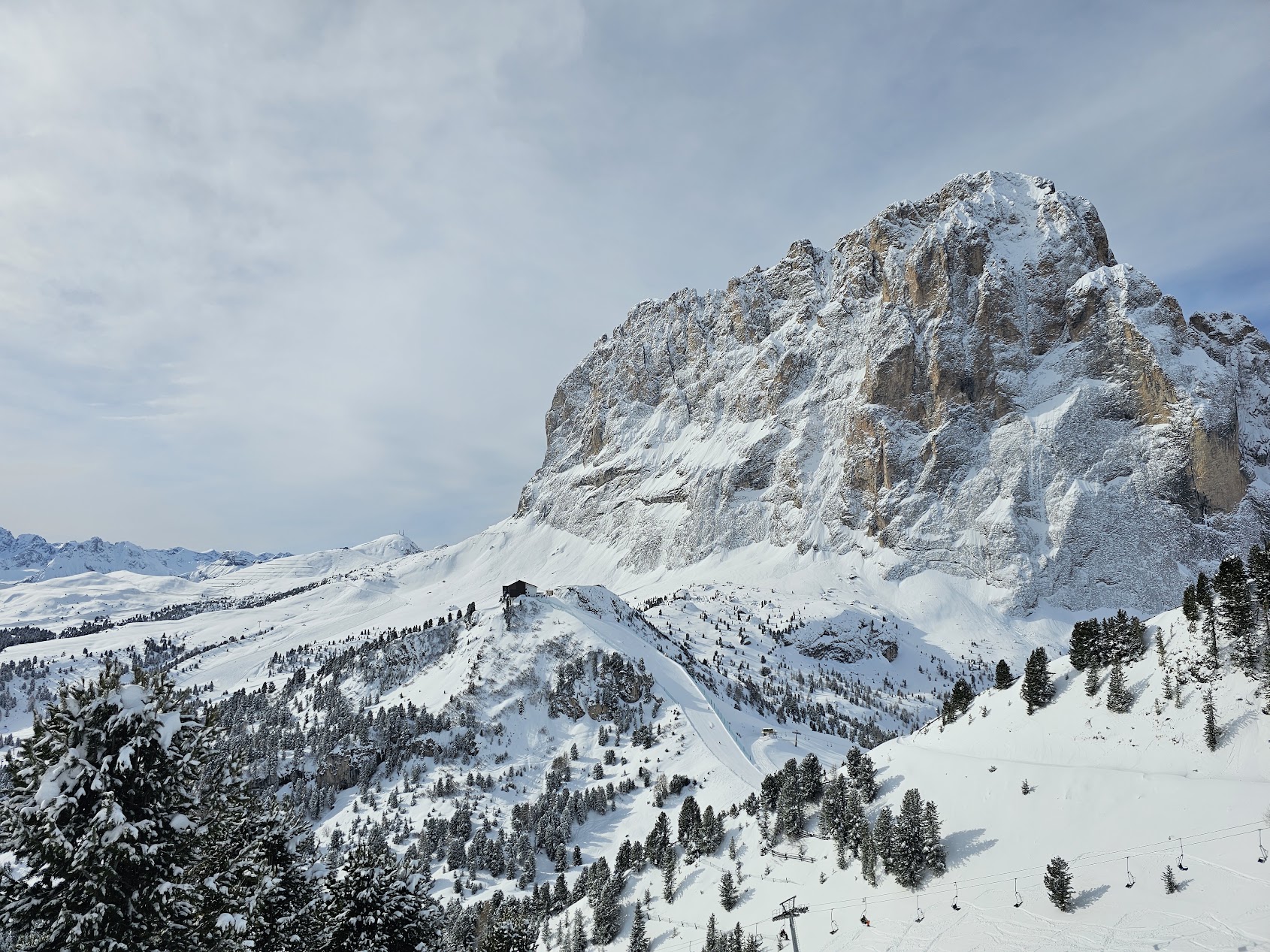
Quick Planning Facts — Ciampinoi and Saslong
| Category | Details |
|---|---|
| Best village access | Santa Cristina and Selva |
| Best for | Confident intermediates, advanced skiers and experts |
| What to expect | Longer, more demanding groomed descents and important ski connections |
| Main advantage | Saslong skiing plus practical Sellaronda access |
| Pass coverage | Val Gardena/Alpe di Siusi local pass; Dolomiti Superski for the Sellaronda |
4. Selva and the Sellaronda — Best for Connected Skiing
Selva sits higher in the valley and is the preferred base for skiers who plan to spend much of their trip on the Sellaronda or use it to reach other connected Dolomiti Superski areas.
Ideal for: Confident intermediates, advanced skiers and experts who want to spend their days moving through the Sellaronda and neighboring ski areas.
Highlights
- Efficient access toward Dantercepies, Passo Gardena and Ciampinoi.
- Most practical Val Gardena village for repeated Sellaronda days.
- Strong base for reaching ski areas connected to the circuit.
- Reduced morning travel compared with starting from Ortisei.
- Best suited to skiers who can maintain a steady touring pace.
Tip: Start early, verify that the complete circuit is open and leave enough margin to return before connecting lifts close.
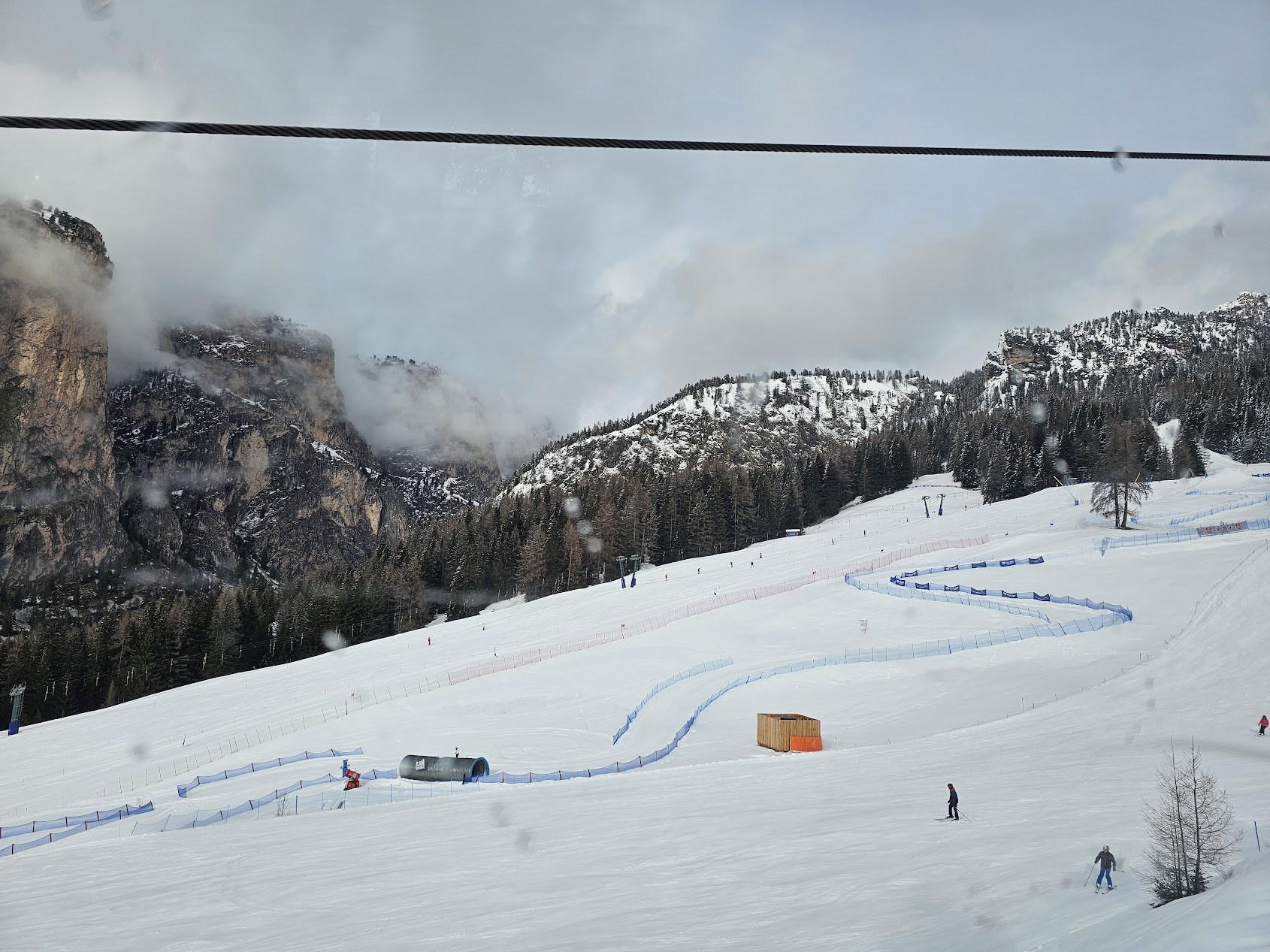
Quick Planning Facts — Selva and Sellaronda
| Category | Details |
|---|---|
| Best village access | Selva; Santa Cristina is also practical through Ciampinoi |
| Best for | Confident intermediates, advanced skiers and experts |
| What to expect | A groomed touring circuit linking several Dolomites ski areas |
| Time needed | Allow a full ski day and start early |
| Pass coverage | Dolomiti Superski required for the full Sellaronda |
Can You Ski the Sellaronda From Ortisei?
It is technically possible to begin on skis from Ortisei and work toward the Sellaronda. In practice, reaching the circuit can consume several hours, making it difficult to complete the entire loop comfortably on the same day.
Better approach: Take a bus from Ortisei to Santa Cristina and begin through Ciampinoi. This preserves more of the day for the circuit and reduces the risk of reaching a closing connection too late.
This approach is particularly useful for families whose members ski at different levels. Beginners and developing intermediates can spend the day practicing on Alpe di Siusi while experienced skiers travel to Santa Cristina for the Sellaronda.
Where to Stay: Ortisei vs Santa Cristina vs Selva
| Village | Best ski access | Best for | Main limitation |
|---|---|---|---|
| Ortisei | Seceda and Alpe di Siusi | Beginners, intermediates, families, mixed abilities and town amenities | Full Sellaronda is impractical when starting on skis; use a bus to Santa Cristina |
| Santa Cristina | Ciampinoi, Saslong and Col Raiser | Intermediates, advanced skiers and travelers seeking a quieter village | Fewer pedestrian areas, shops and dining choices than Ortisei |
| Selva | Dantercepies, Ciampinoi and Sellaronda | Ski-focused trips and easy access to connected ski areas | More through-traffic from Sellaronda skiers and less suitable for visitors seeking a calm town atmosphere |
Ortisei: the best choice for town atmosphere and mixed-ability trips
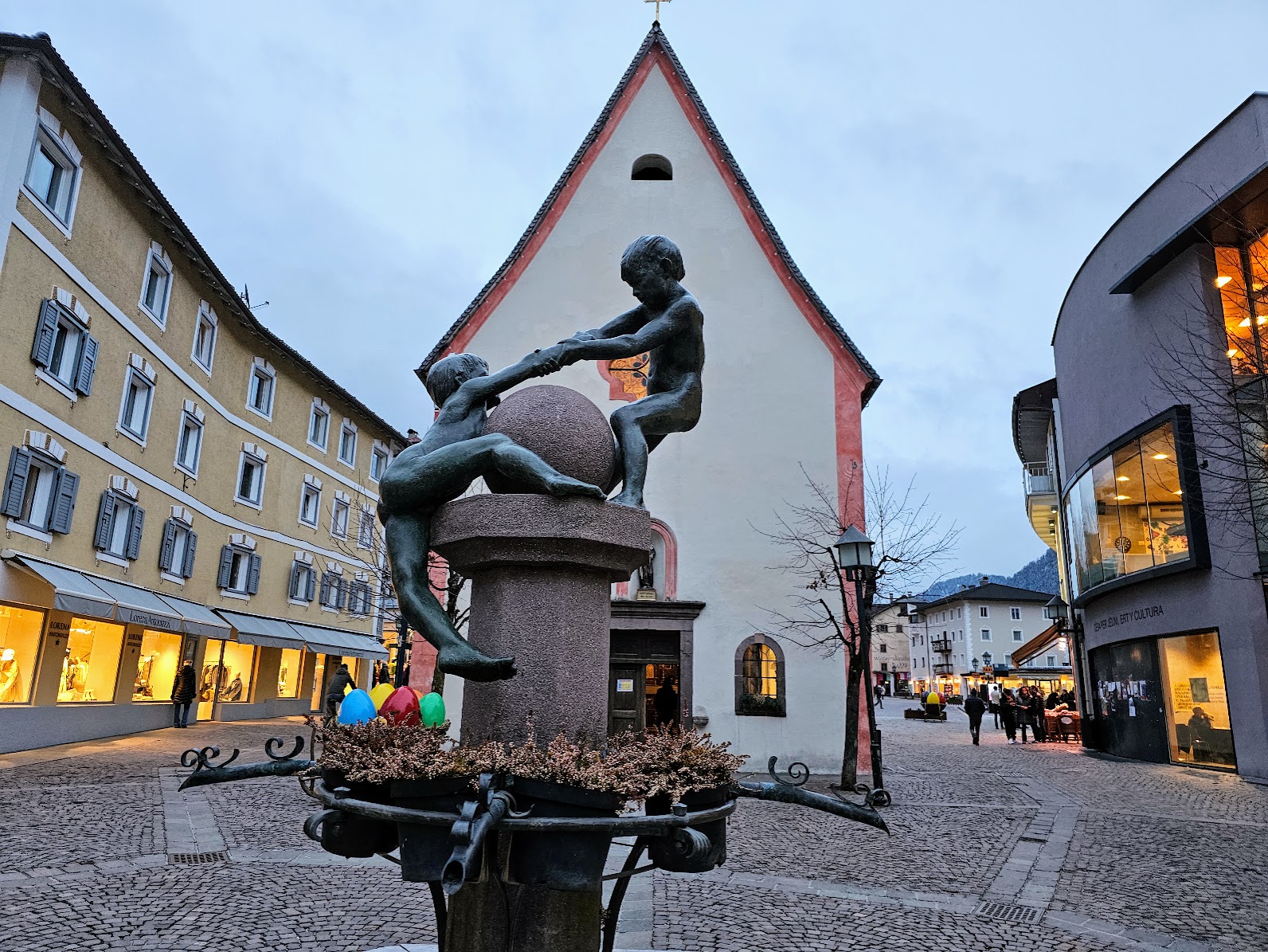
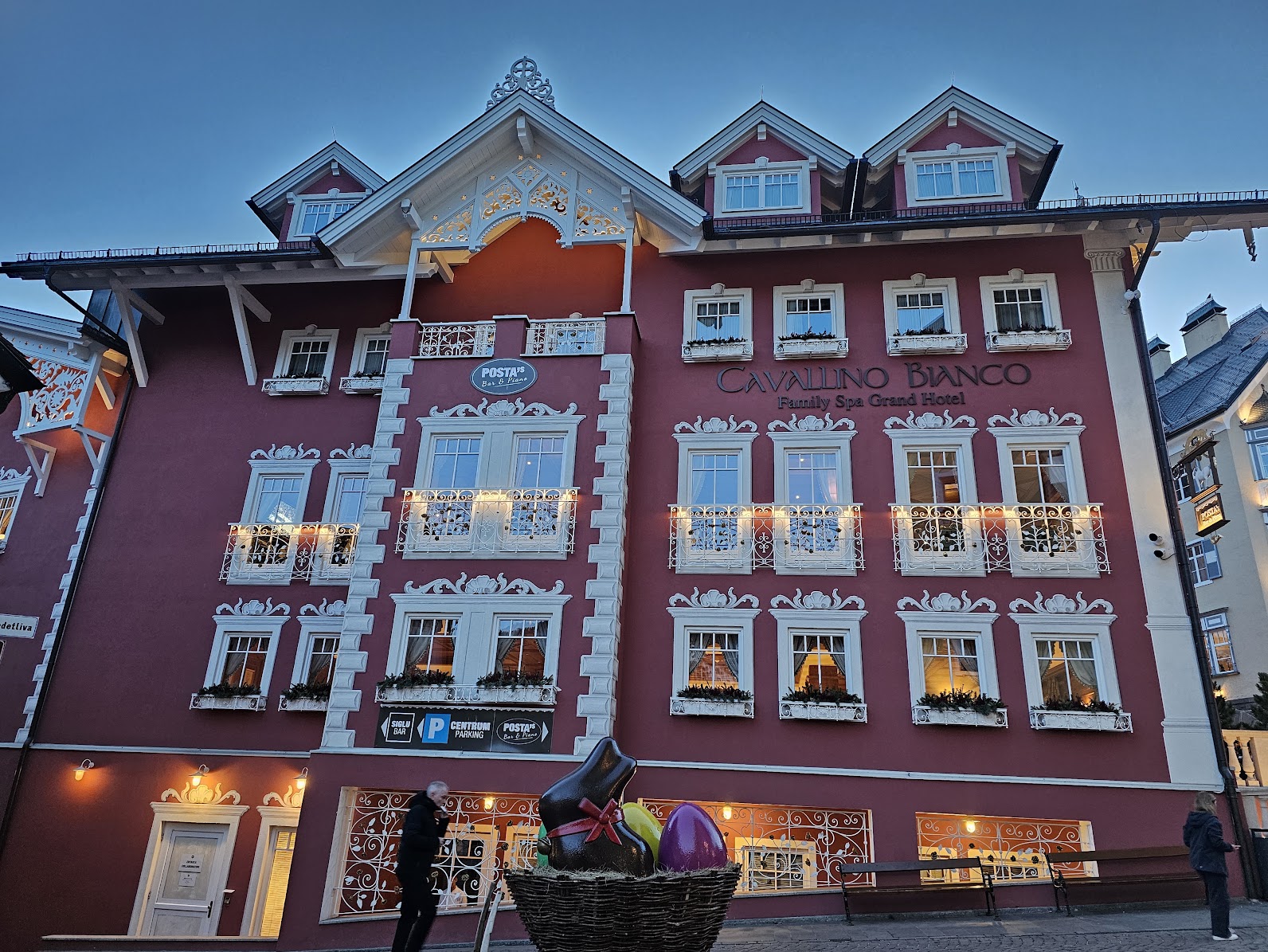
Ortisei feels more like a small alpine town than a compact ski village. It has a larger footprint, more pedestrian areas, a broad selection of restaurants and shops, and plenty of lodging options. That makes it the strongest choice for travelers who want places to walk, dine and spend time after the lifts close.
It is also a practical base for families whose members have different plans. Beginners and intermediates can use the direct gondola to Alpe di Siusi, while other skiers can reach Seceda or take a morning bus to Santa Cristina for the Sellaronda. We used Ortisei as our primary base and traveled to the other ski areas from there.
Santa Cristina: a quieter and more intimate village
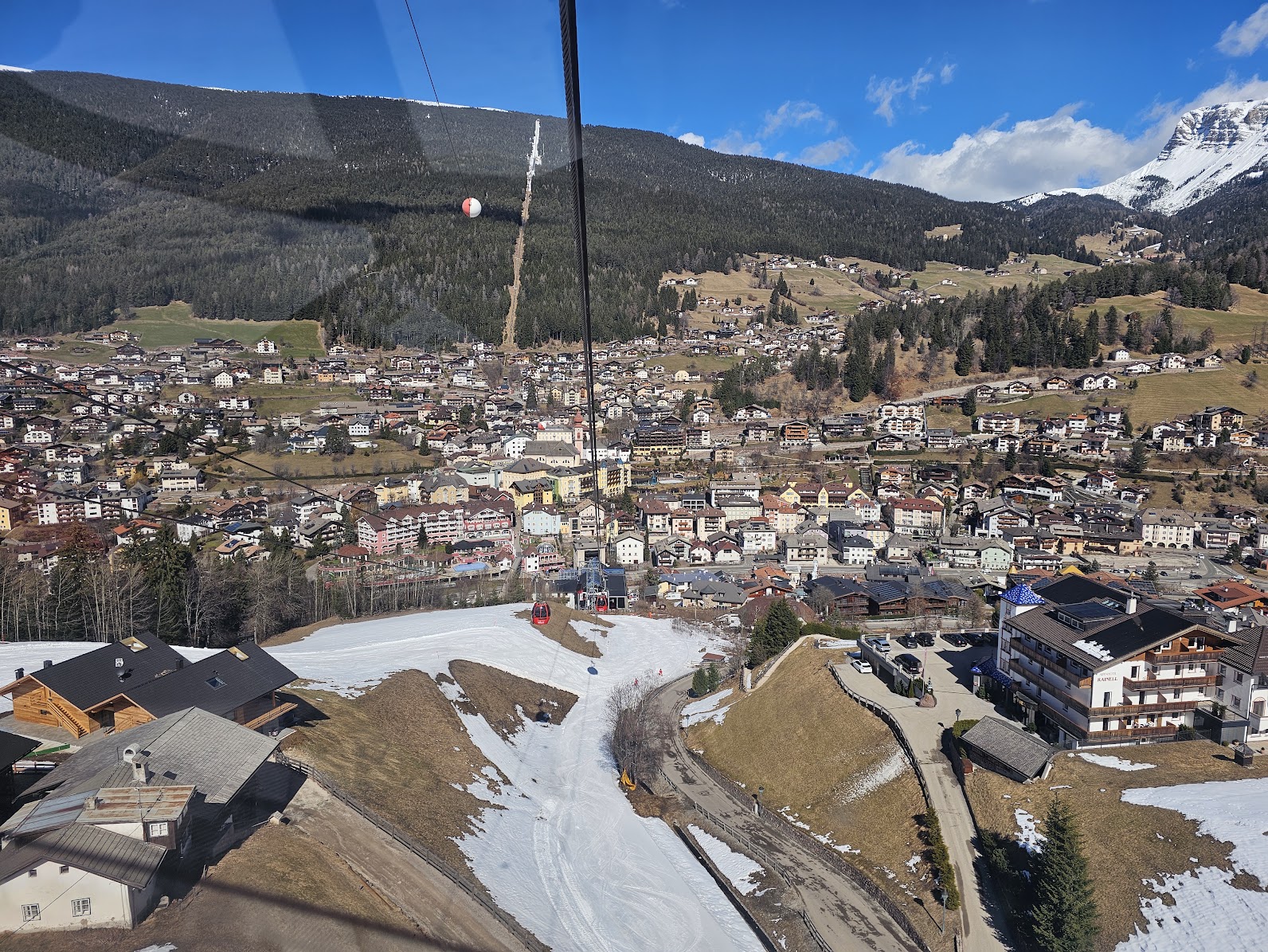
Santa Cristina has a calmer, more intimate atmosphere than Ortisei. It feels like a small mountain village rather than a town, with less space devoted to pedestrian streets, shopping and dining. Travelers who value a quieter setting may prefer it, especially when convenient access to Ciampinoi, Saslong and Col Raiser is more important than having a large choice of evening activities.
Selva di Val Gardena: closest to the Sella Group and the main ski connections
Selva di Val Gardena sits at the top of the valley, closer to the Sella Group and Passo Sella than either Ortisei or Santa Cristina. Direct access to the Dantercepies and Ciampinoi lift systems places serious skiers immediately within the central mountain network and makes Selva the most efficient base for repeated Sellaronda days.
The tradeoff is heavier skier traffic. Many people pass through Selva while completing the Sellaronda, so the village can feel busier than its location might suggest. Travelers who want the most convenient access to the circuit should consider Selva. Those who prefer a more complete town atmosphere, with more room to walk and a wider choice of restaurants and shops, may be happier using Ortisei as their base and traveling to other sectors as needed.
Getting Around Val Gardena
Public buses connect Ortisei, Santa Cristina and Selva. They are not only a backup option; they are part of an efficient ski plan when village location and the day’s objective do not match.
Practical example: Ortisei guests planning the Sellaronda should use the bus to Santa Cristina rather than spend several hours skiing toward the circuit.
Before booking accommodation, check the walking route to the nearest useful lift or bus stop. The Seceda and Alpe di Siusi departure points are on different sides of Ortisei.
Getting to Val Gardena Without a Car
Bolzano is the nearest major transportation hub, approximately 40 kilometers from Val Gardena. It combines a regional airport with a well-connected railway station, and bus line 350 links Bolzano with Ortisei and the other Val Gardena villages. Travelers can therefore arrive by air or train and continue into the valley without renting a car.
Ponte Gardena is a smaller railway stop closer to the entrance of the valley, while Bolzano generally provides a wider choice of long-distance rail and air connections. Depending on the itinerary, travelers can continue by scheduled bus, shared transfer or taxi.
Combining Venice and Val Gardena
International visitors may also consider combining Val Gardena with Venice. Venice Marco Polo Airport is one of the regional gateways served by transfer companies, and Venice is approximately 270 to 300 kilometers from Val Gardena. This makes it possible to combine several days in Venice with a separate ski stay in the Dolomites.
The combination works especially well for travelers arriving from outside Europe who want both a cultural city visit and a mountain trip. Plan the journey as a two-destination itinerary rather than a quick day trip, and reserve enough transfer time for winter road conditions.
Do You Need a Dolomiti Superski Pass?
A local Val Gardena/Alpe di Siusi pass may be sufficient if your plan is limited to those sectors. The broader Dolomiti Superski pass is required for the full Sellaronda and for continuing into other connected ski areas.
Beginners concentrating on ski school and Alpe di Siusi should compare the local option before paying for access they may not use. Confident intermediates and advanced skiers planning multiple valleys are more likely to benefit from Dolomiti Superski.
How Many Days Do You Need in Val Gardena?
Four full ski days is a practical minimum: one day on Alpe di Siusi, one on Seceda, one around Ciampinoi and Saslong, and one for the Sellaronda.
Five to seven days is better if you want to repeat favorite sectors, explore connected ski areas and retain flexibility for weather or lift closures.
Plan Your Val Gardena Ski Trip
| Category | Recommendation |
|---|---|
| Best for beginners | Alpe di Siusi from Ortisei |
| Best for intermediate skiers | Seceda and Alpe di Siusi; Ciampinoi for stronger intermediates |
| Best for advanced skiers | Ciampinoi, Saslong, Dantercepies and connected areas |
| Best panoramic views | Seceda and Alpe di Siusi |
| Best village for mixed abilities | Ortisei |
| Best village for Sellaronda | Selva |
| Best central compromise | Santa Cristina |
Val Gardena Ski Areas at a Glance
| Ski area | Best access | Most suitable for | Main reason to ski it |
|---|---|---|---|
| Alpe di Siusi | Ortisei | Beginner to intermediate | Broad groomed terrain and panoramic scenery |
| Seceda | Ortisei / Col Raiser from Santa Cristina | Intermediate | Long descents and Odle views |
| Ciampinoi / Saslong | Santa Cristina / Selva | Intermediate to expert | Stronger groomed terrain and Sellaronda connection |
| Selva / Dantercepies | Selva | Confident intermediate to expert | Direct entry to the Sellaronda and neighboring ski areas |
Val Gardena Ski Guide FAQ
Where should beginners ski in Val Gardena?
Alpe di Siusi is the strongest choice because of its broad groomed terrain and direct gondola access from Ortisei.
Is Val Gardena good for intermediate skiers?
Yes. Intermediates are the audience Val Gardena serves best, with extensive options on Alpe di Siusi, Seceda, Ciampinoi and the wider connected network.
Is Val Gardena good for advanced and expert skiers?
Yes, particularly for long groomed descents, full days of connected skiing, Sellaronda access and touring possibilities. It is not primarily an extreme-terrain destination like Chamonix.
Which is better for skiing: Ortisei, Santa Cristina or Selva?
Ortisei is best for Alpe di Siusi, Seceda and mixed abilities. Santa Cristina is best for Ciampinoi, Saslong and central access. Selva is best for repeated Sellaronda days.
Can you ski the Sellaronda from Val Gardena?
Yes. Selva provides the most efficient access. From Ortisei, taking a bus to Santa Cristina and starting through Ciampinoi is more practical than skiing toward the circuit.
Is Seceda worth skiing?
Yes. Seceda provides panoramic views and long groomed intermediate skiing, with touring opportunities for properly prepared expert skiers.
How many days do you need?
Four full ski days is a practical minimum. Five to seven days provides better coverage and weather flexibility.
Final Thoughts
Val Gardena works best when the village reflects both the skiing and the atmosphere you want after skiing. Ortisei combines direct access to Alpe di Siusi and Seceda with the widest choice of pedestrian areas, restaurants, shops and lodging. Santa Cristina provides a quieter village setting with central access to Ciampinoi, Saslong and Col Raiser. Selva is the strongest ski-first base for the Sellaronda, but it also receives more skier traffic moving through the circuit.
Beginners should prioritize Alpe di Siusi. Intermediates can use every major sector and are likely to receive the greatest overall value. Advanced skiers and experts should focus on Ciampinoi, Saslong, Dantercepies, the Sellaronda and properly planned touring objectives.

About the Author
Andy Newman is the founder of Next Outdoor Adventures and has more than 10 years of firsthand skiing experience at major resorts across North America and Europe, including Jackson Hole, Sun Valley, Vail, Chamonix, and Dolomiti Superski.
Andy began skiing in his 40s and progressed from a complete beginner to skiing advanced and double-black-diamond terrain by his late 40s. That progression gives him a practical understanding of the challenges skiers face when comparing resorts, choosing appropriate terrain, and planning trips for different ability levels.
In Val Gardena, Andy spent substantial time skiing Alpe di Siusi, completed the Sellaronda and skied Seceda. His guides are based on actual resort visits and personal skiing experience.
Support the Channel
If this guide helped you plan your trip, please subscribe to our YouTube channel, share the article, and tag us on Instagram with your Val Gardena photos.