
Maryland Side Great Falls Guide
Great Falls Maryland Side Guide: Best Waterfall Views, C&O Canal Walks and Billy Goat Trail Access
Safety first: Great Falls is not a place for swimming, wading, rock hopping, climbing down near the river, ignoring signs, or going off trail around the falls area. Stay on marked trails and follow posted National Park Service guidance.
Most people searching for Great Falls near Washington DC do not realize there are two different visitor experiences.
The Virginia side is Great Falls Park. It is designed mainly around direct waterfall observation areas and short scenic viewing. The Maryland side is accessed through Chesapeake & Ohio Canal National Historical Park near Great Falls Tavern Visitor Center, and it offers a broader outdoor experience: the C&O Canal towpath, canal history, Olmsted Island, Great Falls Overlook, biking and walking access, and direct connection to Billy Goat Trail Section A.
That difference matters.
As a DC-area local who has visited the Great Falls area many times in different seasons, I think the Maryland side is usually the stronger choice if you want more than a quick waterfall viewpoint. The Virginia side is excellent for seeing the falls. The Maryland side gives you the falls, the canal, easy walks, biking access, historical context, and one of the best adventure hikes near DC.
But Great Falls is not a place for swimming, wading, rock hopping, climbing down near the river, ignoring signs, or going off trail around the falls area. The Potomac River near Great Falls has powerful current, slippery rock, hidden hazards, and a history of fatal incidents. Visitors should obey posted signs, stay on marked trails and boardwalks, and follow National Park Service guidance.
This guide explains how to visit Great Falls from the Maryland side, what to see first, how to choose between easy walks and harder hikes, and what mistakes to avoid.
Quick Verdict: Is the Great Falls Maryland Side Worth Visiting?
Yes. The Great Falls Maryland side is absolutely worth visiting, especially if you live in Washington DC, Montgomery County, Northern Virginia, or anywhere in the DMV.
The Maryland side is one of the best outdoor destinations near DC because it combines several experiences in one place:
- Dramatic waterfall views
- Great Falls Overlook
- Olmsted Island boardwalk
- C&O Canal towpath
- Great Falls Tavern history
- Easy walking options
- Biking access on the towpath
- Billy Goat Trail Section A access
- Photography and seasonal scenery
That is the big advantage. The Maryland side is not just a place to look at the falls. It is a full outdoor area where visitors can choose between an easy scenic walk, a canal-side stroll, a bike ride, a family outing, or a serious rock-scrambling hike.
The Virginia side is better if your main goal is a simpler waterfall-viewing visit from observation areas. The Maryland side is better if you want the most complete Great Falls experience.
But the Maryland side is not appropriate for unsafe or restricted activities. Do not swim, wade, rock hop, climb down near the river, go off trail near the falls, or ignore posted signs.
Great Falls Maryland Side vs Virginia Side
The Maryland and Virginia sides of Great Falls are not interchangeable viewpoints. They are designed for different visitor experiences.
The Virginia side, Great Falls Park, is the more direct waterfall-viewing experience. It is a strong choice if your main goal is to see the falls quickly from observation areas and keep the visit simple.
The Maryland side, through Chesapeake & Ohio Canal National Historical Park, offers a broader outdoor experience. It gives you access to Great Falls Tavern, the C&O Canal towpath, Olmsted Island, Great Falls Overlook, canal history, biking and walking routes, and Billy Goat Trail Section A.
If you want a quick scenic stop, the Virginia side can be enough. If you want a fuller half-day outdoor visit, the Maryland side usually offers more depth. You can walk the towpath, visit the overlook, learn the canal history, take photos, watch cyclists and hikers move along the canal corridor, or continue toward Billy Goat Trail Section A if your group is ready for a serious scramble.
Neither side is appropriate for off-trail exploring near the falls, climbing beyond barriers, rock hopping, swimming, wading, or ignoring posted warnings. The waterfall and river area can be life-threatening because of slippery rocks, hidden underwater hazards, strong current, and the risk of falling into the Potomac River.
My local recommendation: choose the Virginia side for a simpler waterfall-viewing stop. Choose the Maryland side if you want the most complete Great Falls experience near DC.
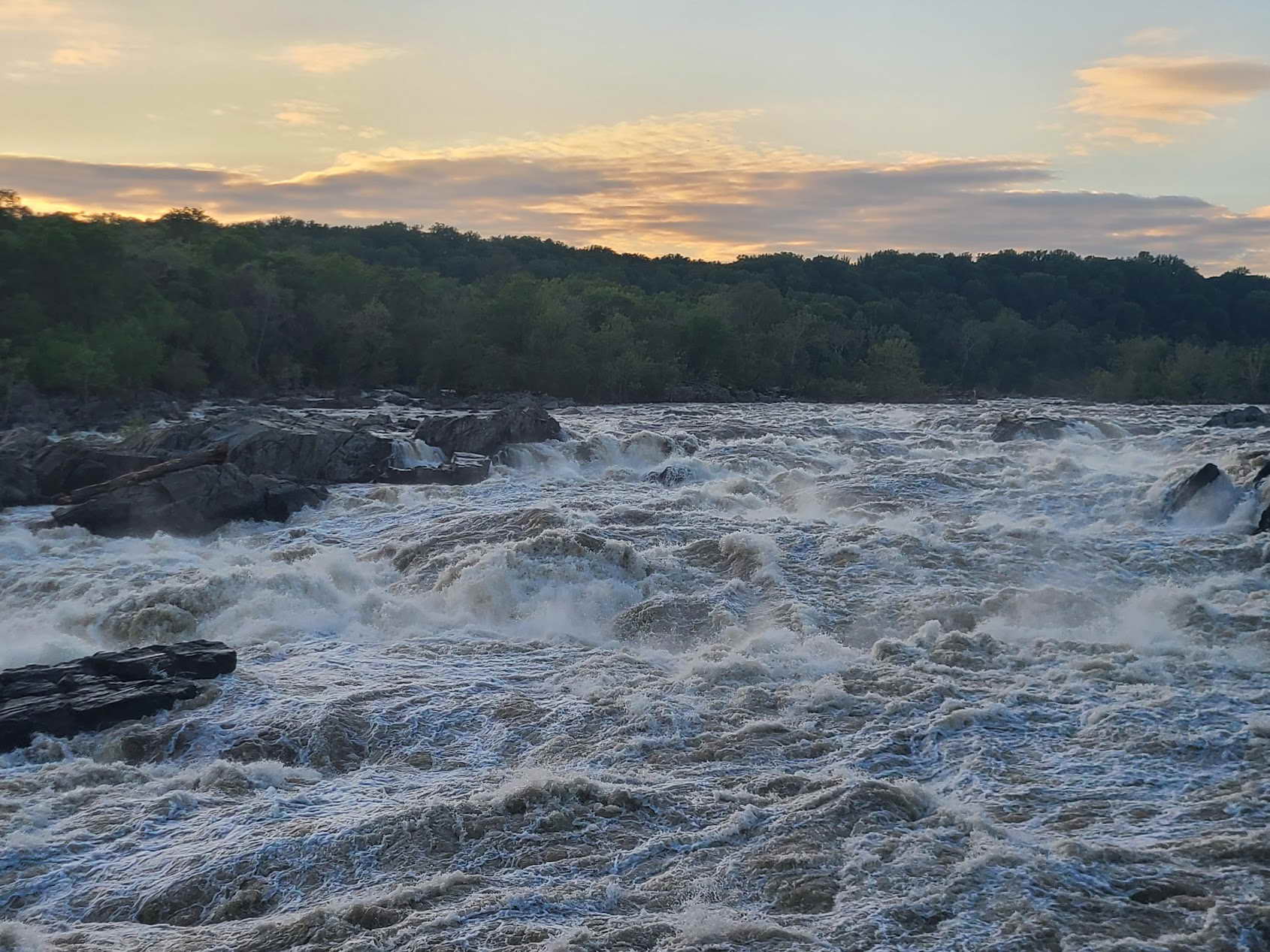
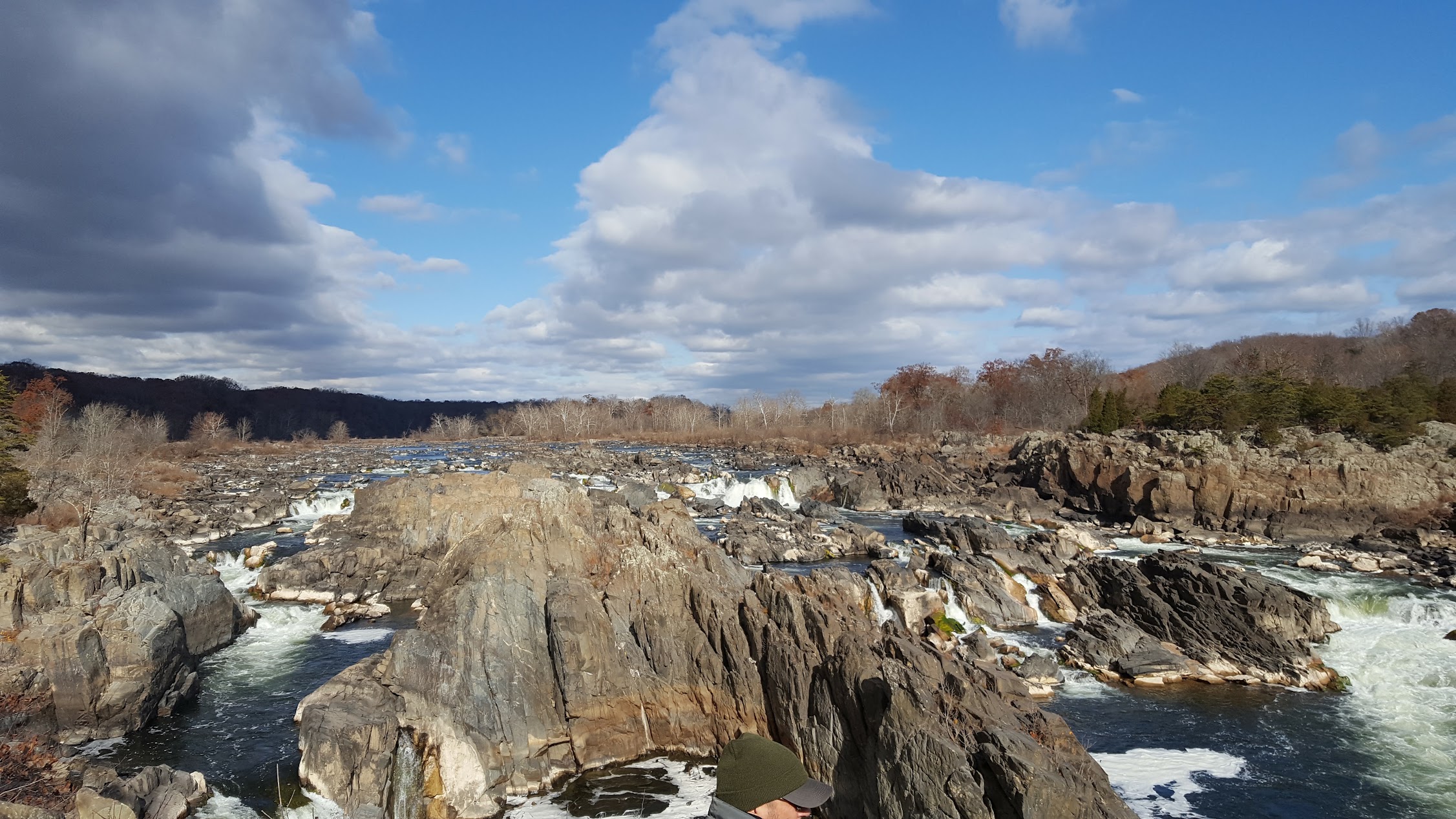
Left photo: Great Falls Maryland side / Olmsted Island / waterfall overlook
Right photo: Great Falls Virginia side observation view
Side by Side Summary
| What you want to do | Maryland side | Virginia side |
|---|---|---|
| See Great Falls | Yes — via Great Falls Overlook and Olmsted Island. | Yes — best for a simpler waterfall observation visit. |
| Walk the C&O Canal towpath | Yes — one of the biggest reasons to choose the Maryland side. | No — the C&O Canal towpath is part of the Maryland-side experience. |
| Bike near Great Falls | Yes — the towpath is a popular biking corridor, so hikers should share the path. | Not the main experience; the Virginia side is focused more on observation areas. |
| Visit canal history | Yes — Great Falls Tavern and the canal setting are central to the visit. | No — Virginia is not the C&O Canal / Great Falls Tavern experience. |
| Access Billy Goat Trail Section A | Yes — the Maryland side is the main gateway to Billy Goat Trail Section A. | No — Billy Goat Trail Section A is accessed from the Maryland side. |
| Plan a full half-day outing | Best choice — overlook, towpath, canal history, biking access and optional Billy Goat access. | Better for a shorter, simpler falls-viewing stop. |
Where Is the Maryland Side of Great Falls?
The Maryland side of Great Falls is accessed from the Great Falls Tavern area of Chesapeake & Ohio Canal National Historical Park in Potomac, Maryland.
This is the side you want if your plan includes the C&O Canal towpath, Great Falls Overlook, Olmsted Island, or Billy Goat Trail Section A.
For local trip planning, think of the Maryland side as:
Great Falls Tavern → C&O Canal towpath → Olmsted Island boardwalk → Great Falls Overlook → optional Billy Goat Trail access
That sequence is the simplest way to understand the area.
Start at Great Falls Tavern Visitor Center
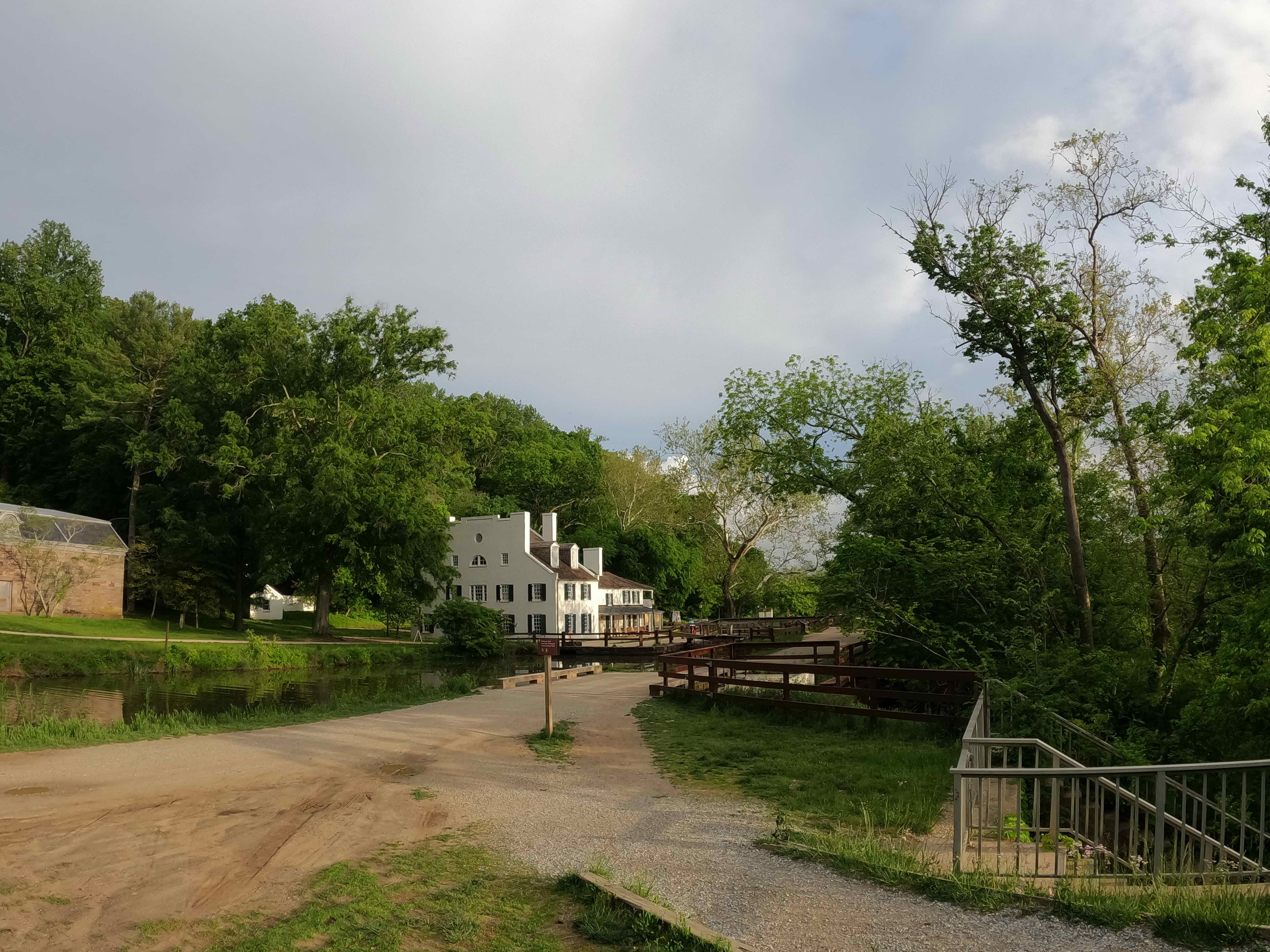
Great Falls Tavern Visitor Center is the best starting point for most Maryland-side visitors.
This is where the visit becomes more than a waterfall stop. Instead of only arriving at an overlook, you begin in a historic canal setting. The C&O Canal towpath runs through the area, and the visitor center connects you to walking routes, overlook access, park information and canal history.
For a first visit, use the visitor center area as your base, then choose your route based on how much effort you want.
For an easy scenic visit, walk to the Great Falls Overlook. For a casual walk, add time on the C&O Canal towpath. For an adventure hike, continue toward Billy Goat Trail Section A. For a family outing, focus on the towpath, canal area and Olmsted Island rather than the scramble.
Best Waterfall Views on the Maryland Side
The best waterfall view on the Maryland side is the Great Falls Overlook, reached by walking toward Olmsted Island from the Great Falls Tavern area.
You do not need to hike Billy Goat Trail Section A to enjoy Great Falls. The overlook alone can be worth the visit, especially if you are bringing family, visiting with out-of-town guests, taking photos, or introducing someone to the area for the first time.
The key is to treat the overlook as a safe viewing area, not as an invitation to climb down closer to the river. Stay on marked routes, respect signs, and do not leave boardwalks or designated paths for a better photo.
Olmsted Island and the Great Falls Overlook
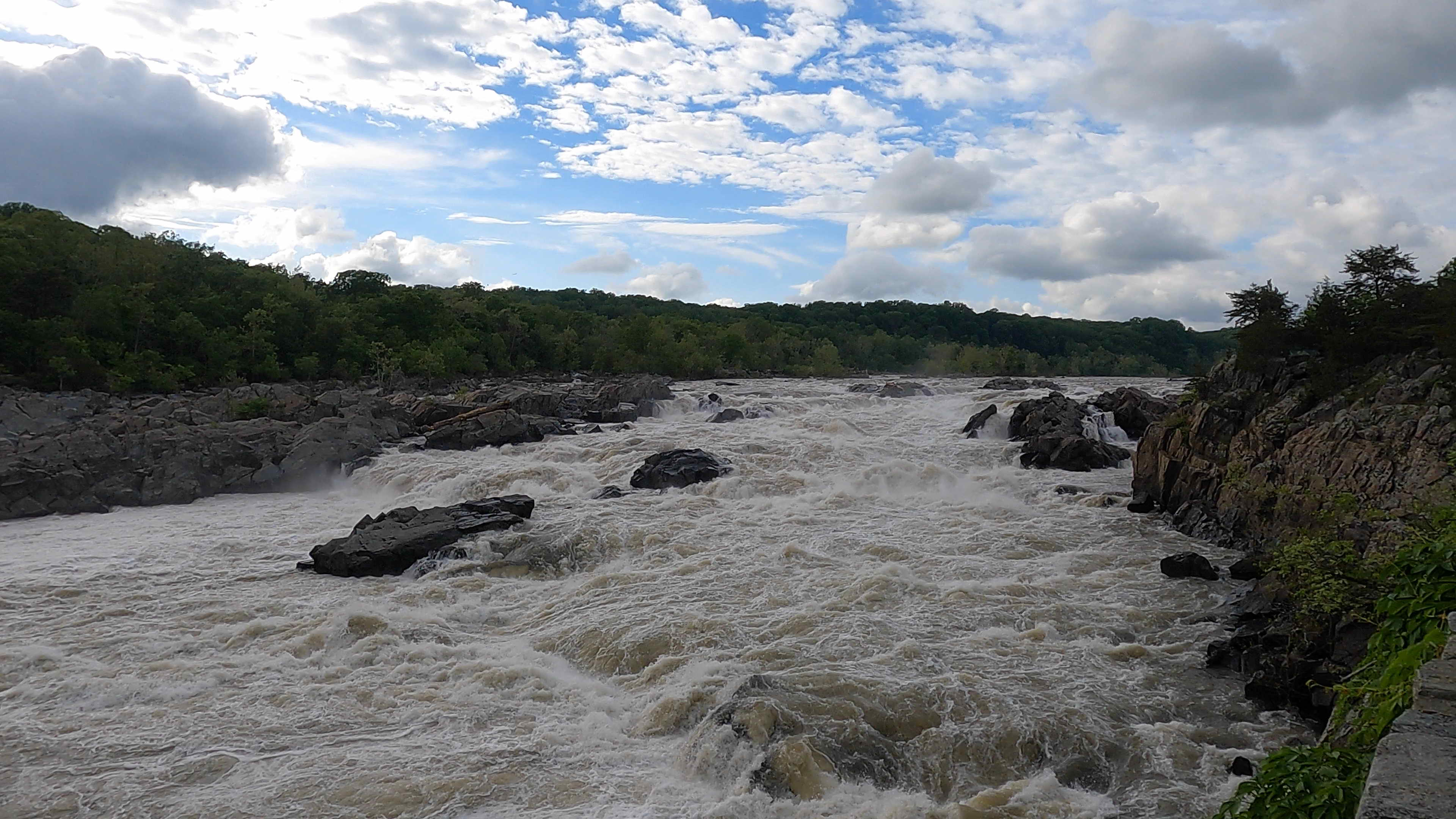
Olmsted Island is one of the reasons the Maryland side is memorable.
Instead of simply standing at a roadside viewpoint, you walk across a boardwalk through a rare island environment before reaching the overlook. That short approach makes the visit feel more complete without requiring a difficult hike.
This is one of the best options if you want a strong waterfall view, a short scenic walk, a family-friendly route, a photography stop, or a less intense alternative to Billy Goat Trail Section A.
Stay on the boardwalk and overlook. Do not climb down toward the rocks or river, and do not leave children unattended. Even easy scenic areas near Great Falls require supervision because the river corridor is not a normal playground or casual waterfront.
C&O Canal Towpath: Easy Walking, Biking and Shared Trail Etiquette
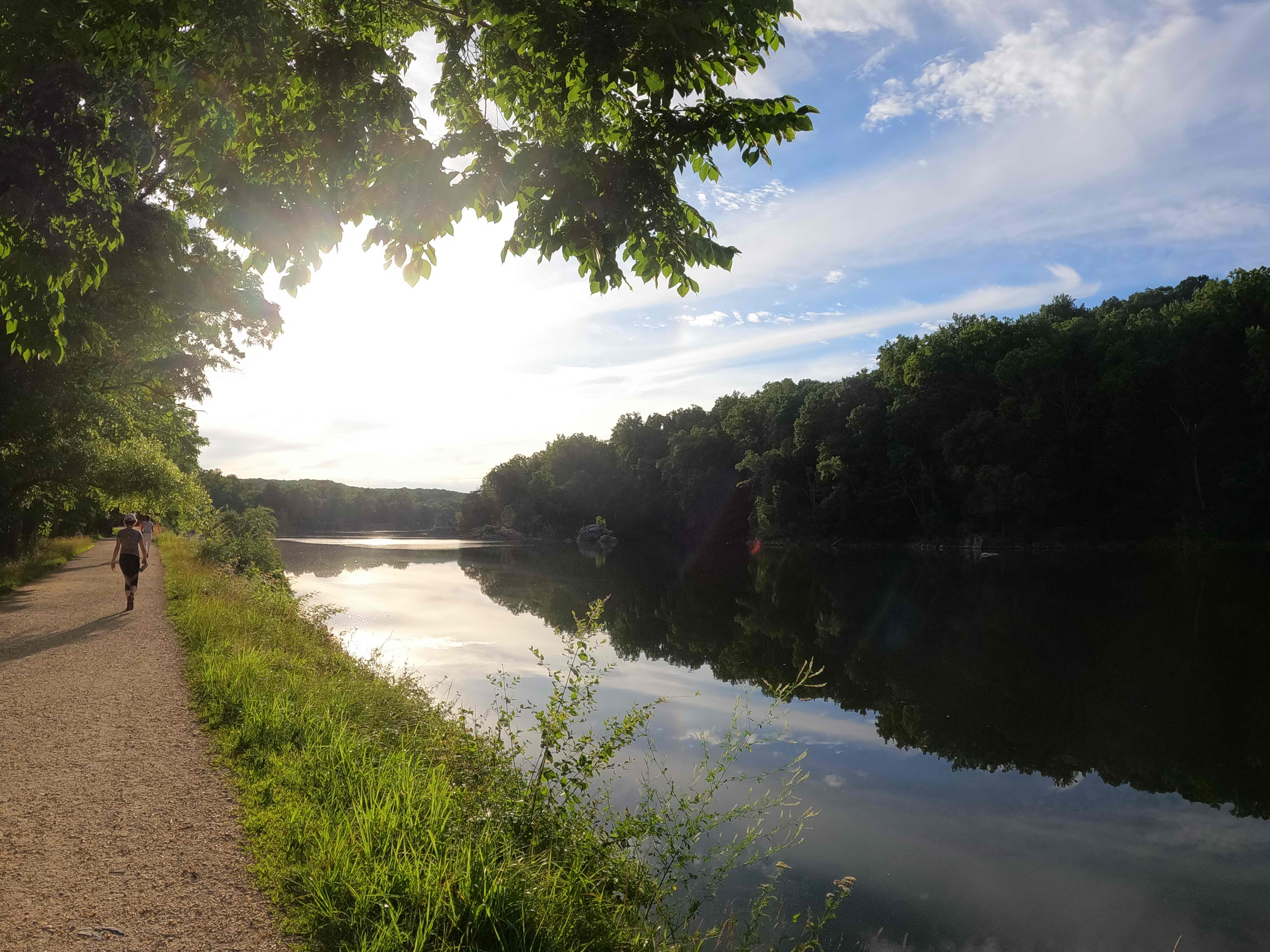
The C&O Canal towpath is one of the biggest advantages of visiting Great Falls from the Maryland side.
It gives visitors an easy way to extend the trip without turning it into a difficult hike. You can walk along the canal, enjoy the historic setting, take photos, continue toward the overlook area, or use the towpath as part of a longer outing.
It is also one of the most popular places near Great Falls for bikers.
That means hikers should expect to share the towpath with cyclists, runners, families, photographers and other visitors. Do not gather in the middle of the towpath, block the route, spread across the full width of the path, or stop suddenly without checking behind you. Keep groups compact, step aside when needed, and allow bikes and other trail users to pass safely.
Respectful behavior matters here. The towpath works best when everyone leaves space for each other.
Compared with Billy Goat Trail Section A, the towpath is flatter, calmer and easier to manage. That makes it a better choice for visitors who want a relaxed walk, a family outing, a dog-friendly route where permitted, or a lower-risk alternative when the rock scramble is not the right choice.
Billy Goat Trail Section A Access
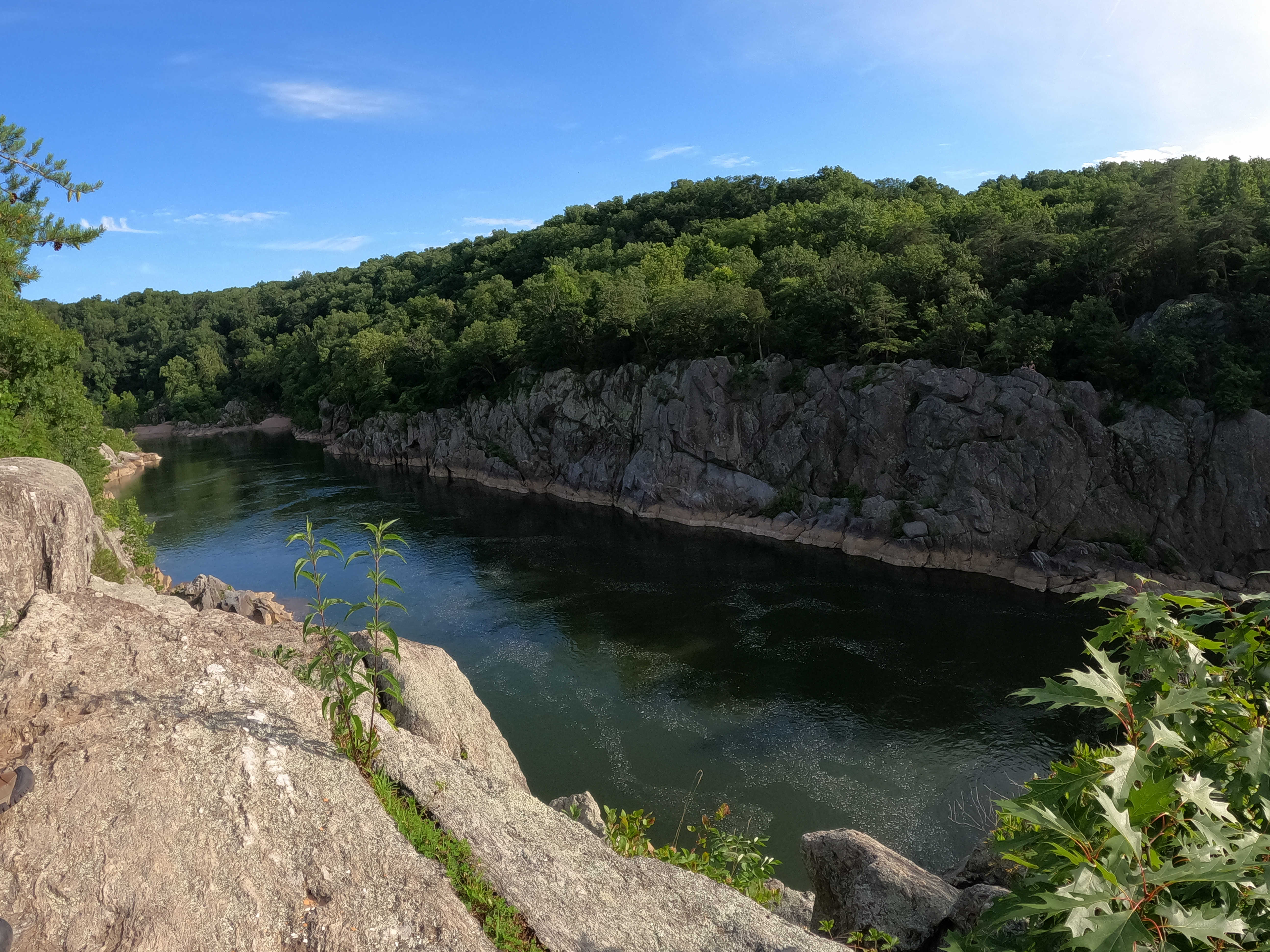
The Maryland side is also the main gateway to Billy Goat Trail Section A, one of the most famous adventure hikes near Washington DC.
That is why the Maryland side can support two very different types of visits:
Easy scenic visit: Great Falls Tavern, towpath, Olmsted Island and Great Falls Overlook. Adventure hike: Billy Goat Trail Section A, only in dry daylight conditions with the right group.
Do not casually add Billy Goat Trail Section A just because you are already nearby. It is a real scramble hike and deserves its own preparation.
If you would like to learn more about the trail, read our full Billy Goat Trail Section A Guide.
Best Easy Option for Families
For families, the best Maryland-side plan is simple.
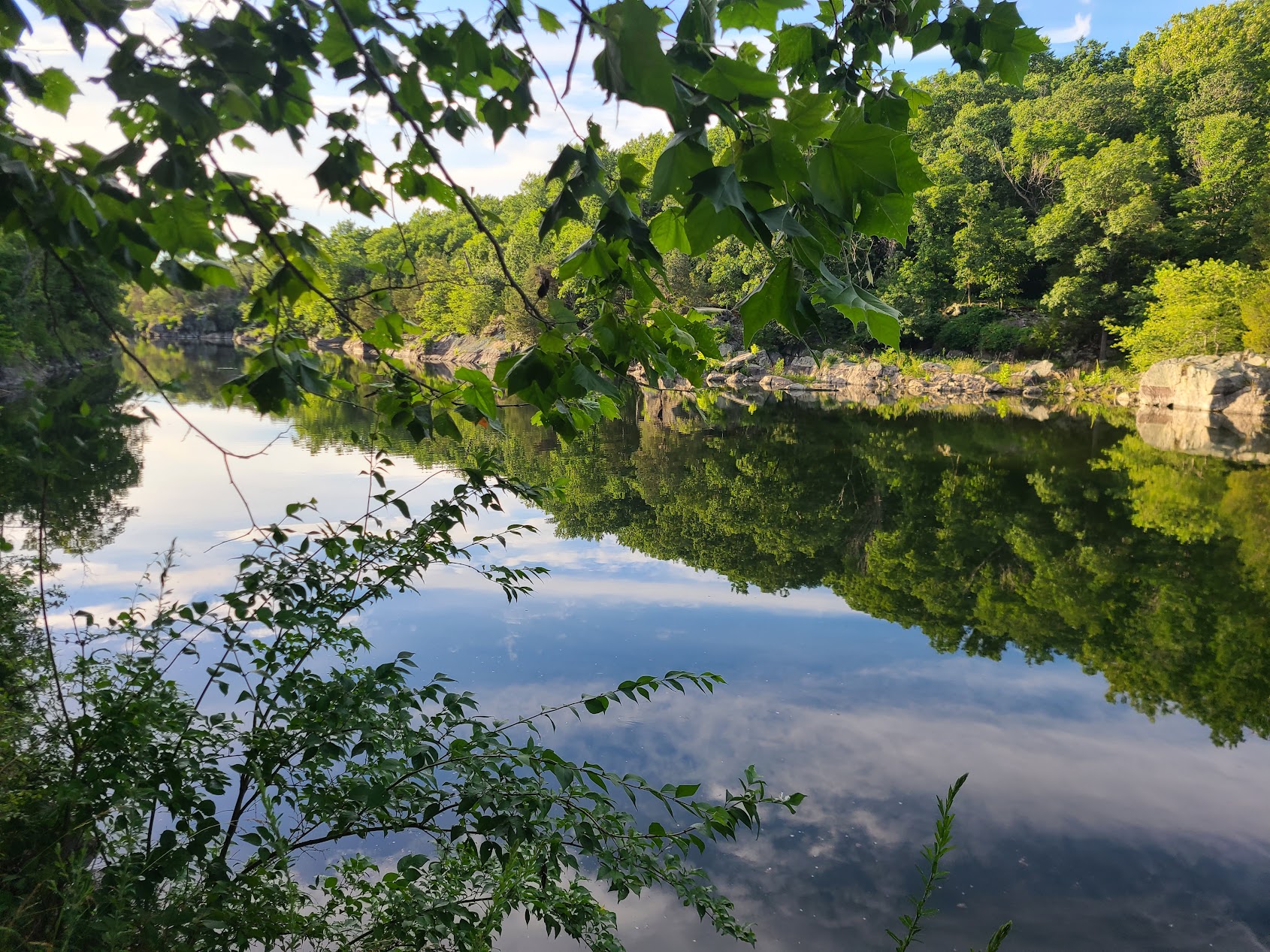
Walk on the C&O Canal towpath around the canal and lake-like water areas, visit Olmsted Island, and enjoy the Great Falls Overlook from safe, designated areas. This gives families a scenic and memorable visit without pushing children into terrain that may be too difficult or risky.
Kids should not be left unattended. Even when the route feels easy, the Great Falls area includes water, crowds, bikers, boardwalks, overlooks and restricted river areas. Adults should keep children close, avoid blocking the towpath, and make sure kids understand that they must stay on marked paths and away from the river.
A good family visit can be short, scenic and memorable without becoming risky.
Can You Bring Dogs to the Great Falls Maryland Side?
Yes, dogs can be walked on the C&O Canal towpath, but they are not allowed everywhere on the Maryland side.
This distinction is important.
The towpath can work for dog walking, but dogs are not permitted on Billy Goat Trail Section A, the boardwalk to Great Falls, or inside park buildings. If you are visiting with a dog, plan around the C&O Canal towpath and permitted routes.
Keep dogs leashed, stay on marked paths, clean up and carry out pet waste, and do not bring pets onto restricted trails, boardwalks, overlooks, or unsafe river areas.
Do not assume that because you are outdoors, dogs can go everywhere. At Great Falls, route choice matters.
Do Not Swim, Wade, Rock Hop, or Go Off Trail Near the Potomac River
Do not swim, wade, rock hop, climb down near the river, or go off trail around the Great Falls waterfall area.
This is not just a normal caution. Around Great Falls, unsafe river access can be fatal. The rocks can be slippery, the river bottom is uneven and rocky, hidden objects may not be visible, and the current can be much stronger than it looks from shore. Even flatter-looking river sections or beach-like areas can be dangerous.
The area has already witnessed multiple deaths, including incidents involving people attempting to swim across sections of the Potomac that may have looked manageable from shore. That is exactly why visitors should not treat any part of the river near Great Falls as a swimming or wading area.
The right guidance is simple:
Stay on marked trails, obey signs, follow NPS guidance, and enjoy the river from safe overlooks only.
Best Time to Visit the Great Falls Maryland Side
The best time to visit the Great Falls Maryland side is early morning or around sunset, assuming you are planning an easy scenic visit, walking the C&O Canal towpath, or visiting Olmsted Island and the overlook.
Early morning is usually best if you want fewer crowds, easier parking, softer light and a calmer towpath experience.
Around sunset can also be beautiful for photography and a relaxed scenic visit, but only if you are staying on easy, familiar routes and leaving before dark. Sunset is not the right time to start Billy Goat Trail Section A or any more serious trail. Great Falls should not be treated as a night hiking destination.
Spring and fall are usually the best seasons because temperatures are more comfortable and the scenery is strong. Summer can still be worth visiting, but heat and humidity matter, especially if you are doing more than a short overlook visit. Winter can be scenic, but ice, snow, wet boardwalks or slick rock can make conditions more complicated.
For the best visit, aim for dry weather, good daylight, comfortable temperatures, early arrival on weekends, no storms in the forecast, and no high-water concerns if hiking near river areas.
If your plan includes Billy Goat Trail Section A, wait for dry conditions and do not go immediately after rain.
Parking, Fees and Crowd Tips
The Maryland side can get crowded, especially on sunny weekends, holidays and peak fall or spring days.
The most important crowd strategy is to arrive early. If you arrive late on a beautiful weekend, the parking experience can become the worst part of the trip.
Before visiting, check current NPS information for fees, access, closures and conditions. Rules, closures and access conditions can change, especially around high water, weather, trail damage or heavy visitation.
Practical local tips:
- Go early on weekends.
- Avoid peak midday if the weather is perfect.
- Bring water even for short walks.
- Download maps before arriving because cell service can be unreliable.
- Have a backup plan if the parking area is full.
- Do not start a longer hike late in the day.
- Do not block the towpath while taking photos or waiting for your group.
- Give bikers, runners and other hikers enough room to pass.
- Keep children supervised, especially around boardwalks, overlooks and busy shared-use areas.
Maryland Side or Virginia Side: Which Is Better?
The better side depends on what kind of visit you want.
Choose the Maryland side if you want the most complete Great Falls experience: waterfall views, the C&O Canal, Great Falls Tavern, Olmsted Island, towpath walking, biking access, canal history and optional access to Billy Goat Trail Section A.
Choose the Virginia side if you want the more direct Great Falls Park experience with observation areas and a simpler scenic stop.
For hikers, I usually prefer the Maryland side because it gives you more options. You can keep it easy with the overlook and towpath, or make it a serious adventure by adding Billy Goat Trail Section A.
For visitors who only want the fastest waterfall viewpoint experience, Virginia may feel simpler. For local outdoor planning, the Maryland side has more depth.
Final Verdict: Is the Great Falls Maryland Side Worth It?
Yes. The Great Falls Maryland side is one of the best outdoor destinations near Washington DC.
It gives you powerful waterfall views, the C&O Canal towpath, Great Falls Tavern, Olmsted Island, easy scenic walking, biking access and access to one of the most famous adventure hikes in the region. Few places so close to DC offer that much variety in one area.
The key is choosing the right version of the visit.
For an easy scenic outing, walk to Great Falls Overlook, visit Olmsted Island, and spend time around the towpath. For a bigger adventure, plan Billy Goat Trail Section A separately and treat it as a real scramble hike.
Do not swim. Do not wade. Do not rock hop near the falls. Do not climb down to the river. Do not ignore NPS signs. Do not assume every route is dog-friendly. Do not block the towpath for other visitors. Do not leave kids unattended.
If you plan it well and respect the park, the Maryland side of Great Falls is one of the most rewarding local outdoor experiences in the DMV.

About the Author
Andy Newman is the founder of Next Outdoor Adventures. Andy has been hiking in many of the most popular national parks for over a decade, with notable hikes including Bright Angel Trail at the Grand Canyon, Bryce Canyon, Zion, Acadia, Rocky Mountain National Park, the Smoky Mountains and more.
As a Maryland resident, Andy continues to explore and document iconic outdoor locations in the DMV area, including Shenandoah National Park, Great Falls and Upstate New York.
Frequently Asked Questions About the Great Falls Maryland Side
Is the Great Falls Maryland side the same as Great Falls Park?
No. Great Falls Park is on the Virginia side of the Potomac River. The Maryland side is part of Chesapeake & Ohio Canal National Historical Park and is commonly accessed from Great Falls Tavern Visitor Center.
Which side of Great Falls is better?
The Maryland side is better if you want the most complete outdoor experience: C&O Canal towpath, Great Falls Tavern, Olmsted Island, Great Falls Overlook, biking access and Billy Goat Trail Section A access. The Virginia side is better if you want a simpler waterfall observation visit.
Where do you park for the Great Falls Maryland side?
Most visitors park near Great Falls Tavern Visitor Center in Potomac, Maryland. This is the main access point for the Great Falls Overlook, C&O Canal towpath and Billy Goat Trail Section A area.
What is the best overlook on the Maryland side?
The main Great Falls Overlook is the best waterfall-view destination on the Maryland side. It is reached by walking through Olmsted Island from the Great Falls Tavern area.
Can you bring dogs to the Great Falls Maryland side?
Dogs can be walked on the C&O Canal towpath, but they are not permitted everywhere. Dogs are not permitted on Billy Goat Trail Section A, the boardwalk to Great Falls, or inside park buildings.
Can you swim at the Great Falls Maryland side?
No. Do not swim, wade, rock hop, or enter the Potomac River near Great Falls. The river and rocks are dangerous, and visitors should obey NPS signs and guidance.
Is Billy Goat Trail Section A near the Maryland side of Great Falls?
Yes. Billy Goat Trail Section A is accessed from the Maryland side near the Great Falls Tavern / C&O Canal area. It is a technical, strenuous rock-scrambling hike and should not be treated as an easy walk.
Is the C&O Canal towpath good for biking?
Yes. The C&O Canal towpath is one of the most popular biking corridors in the area. Hikers should share the path, avoid blocking the towpath, and make room for bikes and other visitors to pass safely.
What is the best time to visit the Great Falls Maryland side?
Early morning is usually best for fewer crowds, easier parking and a calmer experience. Around sunset can be beautiful for an easy overlook or towpath visit, but do not start Billy Goat Trail Section A or any serious trail near sunset.
Is the Great Falls Maryland side good for kids?
Yes, if you focus on the towpath, canal area, Olmsted Island and overlook. Kids should not be left unattended, and Billy Goat Trail Section A is not a good default hike for children because it includes technical rock scrambling.
Useful Links for Great Falls Maryland Side Planning
- Hiking Blog Hub
- Where to Hike Near DC
- Billy Goat Trail Section A Guide
- Great Falls Tavern Visitor Center — National Park Service
- C&O Canal Current Park Conditions — National Park Service
- Next Outdoor Adventures on YouTube
By Andy Newman, Next Outdoor Adventures founder, July 10, 2026