Rocky Mountain National Park Hiking Guide
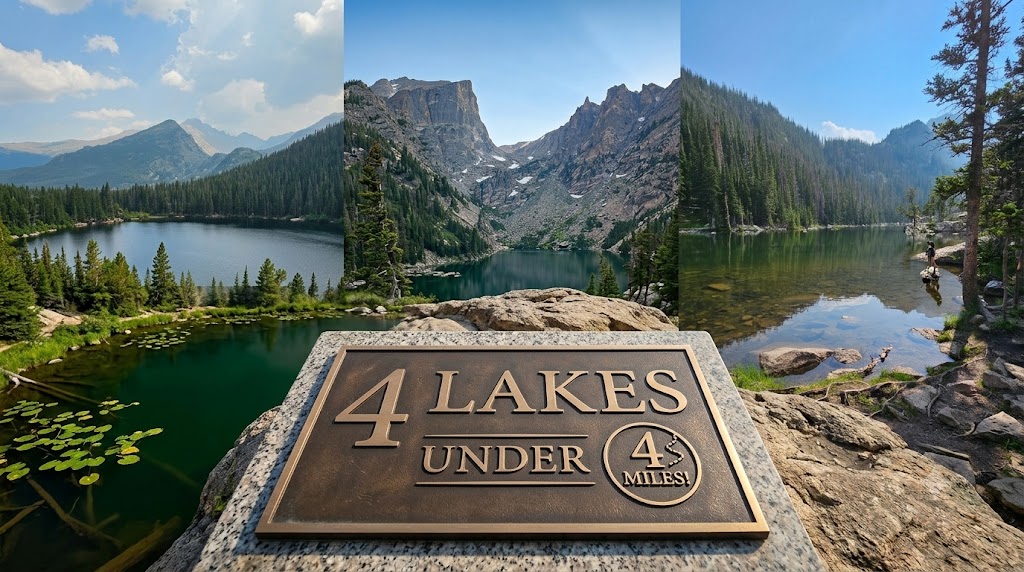
Bear to Emerald Lake: Hiking RMNP's Best 4-Lake Trail
Some hikes are popular because they are easy. Some are popular because they are beautiful. A few are popular because they give you far more than the mileage suggests.
Quick Route Summary
The official NPS trail table lists Emerald Lake at 1.8 miles one way from Bear Lake with 605 feet of elevation gain. Nymph Lake and Dream Lake are intermediate destinations along the same route, while Bear Lake sits at the trailhead area and can be walked as a short loop. Check the current NPS hiking trail table before visiting.
| Lake / Stop | Where It Fits | Approx. Distance | Elevation Gain | Typical Time | Why It Matters |
|---|---|---|---|---|---|
| Bear Lake | Starting lake / optional loop | ~0.5-mile loop | ~20 ft | 20–45 min | Easiest scenic start |
| Nymph Lake | First lake after Bear Lake | ~1.0 mile round trip | ~225 ft | 30–60 min | First scenic transition |
| Dream Lake | Main scenic reveal | ~2.2 miles round trip | ~425 ft | 1–2 hrs | Best view for the effort |
| Emerald Lake | Final destination | ~3.6 miles round trip | ~605 ft | 2–3 hrs | Best full-route payoff |
The key point is this: Bear Lake, Nymph Lake, Dream Lake and Emerald Lake should be understood as one connected route, not four unrelated hikes.
Bear Lake is the starting world. Nymph Lake is the transition. Dream Lake is the breathtaking reveal. Emerald Lake is the final alpine payoff.
How to Get There: Bear Lake Road, Timed Entry and Shuttle Strategy
The hike starts at the Bear Lake Trailhead in Rocky Mountain National Park's Bear Lake Road Corridor. This is not a trail where access should be treated as an afterthought. In peak season, the right parking, timed-entry and shuttle plan can determine whether your day starts smoothly or turns into a waiting game.
- Choose the correct reservation: For this hike, you want Timed Entry+ Bear Lake Road, not the regular Timed Entry option. Timed Entry+ Bear Lake Road includes access to the Bear Lake Road Corridor and destinations such as Park & Ride, Glacier Gorge Trailhead and Bear Lake. For 2026, it is required to enter the Bear Lake Road Corridor from 5 a.m. to 6 p.m. MDT from May 22 through October 18. Check the current NPS timed-entry rules before your trip.
- Log into Recreation.gov at the right time: Monthly timed-entry reservations are released at 8 a.m. MDT on the release dates. For 2026, the NPS schedule lists May 1 for May 22–June 30, June 1 for July, July 1 for August, August 1 for September, and September 1 for October 1–18. Additional reservations are released at 7 p.m. MDT the night before the desired arrival date and can sell out quickly. Use Recreation.gov for reservations.
- Respect the 2-hour window: Timed-entry reservations use designated 2-hour entry windows. If you have a Timed Entry+ Bear Lake Road reservation, you must enter the Bear Lake Road Corridor during your reserved window. Once you are in, there is no set departure time, but if you leave the Bear Lake Road Corridor and want to return later, re-entry is only allowed after 2 p.m.
- Use Park & Ride as your backup plan: A timed-entry reservation does not guarantee a space at the Bear Lake Trailhead. If Bear Lake or Glacier Gorge parking is full, park at the Bear Lake Road Park & Ride and take the free Bear Lake Shuttle Route to Bear Lake. For 2026, NPS lists daily Bear Lake Shuttle service from May 22 through October 18, running from 6:30 a.m. to 7:30 p.m. every 10–15 minutes, with the last Bear Lake Shuttle departing Bear Lake at 7:30 p.m. Review current shuttle details before you go.
Interactive Map: Bear Lake Trailhead to Emerald Lake
The route starts at the Bear Lake Trailhead and follows the classic lake sequence toward Nymph Lake, Dream Lake and Emerald Lake. Use this map for orientation only; always confirm current trail conditions, parking, shuttle and timed-entry details with the National Park Service before your hike.
The hike from Bear Lake to Nymph Lake, Dream Lake and Emerald Lake is one of those rare trails.
On this round-trip hike, you have an opportunity to see some of the most beautiful and picturesque spots in Rocky Mountain National Park without a major investment of time or effort. The route is roughly 3.6 to 4 miles round trip, depending on whether you add the full Bear Lake loop. You start at Bear Lake, where the mountains already feel close. From there, the trail leads to Nymph Lake, smaller and quieter compared with what comes later. You continue to Dream Lake, where the view suddenly opens up and the hike starts to feel bigger than the distance on the map. Then you finish at Emerald Lake, surrounded by steep alpine walls that make the route feel like a real mountain journey, not just a short walk from a crowded trailhead.
That is what makes this hike special.
It is not just “a lake hike.” It is one of the best and most transformative experiences in Rocky Mountain National Park because the scenery keeps changing, the lakes feel increasingly dramatic, and the final alpine payoff feels much bigger than the mileage suggests.
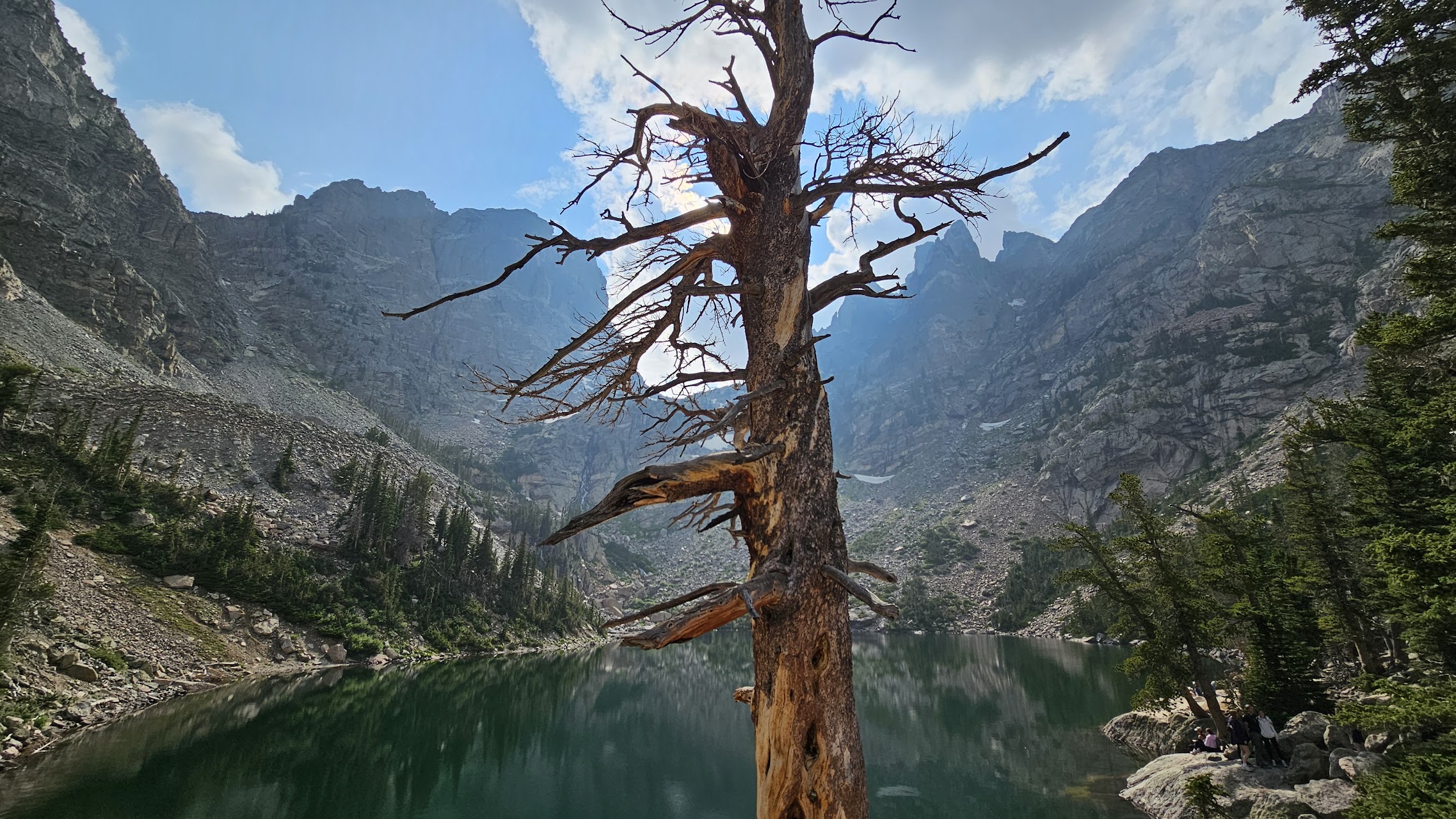
Years ago, when I made a video about this hike, I thought of it as the “3 Lake Hike” because Nymph Lake, Dream Lake and Emerald Lake line up so naturally on the same route. But the truth is even better: if you count Bear Lake at the start, this is really a four-lake experience.
And for first-time visitors to Rocky Mountain National Park, that may be the perfect introduction.
What Makes Rocky Mountain National Park Lakes So Special?
Rocky Mountain National Park is famous for dramatic scenery: sharp peaks, alpine forests, open skies, wildlife, waterfalls and mountain lakes that seem to pull your eyes toward them like a magnet.
Every national park has its own signature.
The Grand Canyon overwhelms you with scale. Zion surrounds you with sandstone walls. Bryce Canyon feels almost unreal with its hoodoos. Acadia gives you the rare combination of mountains and ocean.
Rocky Mountain National Park has its own calling card: high mountain lakes set beneath dramatic peaks, filled with cold, clear water, and shaped by a landscape that feels both peaceful and powerful at the same time.
From a distance, these lakes can look like mirrors. Up close, they reveal a different world: rocks under the surface, changing colors, reflections, wind patterns, mountain shadows and sudden flashes of light.
That was one of the main reasons we wanted to visit Rocky Mountain National Park after hiking in other famous destinations. We did not come only to “complete a trail.” We wanted to see whether these mountain lakes were as beautiful in person as they looked in photos and videos.
The answer was yes.
And one hike gives you one of the best introductions to that experience.
Why the 4 Lake Hike Is So Unique
The route from Bear Lake to Nymph Lake, Dream Lake and Emerald Lake is one of the most rewarding short hikes in Rocky Mountain National Park.
But this hike is not special only because it gives you four lake stops in a short distance.
It is special because the lakes feel different from each other.
In my subjective opinion, this is not just a hike with nice views. It feels like a short journey through four connected worlds built by nature. You start in a calm, accessible forest-lake setting at Bear Lake. Then you hike to Nymph Lake, where the water, plants and rocks begin to change the mood. Dream Lake feels like the first truly dramatic reveal. Emerald Lake feels like the final destination, surrounded by mountain walls and changing light.
That progression is what makes the hike memorable.
It is not just “walk to a lake and come back.” It is a story.
Bear Lake: The Beautiful Beginning
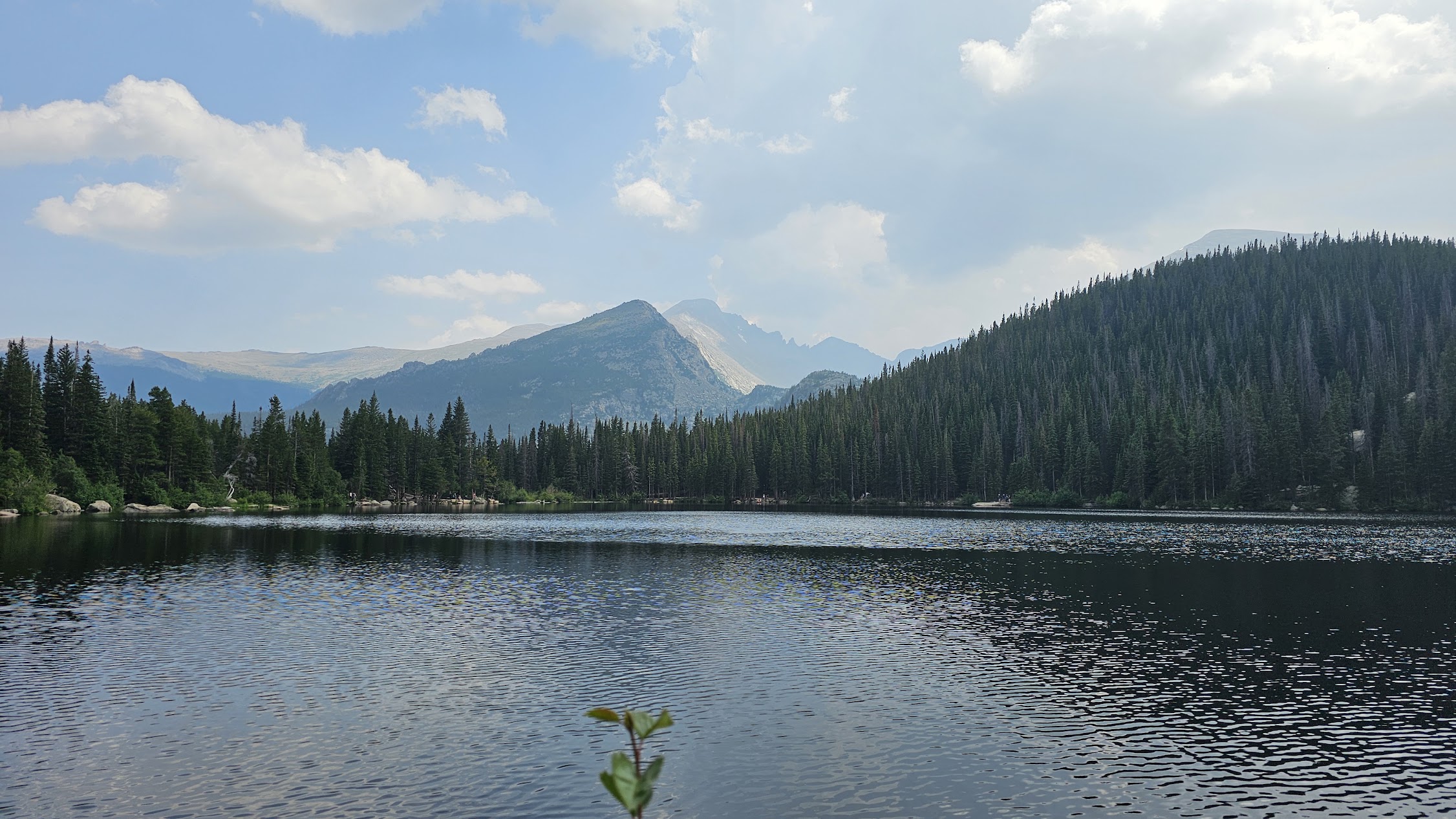
Bear Lake is where the journey begins.
Because it is close to the trailhead, it is easy to underestimate. Many people see it quickly, take a few photos and move on. But Bear Lake deserves a moment, especially if it is your first time in Rocky Mountain National Park.
This is where nature still feels somewhat familiar compared with many other mountain destinations. You see trees, water, surrounding peaks and the calm surface of the lake. Depending on the weather and light, you may also catch reflections, distant snowfields or high mountain features above the lake.
The simplicity is part of the beauty.
Bear Lake gives you one of the best scenic rewards you can find within walking distance of a parking area. For some visitors, especially families or people adjusting to altitude, this may be enough.
But Bear Lake also creates the question that makes the hike worth continuing:
If this is what the trail gives you at the beginning, what is waiting higher in the mountains?
That is the reason to keep going.
Nymph Lake: The First Transformation
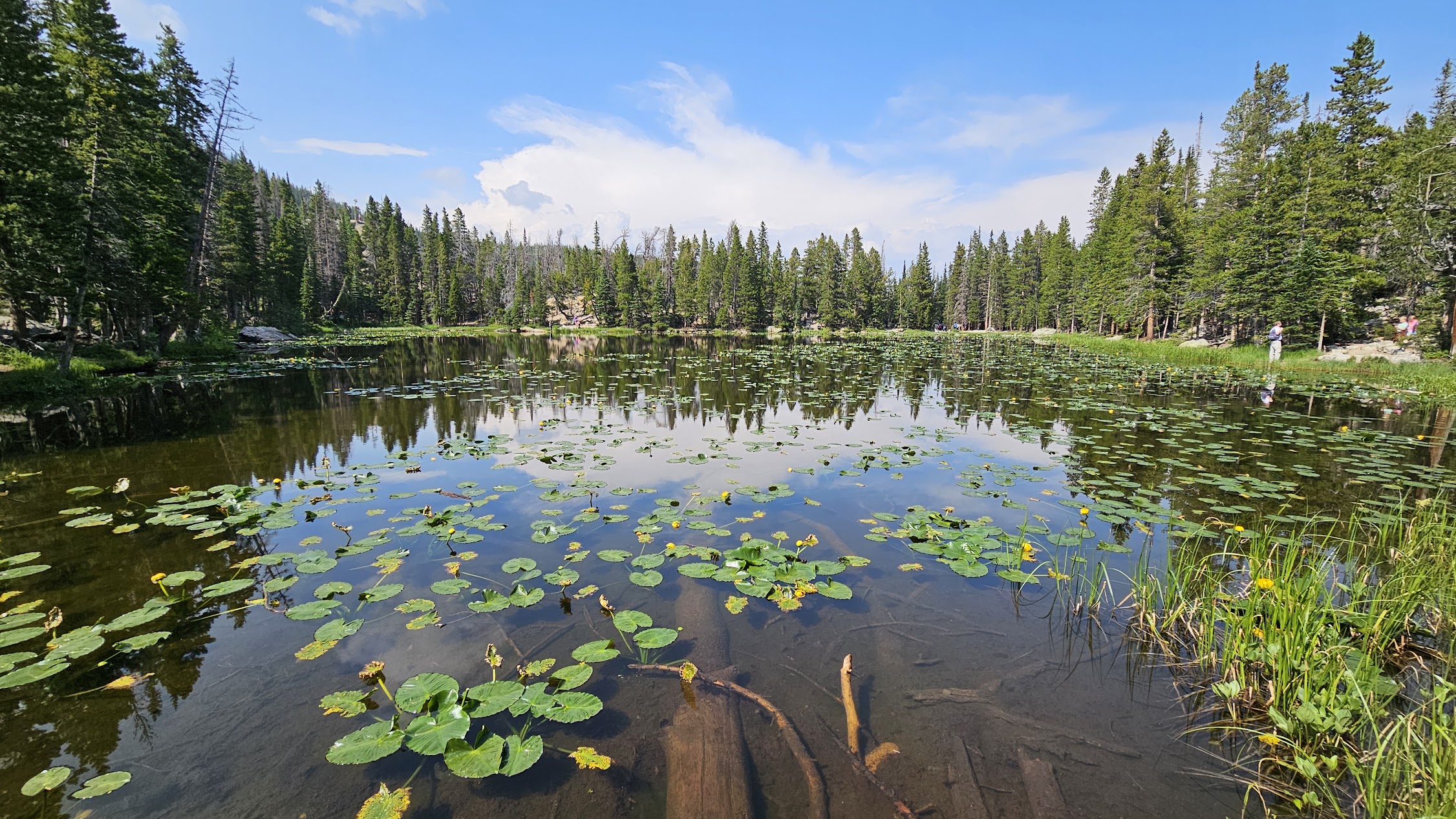
As you leave Bear Lake and hike toward Nymph Lake, the route begins to change.
This is where the route stops feeling like a simple lakeside walk and starts becoming a mountain trail. You feel the elevation more. The trees shift around you. Rocks become more noticeable. The world starts to feel closer, quieter and more enclosed.
Nymph Lake is smaller and less dramatic than Dream Lake or Emerald Lake, but it adds something important to the journey.
It is the first transformation.
Here the water can feel more intimate. You may see aquatic plants and lily-covered sections near the surface. The lake can reveal more texture and detail than Bear Lake because you are now moving deeper into the route, away from the easiest part of the corridor.
This is also where you begin to mentally transition into the mountains.
The rocks, trees, birds, water and changing trail conditions all start to tell you that the hike is becoming more interesting. Nymph Lake may not be the lake people talk about most, but it plays an important role: it makes the journey feel layered instead of repetitive.
Do not rush through it just because Dream Lake is ahead.
Dream Lake: The View That Makes You Stop
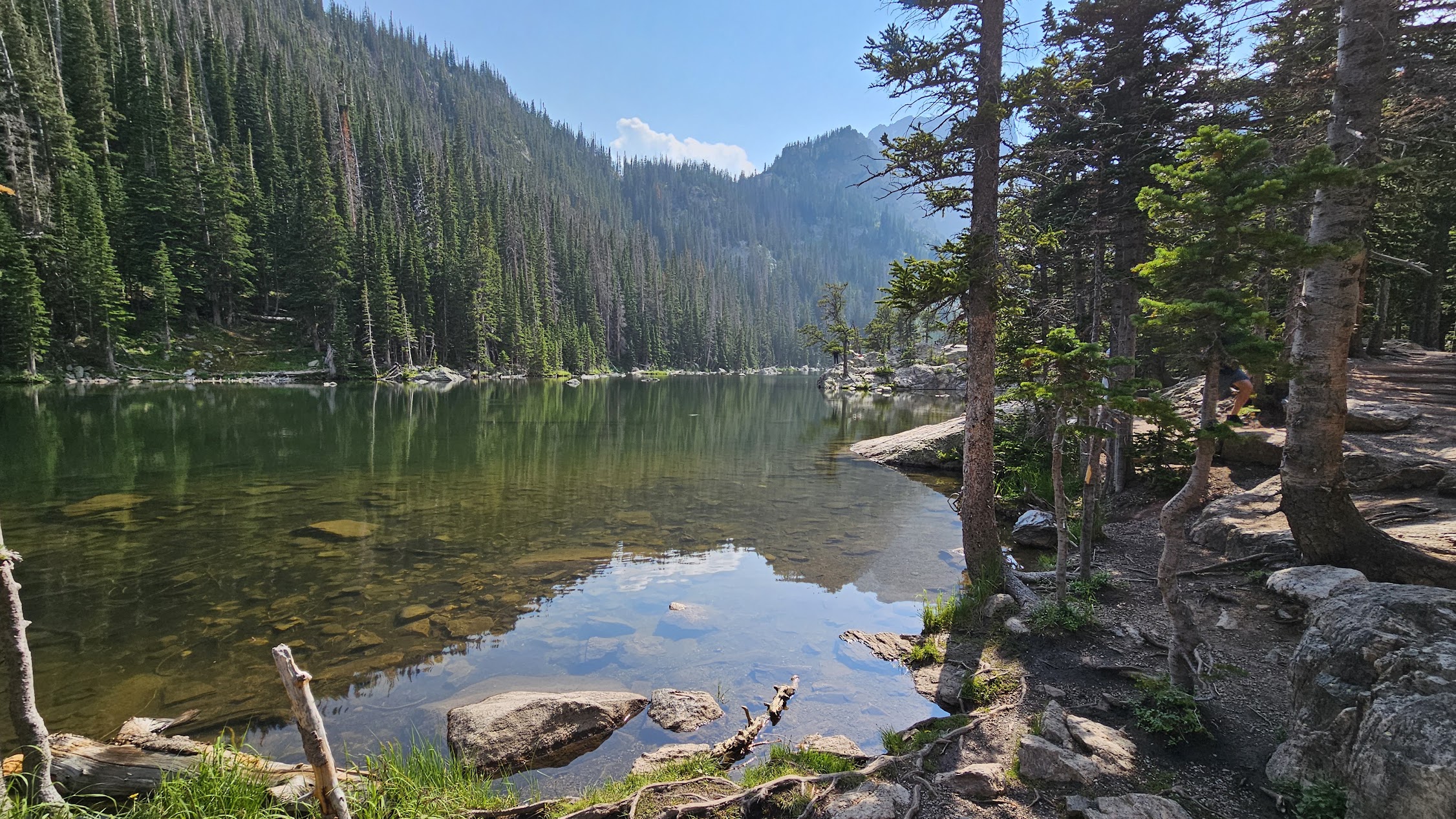
Dream Lake is where the hike becomes unforgettable.
This is the first lake on the route that can genuinely take your breath away.
The water can shift between emerald, blue and mirror-like reflections depending on the angle of the light, the clouds, the wind and the time of day. From some viewpoints, Dream Lake reflects the surrounding mountains so cleanly that it almost feels unreal. From others, the lake looks transparent enough to pull your eyes into the water itself.
This is where you start to understand what makes Rocky Mountain National Park different.
Dream Lake is not just another stop on the way to Emerald Lake. For many hikers, it may be the most beautiful part of the entire route. It is also one of those places where photographers, hikers and bloggers naturally stop because the scene almost demands it.
This is where you take the photo you keep as a lifetime memory.
But Dream Lake also does something else: it pulls your eyes forward.
Looking beyond the lake, the mountains ahead feel closer. The route begins to suggest that something even more dramatic may be waiting near the Flattop-Hallett area, where layered ridgelines, alpine rock and big western sky come together.
That is the power of Dream Lake.
It gives you enough beauty to feel satisfied, but enough mystery to make you continue.
The Trail from Dream Lake to Emerald Lake
The section after Dream Lake feels different again.
The hike begins to gain elevation more noticeably. The trail moves through rocks, trees, open views and smaller details that are easy to miss if you are only focused on reaching the final lake.
This is where the route starts to feel more alpine.
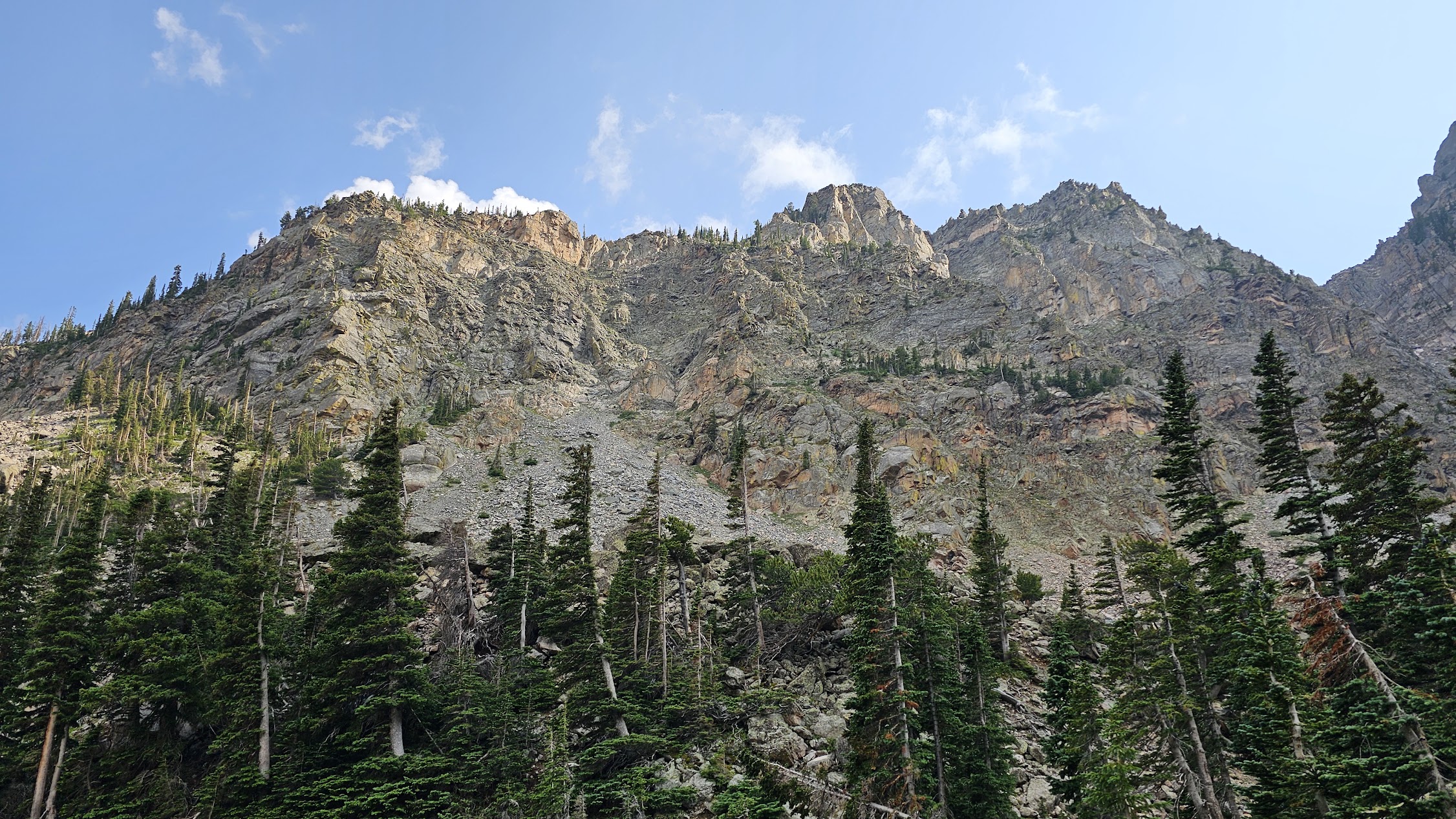
You may notice small streams or water flowing near rocks, trees growing in unlikely places, wildflowers in season, and boulders with shapes that make the landscape feel older and more rugged. The mountains no longer feel distant. They feel present.
This is also where conditions matter more.
Even though this is not a long hike, it is still a high-elevation route in Rocky Mountain National Park. Trail conditions can change quickly. Check current NPS trail conditions before hiking, especially in spring, early summer or after storms.
Emerald Lake: The Final Alpine Payoff
Emerald Lake feels like the destination the whole trail has been building toward.
The moment you step onto the rocky shore, the setting changes again. The lake sits beneath dramatic mountain walls, with the Flattop-Hallett area rising above the scene. Compared with Bear Lake and Nymph Lake, Emerald Lake feels more enclosed, more rugged and more alpine.
This is the final world of the hike.
What makes Emerald Lake special is not only the view. It is the way the place changes while you are standing there.
Wind can arrive and disappear quickly. Clouds can move fast across the peaks. Sunlight can reflect off the water and rocks in different ways within minutes. The lake may look calm one moment and textured the next. The same view can feel different depending on where you stand and how long you stay.
This is where people slow down.
Some take photos. Some record videos. Some sit quietly on the rocks and take in the scene. Some simply stare because the place feels larger than the short mileage that brought them there.
That is what makes Emerald Lake the right final destination.
It gives the hike closure.
Practical Tips for Hiking the 4 Lake Route
This route does not require technical climbing.
You may step over rocks, navigate uneven trail sections or deal with mud, snow or ice depending on the season, but the route is fundamentally a hiking trail. It gives you the opportunity to walk, pause, take photos and move at your own pace.
The elevation gain from Bear Lake to Emerald Lake is modest compared with many harder hikes in Rocky Mountain National Park. NPS lists Emerald Lake at 605 feet of elevation gain from Bear Lake.
That is why this hike is popular with many visitors, including first-time hikers and prepared beginners.
But “popular” does not mean “no planning required.”
- Start early.
- Check weather before you go.
- Avoid hiking during thunderstorms or high winds.
- Wear footwear that can handle dirt, rock, mud or lingering snow.
- Bring water, especially if you are not used to hiking at elevation.
- Do not rush Dream Lake.
- Continue to Emerald Lake only if your group feels good and conditions are stable.
- Check current trail conditions before your visit.
Planning note: The Bear Lake Road Corridor is extremely popular. Parking, shuttle access, weather and timed-entry rules can affect your day as much as the trail itself.
Best Time to Hike Bear Lake to Emerald Lake
The best time to hike this route is early morning in dry summer or early fall conditions.
We hiked this trail in summer, and I think dry conditions are ideal for enjoying the entire route. You can focus more on the lakes, views and photography instead of worrying about ice, slush or slippery sections.
Early morning is also better because the Bear Lake area is extremely popular. If you wait until midday, you may face harder parking, more people on the trail, stronger sun and less predictable mountain weather.
This is especially important because the Rocky Mountains can change quickly. A calm morning can become windy or stormy later in the day. Even though this hike is relatively short, you should still treat it as a real mountain environment.
Is This Hike Worth It?
Yes.
If you are visiting Rocky Mountain National Park for the first time, this may be one of the best hikes you can do.
Not because it is the hardest. Not because it is the most remote. Not because it gives you bragging rights.
It is worth it because it gives you a complete Rocky Mountain lake experience in a compact route.
Bear Lake introduces you to the corridor. Nymph Lake changes the mood. Dream Lake makes the hike unforgettable. Emerald Lake gives the journey its final alpine payoff.
That is rare.
Many hikes give you one destination. This hike gives you a sequence — four different lake experiences connected by one trail.
That is why it should be on your Rocky Mountain National Park list.
Final Recommendation
If you want to understand why people fall in love with Rocky Mountain National Park, hike from Bear Lake to Emerald Lake.
Take your time at each lake. Notice how the scenery changes. Do not treat Nymph Lake as a throwaway stop. Do not rush through Dream Lake. Do not arrive at Emerald Lake only to take one photo and leave.
Let the hike unfold.
That is the real value of this route.
In less than a half-day, you can move from an easy trailhead lake to a dramatic alpine destination beneath some of the most beautiful mountain scenery in the park.
For me, that is what makes the 4 lake hike special.
It is not just a short hike. It is a compressed Rocky Mountain journey.

About the Author
Andy Newman is the founder of Next Outdoor Adventures. Andy has been hiking in many of the most popular national parks for over a decade, with notable hikes including Bright Angel Trail at the Grand Canyon, Bryce Canyon, Zion, Acadia, Rocky Mountain National Park, the Smoky Mountains and more.
As a Maryland resident, Andy continues to explore and document iconic outdoor locations in the DMV area, including Shenandoah National Park, Great Falls and Upstate New York.
Watch the 4 Lake Hike Video
FAQ: Bear Lake, Nymph Lake, Dream Lake and Emerald Lake
Can you hike Bear Lake, Nymph Lake, Dream Lake and Emerald Lake together?
Yes. Bear Lake is at the trailhead area, and the trail continues naturally to Nymph Lake, Dream Lake and Emerald Lake.
Which lake is the most beautiful?
This is subjective. Dream Lake may offer the best view for the effort, while Emerald Lake feels like the strongest final destination. Bear Lake is the easiest scenic stop, and Nymph Lake is the first transition into the route.
Is Emerald Lake worth the extra section from Dream Lake?
Yes, if your group feels good and conditions are stable. Emerald Lake completes the route and gives the hike a stronger alpine destination.
Is this hike good for beginners?
It can be good for prepared beginners, especially in dry summer conditions, but visitors should remember that the trail starts at high elevation. Go slowly, bring water and turn around earlier if needed.
Do you need timed entry for Bear Lake Road?
During the busy season, you may need a Timed Entry+ Bear Lake Road reservation during certain hours. Always check current NPS rules before visiting.
Should I hike this or Sky Pond?
For most first-time RMNP visitors, hike Bear Lake to Emerald Lake first. Sky Pond is a longer, harder adventure and is better planned as a separate hike.