
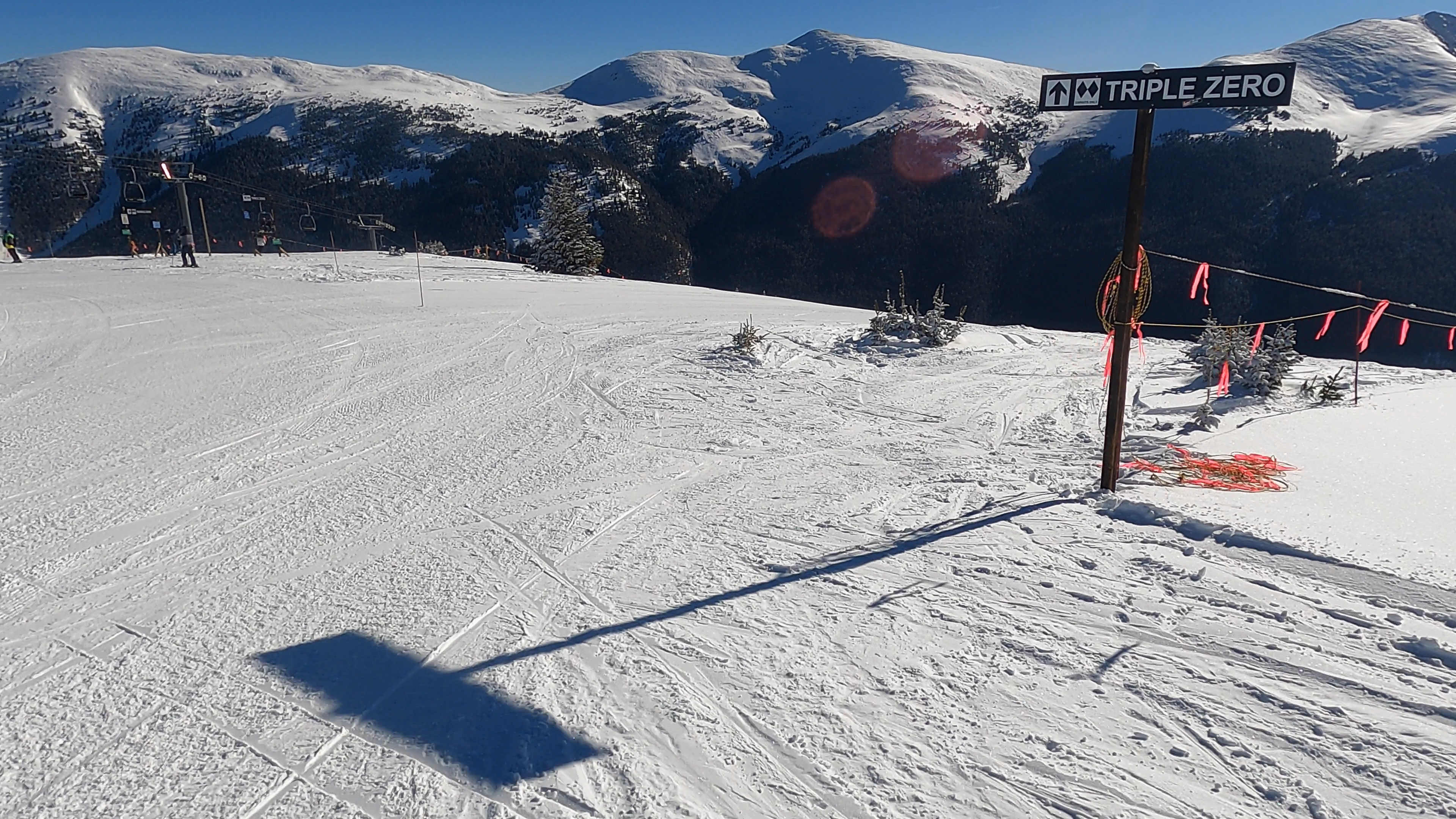
What Counts as “Steep” at North American Resorts
In the United States and Canada, trail difficulty is typically communicated using the green / blue / black system, with black and double-black trails generally marking the start of sustained steep terrain. In Europe, most resorts instead classify runs using colored piste ratings (blue, red, black), where red pistes often overlap with North American black runs, and European black pistes frequently represent steeper, more sustained, or more exposed terrain than their North American counterparts.
Because trail ratings are relative to each resort, a black run at one mountain may feel very different from a black run at another—especially when comparing North American and European grading systems. Understanding these differences helps set realistic expectations when skiing new resorts or traveling internationally.
Read more about ski trail rankings and what they really meanNow, this article is strictly about lift-served, in-bounds resort steep terrain. Backcountry terrain requires additional training, equipment, and risk management beyond resort skiing so we'll leave it up for discussion in our future articles.
Speed Control Is the Non‑Negotiable Skill
The clearest signal you’re ready for steeps is whether you can control speed without fear. On steep slopes, gravity does most of the work—so if you rely on long traverses, hockey stops, or panic braking, steeper terrain will magnify those habits.
A skier ready for steeps controls speed with turn completion: finishing turns across the hill, setting a rhythm, and feeling in control at the end of every turn.
Ask yourself:
- Can I regulate speed using turn shape instead of skidding?
- Do I feel “ahead of the hill,” not rushed from turn to turn?
- Can I stop intentionally on a steep pitch without panic?
Turn Shape Matters More Than Aggression
Many skiers assume steep skiing requires more edge angle or more power. In reality, it requires cleaner fundamentals. On steeps, incomplete turns lead to fast acceleration. Excessive skidding increases fatigue and reduces confidence.
A solid readiness benchmark is being able to link calm, complete turns on black runs when the snow is not perfect—firm mornings, end-of-day chop, or lightly bumped pitches.
Are You Comfortable Skiing the Fall Line?
Steep terrain requires you to ski with gravity, not constantly across it. If pointing your skis downhill—even briefly—creates anxiety, steeps will feel overwhelming rather than rewarding.
Readiness looks like this: you can enter the fall line intentionally, manage pressure through the turn, and exit cleanly without rushing or “bailing” into a traverse.
Stance & Balance: Centered Beats Defensive
On steeps, a defensive stance (leaning back, stiff legs, locked ankles) feels protective, but it reduces control. Staying centered—trusting the front of your boots and letting your legs absorb terrain changes—makes steep skiing feel stable.
- If you consistently sit back on steeper pitches, that’s a skill gap—not a bravery gap.
- If you can pressure the shovels and stay balanced, steeps become predictable.
Variable Snow Readiness (The Real Resort Test)
In-bounds steeps often change from top to bottom: scraped sections near entrances, chalky mid‑pitch snow, softer bumps lower down, and tracked-out pockets after storms. If you only feel confident on smooth groomers, steep terrain will feel unpredictable.
A practical test is skiing ungroomed blacks comfortably in late-day conditions without going into survival mode.
Mental Readiness: Calm Under Pressure
Being ready doesn’t mean feeling fearless. It means your focus improves under pressure. If your internal dialogue becomes “just get down,” the terrain is likely too big for the day.
Steep skiing readiness is often visible in how you approach the entrance: pause, pick a line, plan a few turns, and commit calmly.
Mistake Recovery Skills
Everyone makes small mistakes. On steeps, the key is whether you can recover smoothly: regain balance after a slightly off turn, side-slip when needed, and stop without panic.
Minimum recovery toolkit (in-bounds):
- Controlled side-slip on a steeper pitch
- Intentional stop on a steep section
- Ability to reset, breathe, and continue without rushing
Equipment Check (Edges Matter)
Technique matters most, but equipment can help or hurt. Dull edges on firm steep terrain can make even good skiers feel insecure. Supportive boots and maintained edges are especially important on black and double-black terrain.
A Safe In‑Bounds Progression Path
The best way to earn steep-slope confidence is progressive exposure. Resorts make this easy because you can choose steeper sections with safe runouts and predictable exits.
- Step 1: Confident on all groomed blacks
- Step 2: Comfortable on lightly bumped blacks
- Step 3: Short steep pitches with safe runouts
- Step 4: Wider steep faces before narrow chutes
- Step 5: Steeper terrain in mixed conditions
One sign of real readiness is knowing when to skip a steep run—poor visibility, fatigue, or unfavorable snow can turn “progression” into “survival.”
Quick Self‑Assessment Checklist
You’re likely ready for steeps if:
- You control speed through turn shape, not braking.
- You stay centered and can pressure the front of the boots.
- You’re comfortable briefly skiing the fall line.
- You adapt to variable in-bounds snow without panic.
- You can side-slip and stop intentionally on a steep pitch.
- You can pause, plan a line, and ski calmly.
If several of these still feel uncertain, that’s normal. Steep skiing is a progression, not a threshold. Build the fundamentals, choose the right conditions, and the steeps will start to feel like a puzzle—not a problem.
By Andy Newman, NextOutdoorAdventures founder, Dec 17, 2025
Related Ski Guides
- Starting Your Ski Journey — What to Expect, What to Buy, and How to Progress
- Ski Trail Rankings Explained — How Greens/Blues/Blacks Translate Across Resorts
- Ski Trip Planning Tips — Packing, Budgeting & Itinerary Ideas
Tell us your take: What was the steep run that “unlocked” your progression? Share it with us on YouTube or Instagram.